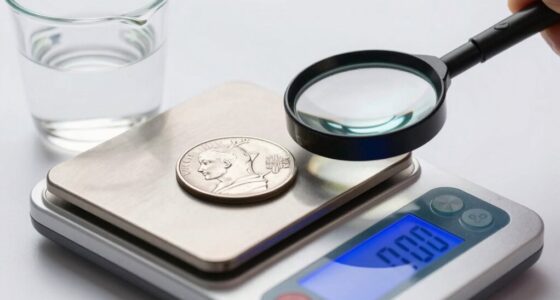
To properly store your coins, use inert materials like capsules or tubes to prevent damage and preserve their condition. Capsules provide airtight, transparent protection for display or handling, while tubes are great for bulk storage and organization. To prevent toning caused by environmental factors, keep coins in low-humidity, controlled environments and handle them with gloves. Following these basic tips helps maintain coins’ value and appeal—continue to explore for more detailed techniques and advanced methods.

Get home office essentials delivered free with Prime
- Fast, free delivery on millions of items
- Prime Video, Amazon Music and more included
- Member-only deals all year
Key Takeaways
- Use inert materials like polycarbonate or acrylic capsules to prevent chemical reactions and protect coin surfaces.
- Store bulk coins in clean, dry plastic or cardboard tubes labeled for easy organization and protection.
- Maintain low humidity and avoid direct sunlight to minimize toning and preserve coin luster.
- Handle coins with gloves to prevent oils and acids from causing surface damage or discoloration.
- Incorporate desiccants and climate-controlled environments to control moisture and prevent environmental toning.
Storing your coins properly is essential to preserving their condition and value. When it comes to safeguarding your collection, understanding the right storage methods can make a significant difference. Using the proper preservation techniques helps prevent damage, reduces the risk of toning, and ensures your coins meet grading criteria when you decide to have them appraised or sold. The goal is to keep your coins in the best possible condition over time, and selecting the right storage solutions is a crucial first step.
Proper storage preserves your coins’ condition, value, and grading potential over time.
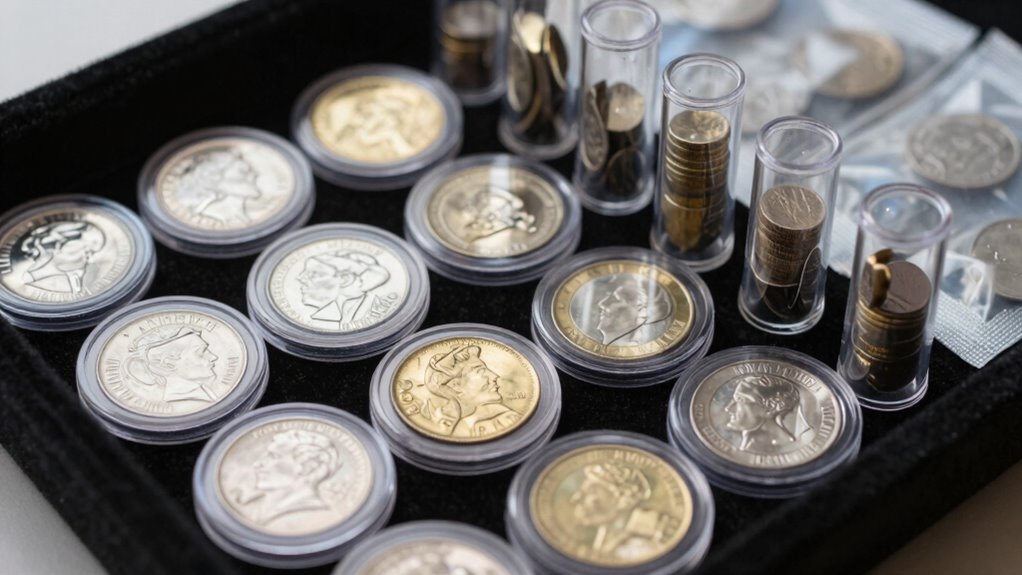
One of the simplest and most effective ways to protect your coins is by using capsules. Coin capsules are transparent, airtight holders that shield your coins from dust, moisture, and scratches. They are ideal for coins you want to display or handle occasionally. When choosing capsules, ensure they are made from inert materials such as polycarbonate or acrylic, which won’t react with the metal. Properly fitting capsules prevent movement within the holder, reducing the chance of abrasions that could negatively impact the coin’s surface and, consequently, its grading criteria. Remember, a snug fit is key; loose capsules can cause unnecessary wear, while overly tight ones may damage the coin when inserting or removing.
Tubes offer another storage option, especially for larger quantities or bulk coins. Coin tubes are typically made from cardboard with plastic linings or entirely plastic, providing a sturdy barrier against environmental elements. They are best suited for coins that are less likely to be handled frequently, as removing coins from tubes repeatedly can cause surface wear. When using tubes, ensure they are clean and dry before placing your coins inside. Labeling each tube with the coin type, year, and mint mark can help you organize your collection efficiently and keep track of your inventory. Proper labeling and careful handling are preservation techniques that help maintain the overall condition and value of your coins.
Preventing toning is also vital, especially if you want to retain the coin’s original appearance. Toning occurs due to chemical reactions between the coin’s metal and environmental factors like humidity, pollutants, or oils from your skin. To minimize toning, store coins in a low-humidity environment, away from direct sunlight, and avoid handling them with bare hands. Using gloves when handling coins can further prevent oils and acids from transferring onto the surface. You can also use silica gel packets or other desiccants within storage containers to control moisture levels. These preservation techniques help maintain the coin’s luster and prevent unwanted discoloration, keeping your coins in prime condition for grading or display. Additionally, modern storage solutions such as inert plastic holders and climate-controlled environments can further enhance preservation efforts.
As an affiliate, we earn on qualifying purchases.
Frequently Asked Questions
What Are the Best Materials for Coin Storage Containers?
You should choose materials like inert plastic, acid-free cardboard, or acrylic for coin storage containers because they guarantee materials compatibility, preventing chemical reactions with your coins. These materials also provide environmental protection by guarding against humidity, air, and pollutants that can cause toning or damage. Avoid PVC and other plastics that may emit harmful chemicals over time. Properly selected containers keep your coins safe, preserving their condition and value.
How Often Should I Inspect Stored Coins for Damage?
You should inspect your stored coins every 6 to 12 months to catch any damage early. Regular coin inspection frequency helps you detect issues like toning, corrosion, or scratches before they worsen. Use damage detection tips such as handling coins with gloves, checking for discoloration, and examining edges carefully. Staying vigilant guarantees your collection remains in pristine condition, preserving its value and appearance over time.
Can Improper Storage Cause Long-Term Coin Value Reduction?
Improper storage can be a silent assassin, gradually eroding your coin’s value like rust on steel. Poor conditions may lead you to unnecessary coin cleaning, which risks damaging the surface and diminishing worth. It can also hinder accurate authentication techniques. To protect your investment, store coins in quality capsules or tubes, avoid exposure to humidity and acids, and regularly inspect them to catch issues early, ensuring your coins stay as valuable as they are beautiful.
Are There Eco-Friendly Options for Coin Storage?
Yes, you can choose eco-friendly options for coin storage. Look for containers made from sustainable materials, such as recycled plastics or biodegradable substances. These eco-friendly materials help diminish environmental impact while protecting your coins. Using sustainable storage not only preserves your collection but also supports environmentally responsible practices. By opting for eco-friendly options, you guarantee your coins are stored safely and sustainably for the long term.
How Do Temperature Fluctuations Affect Stored Coins?
Don’t let your coins fall between the cracks; temperature fluctuations can wreak havoc by causing metal expansion and contraction, leading to potential damage. When storage isn’t stable, coins might develop toning or corrosion. To keep them in top shape, focus on temperature stability and humidity control. Maintaining a consistent environment prevents these issues, ensuring your coins stay pristine and valuable for years to come.
As an affiliate, we earn on qualifying purchases.
Conclusion
Think of your coins as treasures in a ship’s hold. Using the right capsules and tubes keeps them safe from the storm of tarnish and damage. Just like a sturdy ship prevents leaks and rust, proper storage preserves your coins’ shine and value. Handle them with care, and they’ll remain sparkling gems for generations. With the right precautions, your coin collection will sail smoothly through time, shining brightly like a well-kept treasure chest.
As an affiliate, we earn on qualifying purchases.
As an affiliate, we earn on qualifying purchases.
Halloween Picks
halloween
As an affiliate, we earn on qualifying purchases.