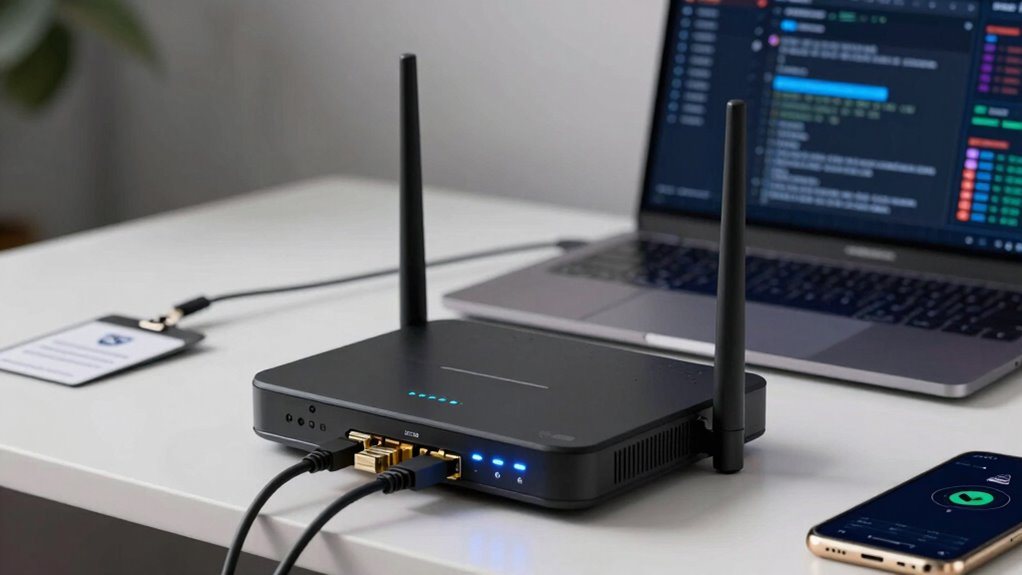

To secure your home network for trading, focus on enabling your VPN to auto-connect, use a reliable service with strong encryption, and avoid logging activity. Tighten your firewall rules by closing unused ports and limiting remote access to trusted IPs. Keep your router firmware up-to-date and regularly review security settings to adapt to new threats. Mastering these settings helps protect your financial data—discover more tips to strengthen your network defenses.

Get home office essentials delivered free with Prime
- Fast, free delivery on millions of items
- Prime Video, Amazon Music and more included
- Member-only deals all year
Key Takeaways
- Enable WPA3 or WPA2 encryption on your router to secure your Wi-Fi network during trading activities.
- Change default admin passwords and disable remote management to prevent unauthorized access.
- Enable VPN and set it to auto-connect for secure, encrypted internet traffic during trading sessions.
- Close unused ports and restrict remote access to trusted IP addresses to minimize vulnerabilities.
- Regularly update router firmware and review security settings to stay protected against emerging threats.
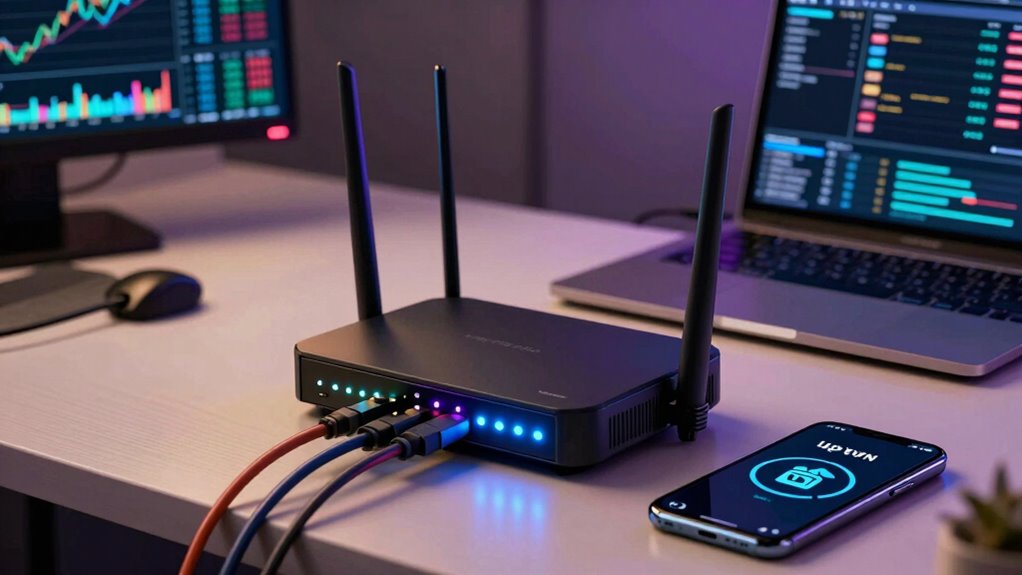
In today’s digital age, safeguarding your home network is essential for secure trading. Whether you’re handling sensitive financial information or executing high-stakes transactions, your network’s security directly impacts your safety and success. One of the most effective ways to protect your data is by properly configuring your router’s security settings, especially focusing on VPN configurations and firewall rules. These settings act as the first line of defense against cyber threats and unauthorized access, giving you peace of mind while trading from home.
When it comes to VPN configurations, you want to make certain that your virtual private network is set up correctly. A VPN encrypts your internet traffic, making it much harder for hackers to intercept or decipher your data. Check that your VPN is enabled and configured to automatically connect whenever you go online, especially during trading sessions. Use a reliable VPN service that offers strong encryption protocols and doesn’t keep logs of your activity. Also, make sure the VPN’s server location is appropriate for your needs—sometimes, connecting through a server in a different country can add an extra layer of security. Proper VPN setup ensures your sensitive data remains private, even if your home network faces external threats.
Ensure your VPN is enabled, set to auto-connect, and uses strong encryption for secure trading.
Firewall rules are equally critical in creating a secure trading environment. Your router’s firewall acts as a filter, blocking unwanted incoming traffic while allowing legitimate data to pass through. Explore your router’s settings and review the existing firewall rules. You should create customized rules that restrict access to ports and services that aren’t necessary for your trading activities. For example, close any open ports that are not actively used, as open ports can be exploited by cybercriminals. Set rules to limit remote access, only permitting connections from trusted IP addresses if remote login is required. Regularly update your firewall rules to adapt to new threats, and avoid using broad or default settings that could leave your network vulnerable. Ensuring your network security is properly configured can significantly reduce potential attack vectors.
Together, VPN configurations and firewall rules form a robust security foundation for your home trading setup. They work in tandem to encrypt your data and block malicious traffic. Don’t overlook these settings—taking the time to fine-tune them can considerably reduce your risk of cyberattacks. Keep your firmware updated and review your security settings periodically to stay ahead of evolving threats. By actively managing your VPN and firewall rules, you’re building a resilient barrier that safeguards your financial information and keeps your trading activities private. Your proactive approach to router security isn’t just about compliance; it’s about protecting your assets and trading confidence in today’s increasingly connected world.
Products Worth Considering

Samsung 27-inch Odyssey OLED G6 QD-OLED QHD Gaming Monitor

Logitech MX Mechanical Full-Size Wireless Mechanical Keyboard, Tactile Quiet Switches, Backlit Keys, Bluetooth, USB-C, Multi-Device, Graphit

Logitech MX Keys S Wireless Keyboard, Graphite
As an affiliate, we earn on qualifying purchases.
Frequently Asked Questions
How Often Should I Update My Router’s Firmware?
You should update your router’s firmware as often as possible, ideally every few months or when the manufacturer releases new updates. Firmware updates improve security, fix bugs, and enhance performance. Keep up with network monitoring to spot potential issues early. Regular updates help protect your trading activities from vulnerabilities, ensuring your network stays secure. Don’t ignore firmware updates—they’re key to maintaining a safe, reliable home trading environment.
What Is the Best Wi-Fi Password for Trading Security?
You might think a simple password is enough, but for trading security, a strong password is essential. Use a mix of uppercase and lowercase letters, numbers, and symbols to boost password complexity. Avoid common words or easily guessable info. A strong password helps protect your financial data and prevents unauthorized access. Regularly update it, and never reuse passwords across different accounts to keep your trading activities secure.
Can VPNS Improve My Trading Network Security?
Yes, VPNs can improve your trading network security. They use VPN encryption to protect your data from hackers and IP masking to hide your real location, making it harder for cybercriminals to target you. By routing your internet traffic through a secure server, VPNs help keep your sensitive trading information private. Always choose a trusted VPN provider to guarantee maximum security and avoid potential vulnerabilities.
How Do I Identify Unauthorized Devices on My Network?
Think of your network as a bustling city—unauthorized devices are like uninvited guests. To spot them, perform regular device monitoring and network scanning through your router’s admin panel or dedicated apps. Look for unfamiliar IP addresses or device names, and disconnect anything suspicious. Stay vigilant; keeping tabs on your network helps prevent potential security breaches and keeps your trading environment safe from lurking threats.
Is Dual-Band Wi-Fi Better for Trading Security?
Yes, dual-band Wi-Fi is better for trading security because it offers dual band benefits, such as reducing interference, which guarantees a stable and fast connection. Less interference means fewer disruptions during important trades, keeping your data safe. Plus, you can separate your trading devices onto a different band, minimizing potential security risks. Overall, dual-band Wi-Fi enhances both connection reliability and security for sensitive trading activities.
Conclusion
Just like a fortress guards its treasures, your home network must stand strong against threats. By tweaking your router settings, you’re safeguarding your trades and personal info, much like a knight shields their domain. Remember, the right choices now keep hackers at bay and guarantee your financial kingdom remains secure. Think of your network as your personal Camelot—secure, private, and ready for your next victorious trade. Stay vigilant, and your digital castle will stand the test of time.