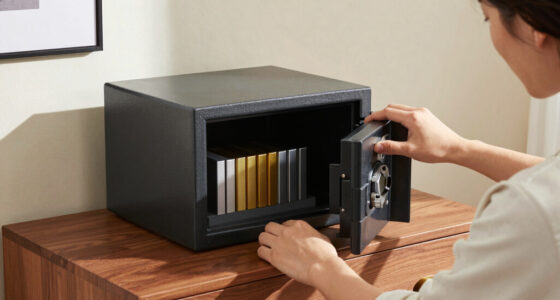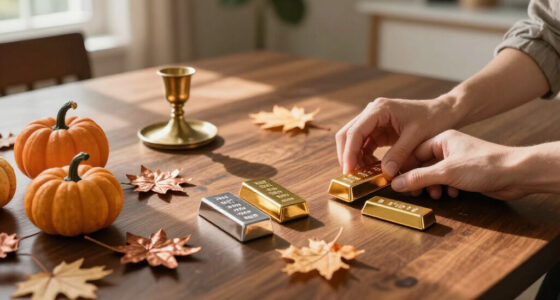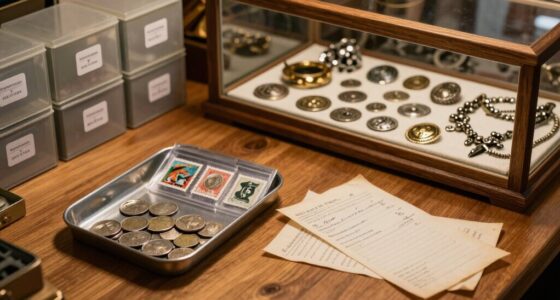

To separate collection value from metal value, you should first check the current market prices of the precious metal. Then, consider factors like rarity, condition, provenance, and historical importance, which can considerably boost an item’s worth beyond its metal content. Be aware that market fluctuations mainly affect metal value, while collection value tends to stay stable or grow over time. If you want to understand how to evaluate both aspects carefully, there’s more to discover.

Get home office essentials delivered free with Prime
- Fast, free delivery on millions of items
- Prime Video, Amazon Music and more included
- Member-only deals all year
Key Takeaways
- Evaluate the item’s rarity, provenance, and historical significance alongside its physical condition.
- Research current precious metal market prices to determine intrinsic metal content value.
- Consider the item’s age, rarity, and notable associations to assess collection or historical value.
- Consult experienced appraisers to differentiate between intrinsic metal worth and collectible premium.
- Recognize that market fluctuations mainly affect metal value, while collection value often remains stable.
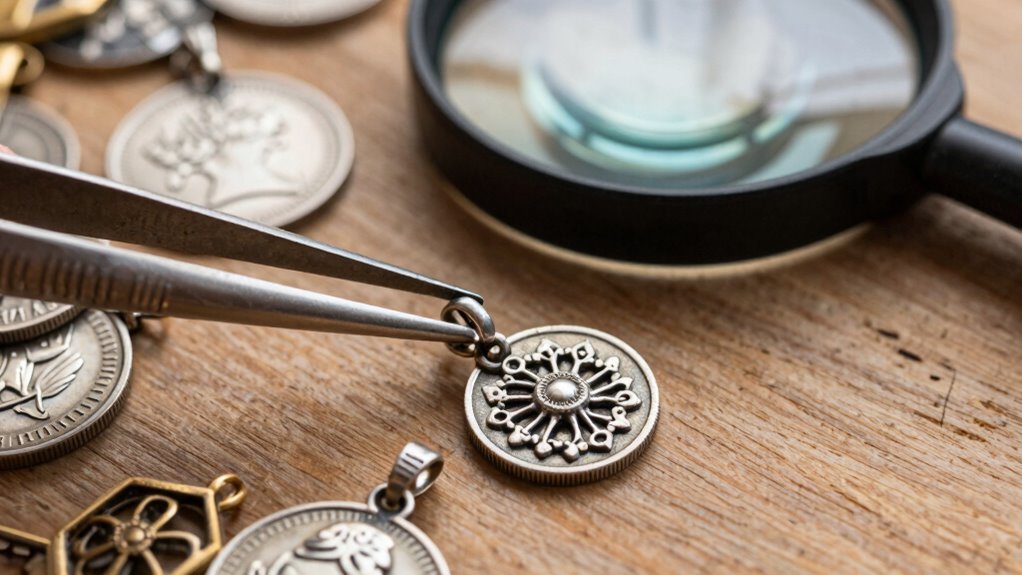
When you’re evaluating collectibles that contain precious metals, it’s important to distinguish between their collection value and their metal value. The metal value is straightforward—it’s the current worth of the precious metal content based on market prices. However, the collection value depends on factors like rarity, condition, provenance, and, significantly, historical significance. Recognizing these differences helps you make smarter decisions whether you’re buying, selling, or appraising.
Distinguish between collection value and metal value to make smarter buying, selling, or appraising decisions.
The market fluctuations of precious metals can be quick and unpredictable, often driven by economic trends, geopolitical events, or changes in supply and demand. These fluctuations directly impact the metal value of your collectibles. For example, if gold prices spike, the metal value of a gold coin or bar increases, but that doesn’t always mean the collectible is more valuable to collectors. The market value can rise sharply, but the collectible’s overall worth might not change substantially if it lacks rarity or historical importance. Conversely, during dips in metal prices, a coin with significant historical significance might retain or even increase its collectible value because of its unique features, not its metal content.
Understanding the historical significance of a collectible is essential when separating its collection value from its metal value. Items with a rich history or association with notable events, figures, or periods often command premium prices independent of their metal content. For instance, a rare coin used in a famous historical event may be worth far more to collectors than its metal weight suggests. These items tend to hold their value better during market downturns because collectors seek their historical importance rather than just their precious metal content. Additionally, market volatility can influence how collectors perceive the value of such collectibles over time, making it crucial to consider both economic and historical factors in your evaluations. Being aware of economic trends can also help you anticipate how market conditions might affect your collectibles’ worth, especially in the short term. Moreover, understanding the intrinsic value of a piece can help you differentiate between its true worth and market-driven fluctuations, ensuring more accurate appraisals.
To accurately gauge a collectible’s worth, you need to evaluate both its metal content and its collectibility factors. Check the current market prices for the precious metal, but also research its rarity, condition, and historical background. Remember that market fluctuations can temporarily inflate or deflate the metal value, but the historical significance rooted in history often remains more stable over time. If you’re unsure, consulting with experienced appraisers or collectors can give you better insight into what truly influences a collectible’s worth, helping you avoid overestimating based solely on metal prices. Ultimately, knowing how to separate these values allows you to make more informed decisions, whether you’re investing or simply appreciating your collection.
As an affiliate, we earn on qualifying purchases.
Frequently Asked Questions
How Do Market Fluctuations Affect Collection and Metal Values?
Market fluctuations directly impact both collection and metal values. When market trends shift, metal prices can rise or fall rapidly, affecting your collection’s worth. You should stay updated on current market conditions to guarantee valuation accuracy. Fluctuations may also influence collector interest, so monitoring trends helps you gauge the right time to sell or hold. Being aware of these changes allows you to make informed decisions and maximize your collection’s value.
Can Rare Collectibles Have Higher Collection Value Than Metal Value?
Yes, rare collectibles can have a higher collection value than their metal content. You determine this through rarity assessment and condition grading, which influence a collectible’s desirability. Even if the metal value is low, a unique item in pristine condition can fetch a premium among collectors. Your appraisal considers these factors, often resulting in a value that exceeds just the metal’s worth, especially for rare, well-preserved pieces.
What Tools Are Best for Testing Precious Metal Purity?
For metal testing and purity verification, you should use a digital gold tester or an acid test kit. A digital tester provides quick, accurate results and is easy to operate, making it ideal for most precious metals. Acid test kits are affordable and reliable but require careful handling. You might also consider X-ray fluorescence (XRF) analyzers for precise, non-destructive testing, especially for larger or valuable items.
How Often Should I Reassess My Collection’s Value?
You should reassess your collection’s value at least once a year using updated valuation methods and appraisal frequency. Market prices fluctuate, so regular check-ins help guarantee accurate valuations. If you acquire new items or notice significant market changes, consider more frequent appraisals. Staying proactive helps you understand your collection’s worth, whether for insurance, sale, or personal interest, keeping you informed about its current market value.
Are There Legal Considerations When Separating or Selling Metals?
Like steering through a minefield, separating or selling metals involves legal regulations and ethical considerations you can’t ignore. You must understand local laws about metal ownership, sales, and taxes. Make certain you’re not dealing with stolen or illegally obtained metals, and follow proper documentation procedures. Ignoring these rules can lead to fines or criminal charges. Always research your jurisdiction’s laws or consult a legal expert to stay compliant and act ethically.
gold coin collection display case
As an affiliate, we earn on qualifying purchases.
As an affiliate, we earn on qualifying purchases.
Conclusion
To maximize your collection’s worth, always differentiate between its artistic or sentimental value and the metal content. For instance, a vintage coin might fetch a high price for its rarity, but its metal value could be minimal. By researching and appraising each aspect separately, you guarantee you get the true value of your items. Remember, understanding these distinctions helps you make informed decisions, whether selling or preserving your collection for future enjoyment.
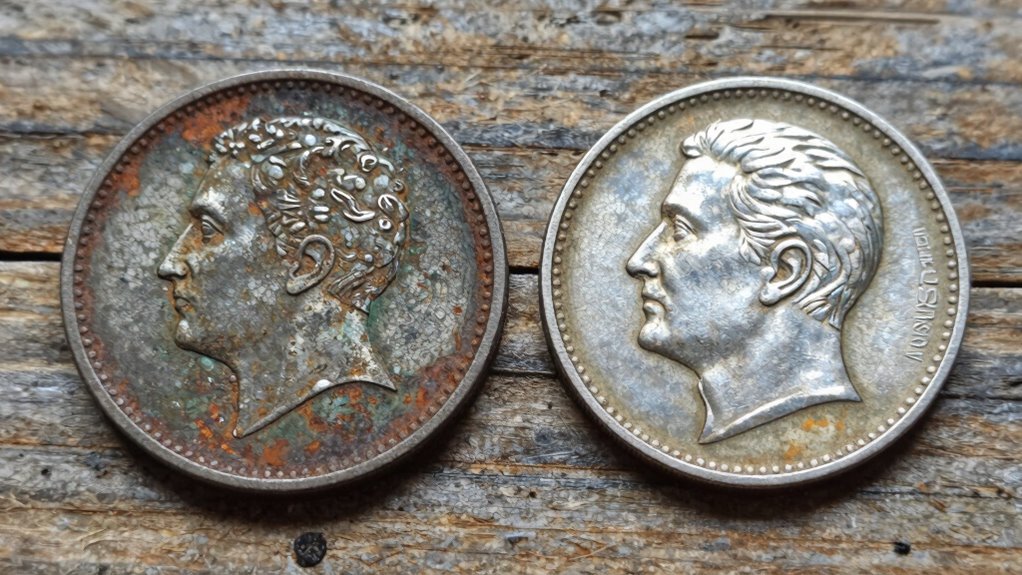
historical silver coin collection
As an affiliate, we earn on qualifying purchases.
As an affiliate, we earn on qualifying purchases.
As an affiliate, we earn on qualifying purchases.
Halloween Picks
halloween
As an affiliate, we earn on qualifying purchases.