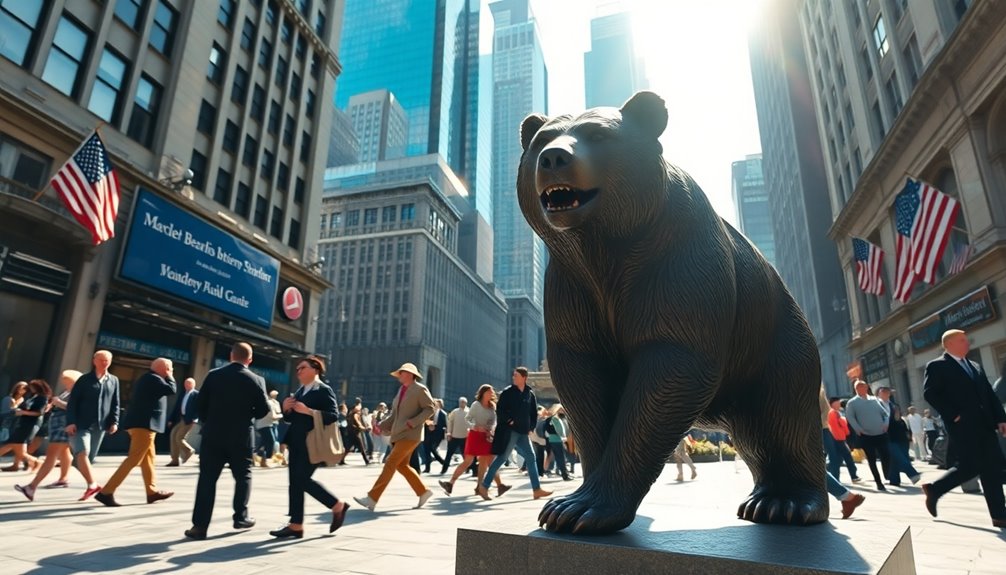

When you hear the term "bear market," it might evoke images of declining stocks and investor anxiety. But did you know this phrase has roots dating back to the 1700s? The story behind it isn't just about economic downturns; it connects to speculative trading and bearskins. Understanding this origin can shift your perspective on market dynamics and the risks involved. What does a bear really symbolize in the world of finance?

As you delve into the world of finance, you'll likely encounter the term "bear market," a phrase with roots dating back to the early 1700s. This intriguing term connects to speculative practices of the time, where traders engaged in risky ventures involving bearskins. The phrase "don't sell the bear's skin before you've caught the bear" aptly illustrates a cautionary approach to short selling, where traders would sell stocks they didn't own in hopes of profiting from falling prices. This early usage laid the foundation for the bear market phenomenon we recognize today.
The bear market's association with declining stock prices is significant. It typically represents a drop of 20% or more from recent highs, signaling a downturn that can generate fear and uncertainty among investors. Historical events, such as the collapse of the South Sea Company, exemplify the kind of market turmoil that birthed this term. The bear's swiping motion—downward—provides a visual metaphor for falling prices, while some suggest that scarce offers on bulletin boards contributed to the name. However, the connection to speculative trading practices is far more credible.
Understanding the economic impact of a bear market is crucial. Such markets create volatility, lead to significant losses, and diminish investor confidence. Events like the 1929 stock market crash and the dotcom bubble burst reveal just how devastating a bear market can be. Since 1942, there have been 15 bear markets that have shaped investor strategies and market behaviors.
Yet, it's important to note that bear markets often precede recoveries, transitioning into bull markets as prices stabilize and sentiment improves.
In modern finance, the definition remains consistent: a bear market is characterized by a decline of at least 20% in stock prices. This concept has evolved into a broader dialogue about market dynamics, where "bull" and "bear" symbolize opposing trends. Financial media frequently uses these terms to provide context for market conditions, helping investors gauge their strategies.
As an investor, you'll likely adjust your approach during bear markets, focusing on defensive positions while awaiting recovery. Market indicators like the S&P 500 serve as benchmarks for tracking these conditions.
Understanding the origins and implications of bear markets will empower you to navigate the complexities of finance more effectively, turning historical lessons into actionable insights for your investment journey.

Charting and Technical Analysis
- Charting and Technical Analysis: Advanced charting tools for analysis
As an affiliate, we earn on qualifying purchases.
As an affiliate, we earn on qualifying purchases.

ASSET REVESTING: HOW TO EXCLUSIVELY HOLD ASSETS RISING IN VALUE, PROFIT DURING BEAR MARKETS, AND CONTINUE BUILDING WEALTH IN RETIREMENT
As an affiliate, we earn on qualifying purchases.
As an affiliate, we earn on qualifying purchases.

Day Trading with Stochastic Oscillator: How to Trade Smarter by Decoding Market Trends and Reversals in achieving Consistent Wins. (Day Trading with Different Indicators)
As an affiliate, we earn on qualifying purchases.
As an affiliate, we earn on qualifying purchases.

12Pcs Trading Chart Pattern Posters Candlestick Pattern Poster Bulletin Board Crypto and Stock Market Trading Poster Office Decorations for Trader Investor Supplies Wall Door Decor 11 x 15.7 Inches
- Complete Trading Pattern Set: Includes 12 posters and 100 adhesive dots
- Professional Design: Sleek black background with clear layout
- High-Quality Materials: Thick, durable, laminated card stock
As an affiliate, we earn on qualifying purchases.
As an affiliate, we earn on qualifying purchases.