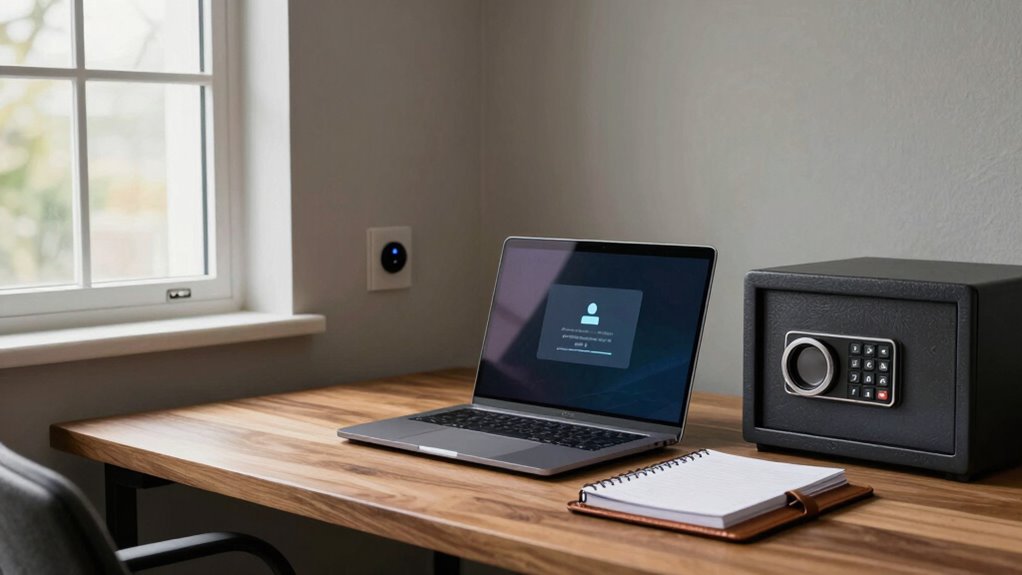

To create a secure home office for financial decision-making, make sure your devices are protected with strong passwords, encryption, and up-to-date security software. Enable multi-factor authentication on all accounts and keep your Wi-Fi network secured with a unique password, ideally set up a separate network for work devices. Regularly update your router firmware and avoid public Wi-Fi without a VPN. Keep security front and center, and you’ll build a safer environment — there’s always more to think about for robust protection.
Open a free Amazon Business account
Business pricing, bulk buying and tax-exempt orders.
As an affiliate, we earn on qualifying purchases.
Key Takeaways
- Set up a separate, encrypted Wi-Fi network for work devices to isolate financial data from personal devices.
- Enable multi-factor authentication on all financial accounts and work-related platforms.
- Keep all software, antivirus, and security protocols regularly updated to protect against emerging threats.
- Use strong, unique passwords and enable automatic security updates on all devices used for financial decisions.
- Avoid public Wi-Fi; use a trusted VPN to securely access financial information remotely.
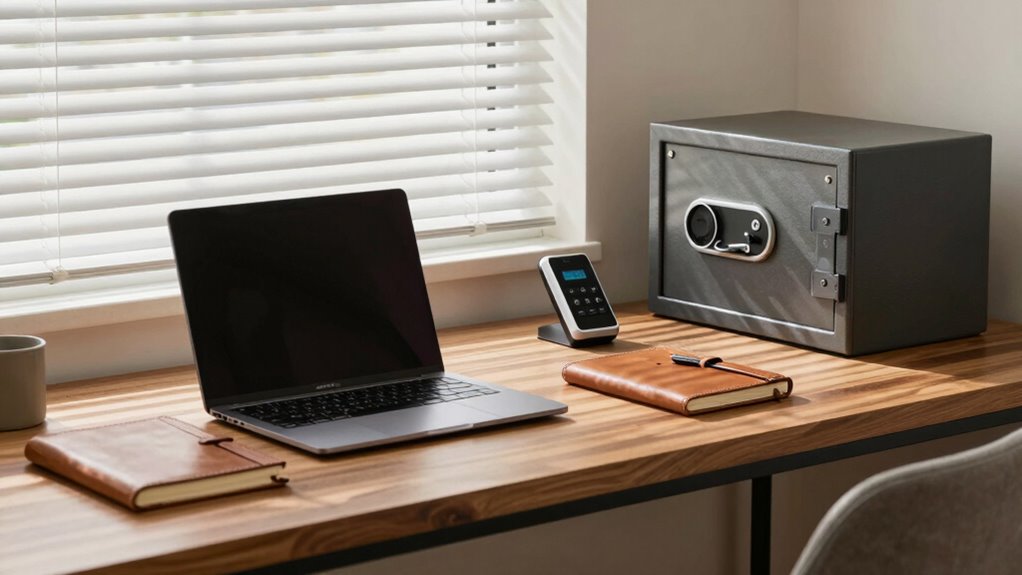
Creating a secure home office for financial decision-making is essential in today’s digital landscape, where sensitive information is constantly at risk. You need to implement robust security measures to protect your financial data from cyber threats and unauthorized access. One of the first steps is to use data encryption. This process converts your information into an unreadable format, making it useless to anyone who intercepts it. Whether you’re transferring files or storing data locally, encryption ensures that even if hackers get past your defenses, they can’t access your sensitive information. Make certain your devices and cloud services support strong encryption standards, and regularly update your security protocols to stay ahead of emerging threats.
Encrypt your data and keep security protocols updated to protect sensitive financial information from cyber threats.
Equally important is setting up multi-factor authentication (MFA). This adds an extra layer of security beyond just a password, requiring you to verify your identity through two or more methods. For example, after entering your password, you might receive a one-time code on your mobile device or use biometric verification like fingerprint or facial recognition. MFA considerably reduces the risk of unauthorized access because even if someone guesses your password, they still need to pass additional verification steps. Enable MFA on all your financial accounts, email, and any cloud-based storage, so your data remains protected even if your login credentials are compromised.
Your home network is another critical area to secure. Use a strong, unique Wi-Fi password and consider setting up a separate network for your work devices. This isolates your financial data from other household devices, preventing potential malware or hacking attempts from spreading. Regularly update your router’s firmware and disable features you don’t need, like remote management, to minimize vulnerabilities. Additionally, understanding cybersecurity best practices can help you stay proactive against emerging threats and safeguard your digital environment. Implementing regular software updates is also vital, as they often include patches for security vulnerabilities that could be exploited by hackers. Staying informed about cybersecurity threats can further enhance your defenses by alerting you to new attack methods and scams. Being aware of common phishing scams can help you recognize and avoid malicious attempts to steal your information.
Furthermore, pay close attention to your devices’ security. Install reputable antivirus and anti-malware software, and keep it up to date. Password-protect your devices and enable automatic updates to patch security flaws promptly. Be cautious about using public Wi-Fi networks for financial activities; if necessary, use a trusted Virtual Private Network (VPN) to encrypt your internet traffic and keep your information secure.
home Wi-Fi network security router
As an affiliate, we earn on qualifying purchases.
As an affiliate, we earn on qualifying purchases.
Frequently Asked Questions
What Are the Best Practices for Securing Wi-Fi Networks?
To secure your Wi-Fi network, start with strong Wi-Fi encryption like WPA3 to protect your data. Enable a unique, complex password and change it regularly. Use network segmentation to separate your financial devices from other home devices, reducing risks. Keep your router’s firmware updated for security patches. Disable remote management and guest networks unless necessary. These steps help safeguard your financial decision-making environment from cyber threats.
How Often Should I Update My Security Software?
Think of your security software like a garden; it needs regular tending to stay healthy. You should update it at least once a month to patch vulnerabilities. Incorporate robust password management and backup strategies to protect your financial data. I once ignored updates, and a ransomware attack nearly compromised my files. Staying vigilant guarantees your home office remains a fortress, guarding your financial decisions against evolving cyber threats.
What Types of Physical Locks Are Most Effective?
The most effective physical security lock types include deadbolts, high-security padlocks, and electronic locks. Deadbolts provide strong resistance against forced entry, while high-security padlocks use hardened materials to prevent tampering. Electronic locks add convenience and can be programmed with unique codes or biometric access. Combining these lock types enhances your home office’s physical security, making it considerably harder for intruders to gain unauthorized access and protecting your financial decision-making space.
How Can I Securely Share Financial Documents Remotely?
You can securely share financial documents remotely by using encrypted file sharing services or secure cloud storage platforms. These tools encrypt your files during transfer and storage, protecting sensitive data from unauthorized access. Always enable two-factor authentication and set strong, unique passwords. Regularly update your software to patch security vulnerabilities. Avoid sharing documents via email, and consider access controls to restrict who can view or edit your files.
What Are Common Cybersecurity Threats Faced by Home Offices?
Like a fortress under siege, your home office faces threats such as phishing attacks and malware infections. Cybercriminals often impersonate trusted sources to steal sensitive info or infect your devices. You might unknowingly click malicious links or download harmful files. To defend yourself, stay vigilant, update software regularly, and use strong, unique passwords. Recognizing these common threats helps you better safeguard your financial data and maintain a secure working environment.
multi-factor authentication security key
As an affiliate, we earn on qualifying purchases.
As an affiliate, we earn on qualifying purchases.
Conclusion
Creating a secure home office isn’t just about technology; it’s about building a space where focus and confidence naturally align. As you implement these measures, you might find that protecting your financial decisions becomes second nature—almost like a fortunate coincidence. With a little effort, you’ll create an environment where secure decision-making flows effortlessly, reminding you that sometimes, the smallest precautions lead to the biggest peace of mind. After all, security often starts where you least expect it.
As an affiliate, we earn on qualifying purchases.
encryption software for data protection
As an affiliate, we earn on qualifying purchases.
As an affiliate, we earn on qualifying purchases.
NFL season / tailgating Picks
team gear
As an affiliate, we earn on qualifying purchases.