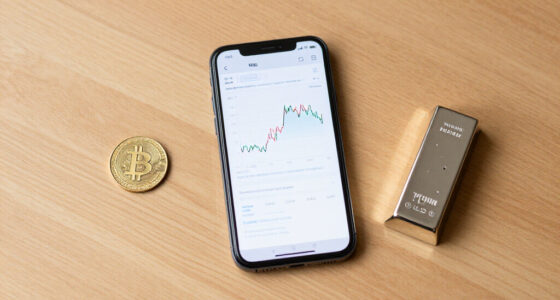
You might have heard that El Salvador has officially stopped accepting Bitcoin as legal tender. This change comes after significant public pushback and is tied to an IMF loan condition. While you're likely aware of the initial excitement surrounding Bitcoin's adoption, this reversal raises questions about the future of cryptocurrency in the nation. What implications does this shift hold for other countries considering similar paths?

Get home office essentials delivered free with Prime
- Fast, free delivery on millions of items
- Prime Video, Amazon Music and more included
- Member-only deals all year
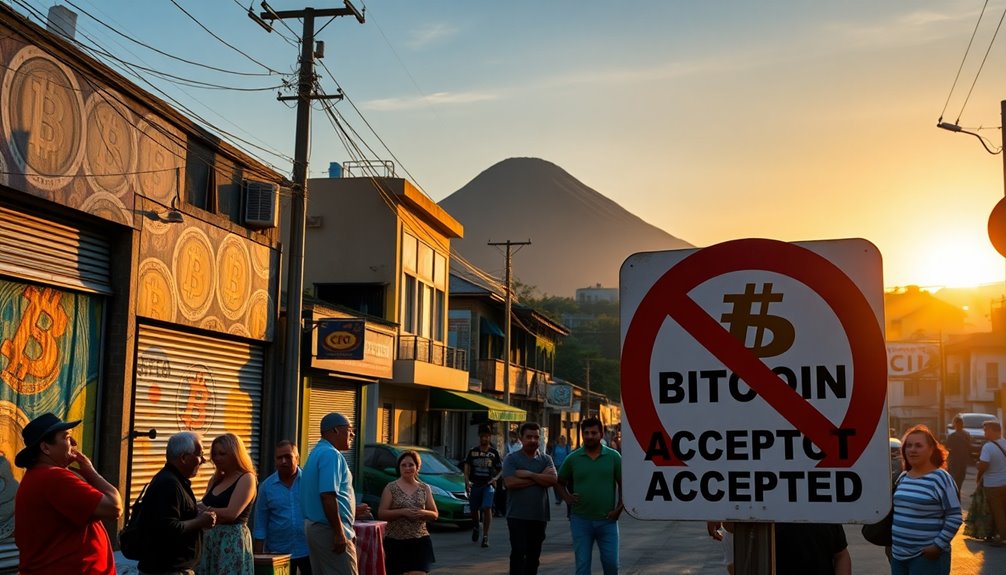
In a bold move that captured global attention, El Salvador became the first country to adopt Bitcoin as legal tender in 2021. The Legislative Assembly approved the Bitcoin Law on June 9, 2021, marking a significant shift in the country's financial landscape. You saw Bitcoin operating alongside the U.S. dollar, which remained the primary official currency. The Salvadoran government launched the Chivo wallet to facilitate these Bitcoin transactions, aiming to improve financial inclusion for the unbanked population and simplify remittances from abroad.
El Salvador made history by adopting Bitcoin as legal tender, introducing the Chivo wallet to boost financial inclusion.
However, despite the initial optimism, significant challenges soon emerged. Public skepticism was rampant, with many Salvadorans unsure about how Bitcoin worked. Polls indicated a majority opposed the adoption, and businesses were reluctant to accept it. You probably noticed that the Chivo wallet faced technical issues, including hacking incidents, which further fueled distrust in the system. Environmental concerns about Bitcoin mining also sparked debates, and the International Monetary Fund (IMF) pressured El Salvador to reconsider its Bitcoin policy.
As the years rolled on, the anticipated economic growth didn't materialize. Bitcoin failed to significantly improve the economy or enhance financial inclusion as hoped. The expected benefits for remittances weren't fully realized either, and foreign investment didn't increase as anticipated. The volatility of Bitcoin discouraged widespread adoption, leaving many businesses and individuals hesitant to engage with it. By 2024, you'd find that most businesses didn't use Bitcoin for transactions, leading to protests and international criticism of the policy. Notably, only 1.3% of remittances utilized Bitcoin, indicating limited impact on cross-border payments.
Fast forward to early 2025, when the Salvadoran Congress agreed to revise the Bitcoin Law. The IMF made removing Bitcoin's legal tender status a condition for a $1.4 billion loan, which became a key factor in this decision. Now, businesses aren't required to accept Bitcoin, and it won't be used for government payments.
However, you should know that private use of Bitcoin remains permissible, although its role has drastically shifted. The reversal of Bitcoin's status highlights the complexities involved in adopting a digital currency as legal tender. It serves as a reminder that while innovation can spark excitement, the path to implementation can be riddled with obstacles. El Salvador's Bitcoin experiment stands as a significant case study for other nations considering similar moves.
Products Worth Considering

FLEXISPOT 36-Inch Height-Adjustable Standing Desk Converter with Keyboard Tray, Black

Canon PIXMA TR160 Wireless Portable Color Inkjet Printer

Canon PIXMA MegaTank G3270 Wireless All-in-One Color Inkjet Printer
As an affiliate, we earn on qualifying purchases.