
TL;DR
Building an AI workstation used to be cheaper, but component shortages and bulk buying have flipped that script. Now, the choice hinges on workload, support, customization, and how much time you want to invest.
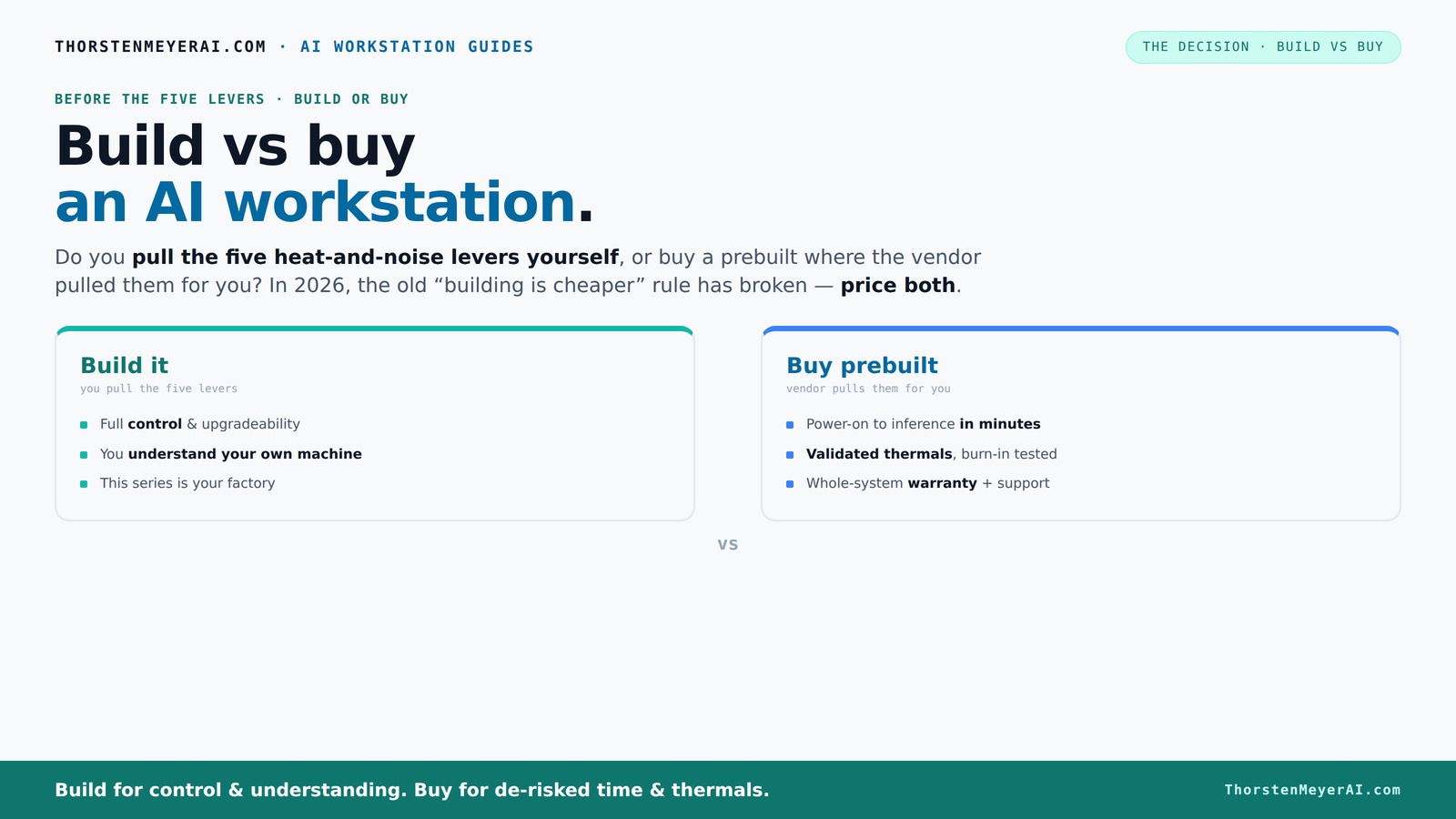
Build vs buy
an AI workstation.
The real question behind this whole series: do you pull the five heat-and-noise levers yourself, or buy a prebuilt where the vendor pulled them for you? And in 2026, the old “building is cheaper” rule has broken. Match your situation in Part 3.
Key Takeaways
- Component shortages in 2026 mean prebuilt AI workstations often match or beat DIY prices for high-end setups.
- Prebuilts save time, reduce risk, and include validated thermals, especially important for multi-GPU systems.
- Building your own offers control, customization, and easier future upgrades, but requires time and technical skill.
- Support and warranty are significant advantages of prebuilts, especially for business use or critical workloads.
- Always compare total costs and specs for your workload, not just individual component prices.

HP 2025 OmniDesk M03 Premium Business Next Gen AI Desktop Computer Intel Core Ultra 5 225(Up to 4.9GHz), 16GB DDR5 RAM, 512GB PCIe SSD, Wi-Fi 6, DP, 2-Monitor Support 4K, HDMI, Windows 11
- Next-Gen AI Performance: Powered by Intel Core Ultra 5-225 processor
- Fast DDR5 RAM & SSD: Up to 64GB RAM and 4TB SSD options
- Versatile Connectivity: Multiple USB ports, HDMI, DisplayPort, Ethernet, Wi-Fi 6
As an affiliate, we earn on qualifying purchases.
As an affiliate, we earn on qualifying purchases.
Why the old rule 'build is cheaper' no longer holds in 2026
Building your own AI workstation used to be the budget-friendly choice. But today, component shortages and bulk buying mean prebuilt systems often come at similar or even lower prices. A DIY rig that used to cost around $1,000 now easily pushes past $1,250, especially with high-end GPUs and DDR5 RAM in short supply. Large vendors like Dell or Lambda leverage their buying power to offer competitive prices, sometimes even undercutting DIY costs when you factor in time and support. According to recent data, the price gap has narrowed or flipped, especially for high-performance multi-GPU setups.
This shift changes the game: it’s no longer just about saving money. It’s about weighing support, reliability, and the hassle factor against raw component cost. The old rule of thumb — build for less, buy for convenience — no longer applies across the board.
Why does this matter? Because the tradeoffs extend beyond initial cost. Building your own machine might save money upfront, but it often requires significant time investment, troubleshooting, and ongoing maintenance. Prebuilts, while sometimes pricier initially, offer a more predictable experience, especially critical for professional workloads where downtime can be costly. This shift pushes users to prioritize reliability and support over raw hardware savings.
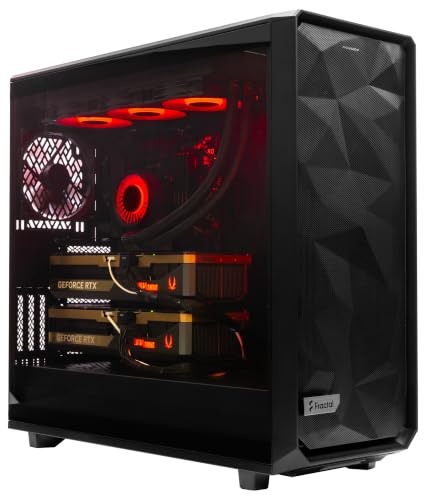
ArsenalPC MES2X Dual GPU AI Workstation - AMD Ryzen 9-9950X3D2 16 core 4.3GHz - Dual GPU GeForce RTX 5090-8TB (2x4TB RAID) NVMe SSD - 256GB DDR5-1600W - Windows 11 Pro - Liquid Cooled
- Processor: AMD Ryzen 9-9950X3D2 16-core 4.3GHz
- Memory: 256GB DDR5 RAM
- Graphics: Dual NVIDIA GeForce RTX 5090 64GB
As an affiliate, we earn on qualifying purchases.
As an affiliate, we earn on qualifying purchases.
The five levers: who pulls the heat and noise controls?
Running a high-power AI workstation is like managing a furnace. It needs careful tuning to stay cool and quiet. The question is: do you pull those levers yourself, or does the vendor do it for you? When you buy a prebuilt, the vendor handles everything: validating thermals, tuning fan curves, and often installing water cooling for silent operation. For example, BIZON claims systems are engineered for up to 30% lower noise and temperature, tested under load before shipping. You pay for that peace of mind.
If you build your own, you control every lever. You choose a quiet GPU, undervolt it (see how), select a cooler and case, set up airflow, and dial in fans. This gives you a machine tuned precisely to your workload, but it requires time, expertise, and ongoing adjustments.
Why does this matter? Because thermal management directly impacts performance, longevity, and user experience. An improperly cooled system might throttle performance during long training runs, leading to longer training times or even hardware failure. Conversely, overcooling can waste energy and increase noise. Support for thermal tuning often varies: prebuilts are tested to meet specific standards, reducing guesswork, while DIY setups demand ongoing attention to maintain optimal operation. Balancing noise, temperature, and power consumption is a nuanced task that can significantly influence your system’s reliability and operational costs over time.

Acer Veriton AI Mini Workstation Personal Computer GN100-UD11 Series
- Powerful AI Performance: 1 PFLOPS FP4 AI with NVIDIA GB10 chip
- Pre-installed NVIDIA DGX OS: Optimized for full NVIDIA AI stack
- High-Performance GPU and CPU: Blackwell GPU with 5th-gen Tensor Cores and 20-core Arm CPU
As an affiliate, we earn on qualifying purchases.
As an affiliate, we earn on qualifying purchases.
When a prebuilt makes sense: plug-and-play, support, and risk reduction
If your time is valuable and you want a reliable, ready-to-run machine, a prebuilt system often wins. Systems from vendors like Lambda or Puget come with validated thermals, warranty support, and pre-installed AI software stacks. For example, a multi-GPU setup tested for 48 hours before shipping means you avoid the headaches of BIOS tweaks, driver conflicts, or thermal throttling issues. Plus, if something breaks, support is just a phone call away.
Especially for multi-GPU rigs or high-end configurations, prebuilt systems are designed with proven cooling and power delivery. When you compare prices today, you might find the vendor’s bulk-buying power makes their systems surprisingly affordable, even compared to DIY costs.
Why does this matter? Because in high-stakes environments, the risk of system failure or downtime can outweigh initial cost savings. Prebuilts often come with warranties and support plans that reduce your exposure to hardware failures. This can save time and money in the long run, especially if your operations depend on consistent, predictable performance. Plus, prebuilt systems are often optimized for airflow and component compatibility, which can be difficult to achieve with a DIY build without extensive testing and expertise.

NEMIX RAM 64GB (2X32GB) DDR5 4800MHz PC5-38400 2Rx8 1.1V CL40 288-PIN ECC UDIMM KIT Compatible with Dell Precision 3680 Tower Workstation
- Exact-Match DDR5 Upgrade: 64GB (2x32GB) DDR5-4800 ECC RAM
- Wide Compatibility: Compatible with Dell, EPYC, Xeon, Sapphire Rapids
- Enterprise-Grade Stability: On-module ECC for error correction and data integrity
As an affiliate, we earn on qualifying purchases.
As an affiliate, we earn on qualifying purchases.
When building your own: control, customization, and future-proofing
Building your own AI workstation means you choose every part — from the GPU to the power supply. Want a quiet GPU and a custom cooling solution? Done. Need specific RAM speeds or NVMe SSDs? You pick them. This control allows you to tailor the machine exactly to your workload, whether it’s inference, training, or data prep.
Beyond immediate needs, DIY builds offer significant advantages in future-proofing. Standard parts and modular design mean you can upgrade components as new hardware becomes available, preventing obsolescence. For example, selecting a motherboard with PCIe 4.0 or 5.0 support ensures compatibility with next-gen GPUs, and choosing a high-capacity power supply provides headroom for future upgrades. This flexibility can save money and effort over the lifespan of your system, especially if your workload grows or evolves. Additionally, the ability to fine-tune cooling and airflow means you can optimize performance and noise levels, which is crucial during prolonged training sessions or high-demand inference tasks.
However, this level of control requires a deeper understanding of hardware and more time investment. For users who enjoy tinkering or need highly customized setups, building your own rig is a strategic choice that pays off in the long term.