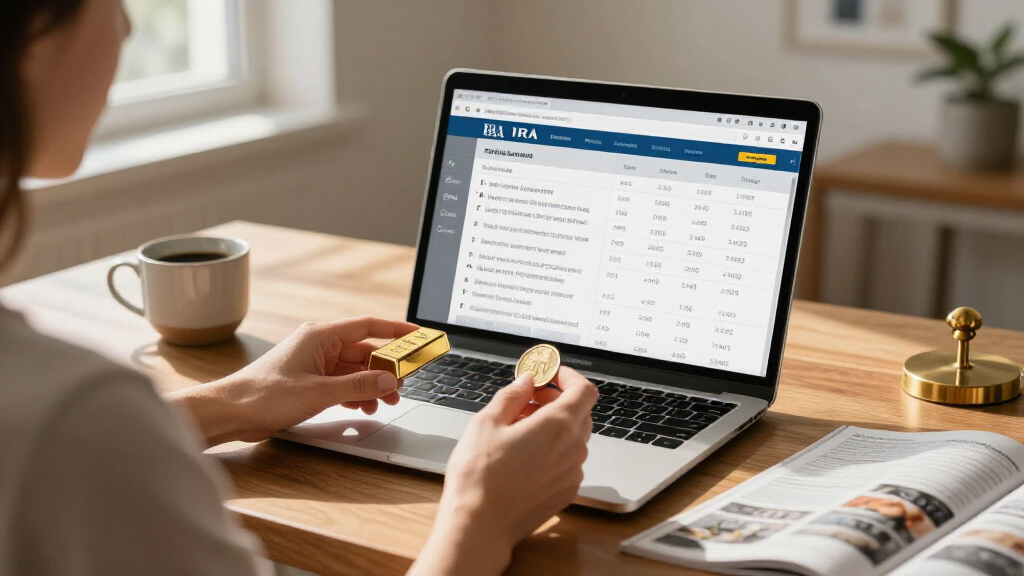
This checklist is for people researching a Gold IRA rollover who want practical tools for learning about precious metals and checking coins or jewelry. It covers reading and reference material alongside basic equipment, while keeping the focus on research rather than treating any tool as a substitute for professional advice.

Get home office essentials delivered free with Prime
- Fast, free delivery on millions of items
- Prime Video, Amazon Music and more included
- Member-only deals all year
The sections are organized by task: build your background with a book, consult a coin reference guide, then consider tools for weighing, testing, and examining items. The final section addresses bullion price tracking. Picks appear where provided; advice-only sections explain what to consider without naming a product.
Use this as a research checklist, not a shopping mandate. Before buying a tool, confirm what it is designed to measure or test, whether it suits the items you plan to examine, and what its instructions require. For IRA-specific decisions, verify account and product requirements with the relevant custodian or qualified professional.
Precious Metals Investing Books
Reading is a useful first step because it can help you form questions before evaluating coins, bullion, or IRA-related options. The listed pick is “Gold & Silver Buying Tips: Understanding and Mastering the Art of Prec”. The product name signals a focus on buying tips, but the name alone does not establish its contents, scope, or suitability for a particular reader. Check the full title, description, author information, and publication details before deciding whether it matches your research needs.
A common mistake is treating any single book as a complete guide to investing or account rules. Separate general buying education from current IRA requirements, which may depend on your custodian and the specific product under consideration. If a book discusses testing or valuing metals, look for clear explanations of its methods and limits rather than assuming that a short discussion replaces hands-on training or independent verification. Consider whether the material is understandable at your experience level and whether it addresses the questions you actually have. A book can support informed research, but it cannot confirm that a coin or item meets your IRA’s requirements.
What to look for:
- Confirm the complete title and publication details.
- Check that the subject matches your experience and questions.
- Look for clear explanations of methods and limitations.
- Distinguish general buying guidance from current IRA rules.
Gold & Silver Buying Tips: Understanding and Mastering the Art of Precious Metal

This book provides insights and strategies for buying gold and silver, helping investors understand market dynamics and make informed purchasing decisions. It covers essential tips for mastering the art of precious metal investing.
Pros:
- Provides valuable insights into precious metal investing
- Helps readers understand market dynamics
- Offers practical buying tips
Cons:
- No detailed specifications provided
- No customer reviews available
- Content may be too basic for advanced investors
Best for: Readers who want a book-led starting point for precious metals research
Not ideal for: People seeking verified, current IRA-specific guidance from a title alone
Bottom line: Use the listed book as a possible learning resource, then verify account-specific details independently.
Gold Coin Reference Guide
A reference guide can help you identify the questions to ask about a coin, such as how its name, markings, condition, or stated specifications are described. No product is specified for this slot, so choose a guide based on the coins you expect to research rather than buying a reference solely because it covers gold. Prioritize a clear identification scope and enough detail to distinguish the items relevant to your needs.
A frequent mistake is assuming that a reference description proves authenticity, condition, or IRA eligibility. A guide is a research aid, not a guarantee. Check whether its coverage matches the coin type and terminology you are encountering, and whether the edition or information is appropriate for your task. If you are comparing a physical item with a reference entry, use the guide to spot questions for follow-up—not to make a final determination from appearance alone. For rollover decisions, confirm product eligibility with the IRA custodian and consult a qualified specialist when identification or condition is uncertain. Fit here means informational fit: a useful guide should match your coins, your level of experience, and the decisions you need to make.
What to look for:
- Choose coverage that matches the coin types you are researching.
- Check the guide’s terminology and identification detail.
- Confirm that its information suits your research task.
- Treat reference entries as prompts for verification, not proof.
Digital Coin Scale
The listed pick is “Digital Bathroom Scale, 400 lb Capacity, Black.” Its product name describes a bathroom scale, not a coin scale, so do not assume it is suitable for weighing small coins or bullion. For this checklist slot, the key issue is matching the instrument to the object and measurement: a scale intended for people may not provide the resolution or platform needed for small items. Check the product’s stated units, display increments, and intended use before considering it for coin research.
A common buying mistake is focusing on the capacity number while overlooking readability and repeatability at the weight you need to measure. Compare the scale’s specifications with the size and mass of the items you plan to check, and confirm that the weighing surface can hold them securely. Follow the manufacturer’s setup and operating instructions, and avoid treating a single reading as proof of authenticity or metal content. If your goal is coin weighing, seek an instrument explicitly designed for small-object measurements and verify its specifications before purchase. The listed pick’s name alone does not establish that it meets those requirements.
What to look for:
- Confirm the scale is designed for small-object weighing.
- Check display increments and units, not just maximum capacity.
- Make sure the platform suits the items you will weigh.
- Review setup and operating instructions before use.
- Use readings as one research input, not an authenticity test.
Digital Bathroom Scale, 400 lb Capacity, Black

This digital bathroom scale measures weight in pounds or kilograms and turns on when you step on it, then shuts off automatically. It has a tempered-glass platform, a backlit LCD display, and a maximum capacity of 400 lb (180 kg); for best results, use it on a flat, hard surface.
Pros:
- Switches between pounds and kilograms
- Automatically turns on and off
- Tempered-glass platform with an easy-to-clean surface
- Backlit display
Cons:
- Requires a flat, hard surface and may not work reliably on carpet
- Manufacturer notes an error range of about 500 g
Best for: Shoppers comparing the listed scale’s specifications with their actual weighing needs
Not ideal for: Anyone who needs a coin scale without confirming the product’s intended use
Bottom line: The product name identifies a bathroom scale, so verify suitability before using it for coins.
Gold Testing Kit
The listed pick is “Gemtone All-in-One Jewelry Testing and Appraisal Kit with Solutions, D.” Its name describes a jewelry testing and appraisal kit with solutions, but it does not establish which metals it tests, what procedures it uses, or whether it is appropriate for bullion or IRA research. Before choosing it, review the complete product information and instructions, including the items and materials covered. A tool’s broad wording should not replace checking its specific capabilities.
One common mistake is treating a test result as a complete assessment of an item. Testing methods have limits, and the kit’s name alone does not tell you how results should be interpreted or whether solutions require particular handling. Read the directions, confirm the test is compatible with the item, and follow any stated safety guidance. Consider whether you are comfortable carrying out the procedure and whether you need an independent professional assessment for a consequential decision. For rollover research, keep testing separate from eligibility: a jewelry test does not by itself confirm that a product meets an IRA custodian’s requirements. If the kit’s scope or instructions are unclear, seek clarification before relying on it.
What to look for:
- Check which metals and item types the kit is intended to test.
- Read the full instructions and result-interpretation guidance.
- Review handling and safety directions for included solutions.
- Confirm the method fits the item you want to assess.
- Verify IRA eligibility separately with the custodian.
Gemtone All-in-One Jewelry Testing and Appraisal Kit with Solutions, Digital Sca

This comprehensive jewelry testing kit includes solutions, a digital scale, diamond tester, touchstone, magnifier, files, and reference bars for evaluating gold, silver, platinum, and diamonds. It features a precise digital scale with multiple weighing modes and larger test solution bottles for extended use.
Pros:
- Comprehensive set with multiple testing tools and solutions
- High-precision digital scale with versatile weighing modes
- Includes reference bars for practice and calibration
- Large test solution bottles for extended testing
Cons:
- Requires some familiarity with jewelry testing techniques
- Electronic diamond tester may need calibration over time
Best for: People comparing a jewelry testing kit with their specific testing needs
Not ideal for: Buyers expecting a kit name alone to confirm bullion content or IRA eligibility
Bottom line: Verify the kit’s coverage, procedure, and limits before relying on any result.
Coin Magnifying Loupe
The listed pick is “Coin Ping Tester Kit with 0.01g Digital Pocket Scale – All-in-One Gold.” The product name mentions a coin ping tester kit and a digital pocket scale, but it does not specify a magnifying loupe. If you need magnification to inspect markings or surface details, confirm that the product actually includes a loupe and check its specifications. Do not infer a feature from the section heading when the product name describes other tools.
For a loupe, consider whether the viewing area and magnification suit the details you want to examine, and whether the item can be held steadily during inspection. For the listed kit’s stated scale, check that its 0.01g resolution and operating instructions fit your intended measurements; the name alone does not establish overall accuracy or suitability. A ping test, a weight reading, and visual inspection each provide different information, and none should be treated as conclusive on its own. Confirm what is included, how each component is used, and whether your intended coin can be examined safely. For important purchase or rollover decisions, use independent verification and check eligibility with the relevant custodian.
What to look for:
- Confirm whether a loupe is actually included.
- Check magnification and handling suitability for the details you inspect.
- Verify the scale’s stated resolution and intended use.
- Understand what each test can and cannot establish.
- Use independent verification for consequential decisions.
Coin Ping Tester Kit with 0.01g Digital Pocket Scale – All-in-One Gold & Silver

This all-in-one coin testing kit includes a high-precision 500g/0.01g digital scale, resonance pinger, magnetic tester, and magnifying loupe, ideal for authenticating gold and silver coins. Compact and portable, it provides essential tools for collectors and dealers to verify the authenticity of precious metals anywhere.
Pros:
- Comprehensive all-in-one coin testing kit with digital scale, resonance pinger, and magnifier.
- High-precision 0.01g scale suitable for gold, silver, and other precious metals.
- Portable and travel-friendly design for use at coin shows, estate sales, or pawn shops.
- Includes multiple accessories like magnetic keychain and storage pouch for convenience.
Cons:
- Some users may find the resonance testing requires practice to interpret accurately.
- Limited to 500g capacity, not suitable for larger or heavier items.
- Battery life may vary; replacement batteries needed over time.
Best for: Shoppers assessing whether the named kit fits a coin-inspection workflow
Not ideal for: Anyone who needs a loupe without confirming that one comes with the kit
Bottom line: The product name describes a tester and pocket scale, so verify loupe inclusion and each tool’s limits.
Bullion Price Tracker
No product is specified for bullion price tracking, so choose a tracking method around the information you need rather than assuming one format suits everyone. Start by identifying whether you want to follow a stated bullion price, record observations over time, or compare information for research. Check how the source labels its data and whether its descriptions are clear enough for your purpose. A tracker is most useful when you understand what it records and what it leaves out.
A common mistake is treating a price display as a complete measure of a coin’s value, suitability, or IRA eligibility. Keep tracking separate from product due diligence, and confirm relevant details with the seller, custodian, or qualified professional. For consistent research, use the same categories and units when recording observations, note when information was checked, and avoid comparing entries that describe different products or terms. Decide how frequently you need to review information and whether the tracker makes its source and timing clear. Since no pick is provided here, evaluate tools on transparency, usability, and fit with your research routine rather than selecting one based on an unspecified feature.
What to look for:
- Check how the source identifies and describes its information.
- Confirm timing and units are clear for your comparisons.
- Use consistent categories when recording observations.
- Keep tracking separate from value and eligibility decisions.
- Choose a format that fits your research routine.
If you are buying in stages, start with reliable research: identify the questions you need answered, then choose reference material and tools that match those tasks. Next, verify that any scale, testing kit, or inspection aid is intended for your items and that you understand its limits. Consider a tracking method only after deciding what information you want to follow. Confirm IRA-specific requirements directly with your custodian before acting.
You do not need every tool at once. A focused checklist can help you avoid buying equipment that does not fit your purpose and keep research separate from eligibility decisions. Take one question at a time, check product details carefully, and seek qualified help when a result could affect a significant decision.
Halloween Picks
halloween
As an affiliate, we earn on qualifying purchases.