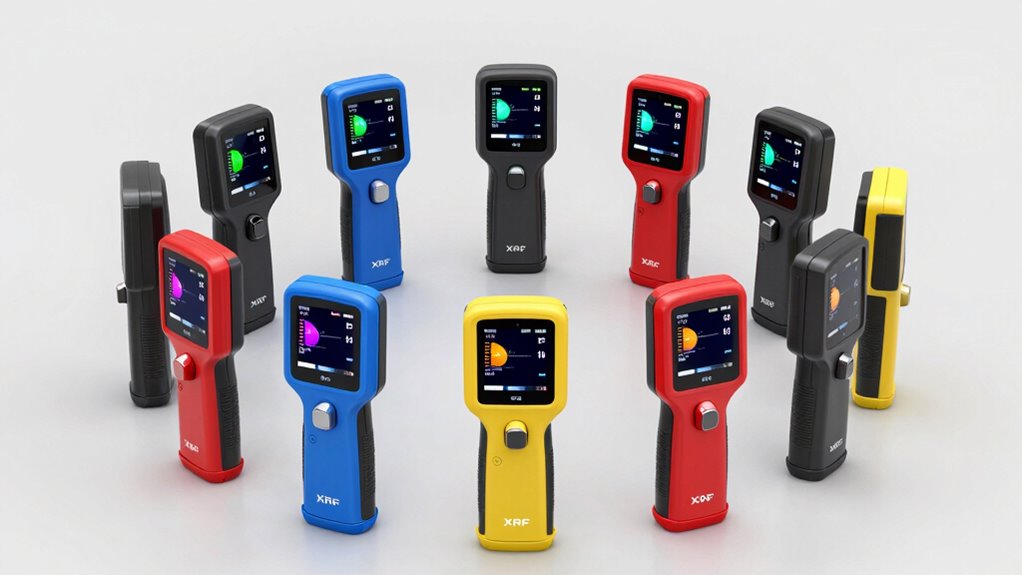
A handheld XRF analyzer can screen metals and other materials without cutting or melting a sample, but the right choice depends on what you test and how you use the results. My best overall pick is the DSF-S2, whose listed 25-element detection and 50 kV/200 µA specifications make it the clearest all-around industrial option in this group. The GOYOJO is a standout for alloy and precious-metal screening, while the HNZXIB is aimed at buyers focused on precious metals and fast readings. The main tradeoffs are application-specific calibration, instrument documentation, portability, and whether a claimed accuracy or element range is backed by usable specifications. Read on for the full comparison and guidance on matching an analyzer to your samples.

Get home office essentials delivered free with Prime
- Fast, free delivery on millions of items
- Prime Video, Amazon Music and more included
- Member-only deals all year
Key Takeaways
The DSF-S2 has the clearest stated industrial scope in this lineup, with 25-element detection and listed 50 kV/200 µA output; buyers should still verify its calibration packages and performance documentation.
The GOYOJO and HNZXIB are more directly positioned for precious-metal work, but a gold-focused analyzer is not automatically the best choice for ore, soil, or broad alloy identification.
Several listings describe similar handheld XRF functions without enough detail on calibration, detection limits, or support, so specification transparency separates stronger candidates from riskier purchases.
The 50 kV spectrometer with Si-PIN detector, six filters, and Peltier cooling provides the most explicit hardware description, but listed components alone do not establish accuracy or suitability for a particular material.
Ore analysis and precious-metal testing call for different application methods; choosing by product name or a headline accuracy claim instead of sample type and calibration can lead to misleading results.
| Hand-held XRF Analyzer Fluorescence Spectrometer for Ore Sample Metal Analysis |  | Best for Ore and Environmental Fieldwork | Technology: X-ray fluorescence spectrometry (XRF) | Applications: Ore samples, environmental surveys, alloy analysis, scrap recycling, and industry compliance | Data connection: USB 2.0 | VIEW ON AMAZON | See Our Full Breakdown |
| GOYOJO Handheld X-Ray Fluorescence Spectrometer – Alloy & Precious Metal Analyzer, Gold Testing Machine |  | Best for Portable Gold and Alloy Checks | Manufacturer: GOYOJO | Analyzer type: Handheld X-ray fluorescence spectrometer | Stated applications: Alloy and precious-metal analysis, including gold testing | VIEW ON AMAZON | See Our Full Breakdown |
| Handheld XRF Alloy Analyzer Spectrophotometer |  | Best for Detailed Alloy Identification | Elements analyzed: 25: Ti, V, Cr, Mn, Fe, Co, Ni, Cu, Zn, Se, Zr, Nb, Mo, Rh, Pd, Ag, Cd, Sn, Sb, Hf, Ta, W, Re, Pb, Bi | X-ray source: 50 kV / 200 µA exciton source | Detector: SI-PIN; energy resolution 149 ± 5 eV | VIEW ON AMAZON | See Our Full Breakdown |
| Handheld Metal Alloy Tester Portable XRF Gold Precious Metal Analyzer Spectrum Analyzer |  | Best for Simple One-Button Operation | Model: HT-312 | Analyzer type: Portable handheld XRF metal alloy tester | Stated detection range: Calcium to uranium | VIEW ON AMAZON | See Our Full Breakdown |
| Portable XRF Metal Analyzer – Handheld 50 kV Spectrometer with Si-PIN Diode Detector, 6 Filters & Peltier Cooling |  | Best for Rugged Field Conditions | Dimensions: 245 × 250 × 90 mm | Weight: 8.0 kg | X-ray tube power: 50 kV | VIEW ON AMAZON | See Our Full Breakdown |
| Hand-held XRF Analyzer – X-ray Fluorescence Spectrometer for Ore Sample Metal Analysis (JITAI9201) |  | Best for Ore Work and High-Capacity Logging | Model: JITAI9201 | Probe: High-sensitivity Si-pin/SDD | X-ray tube: 50 kV, 6–38 µA | VIEW ON AMAZON | See Our Full Breakdown |
| Handheld Spectrometer X-Ray Fluorescence Spectrometer XRF Alloy Analyzer (Truex 800) |  | Best for Straightforward Alloy Identification | Model: Truex 800 | Manufacturer: GOYOJO | Analyzer type: X-ray fluorescence spectrometer | VIEW ON AMAZON | See Our Full Breakdown |
| HNZXIB XRF Precious Metal Analyzer – Gold Silver Platinum Palladium Copper Tester with ±1PPM Accuracy, 60s Fast Testing |  | Best for Bench-Based Precious-Metal Testing | Analysis range: 1 ppm–99.99% | Listed elements: Au, Ag, Pt, Pd, Cu | Testing time: 60 seconds | VIEW ON AMAZON | See Our Full Breakdown |
| DSF-S2 Handheld XRF Analyzer – High‑Precision 25 Element Detection, Portable Precious Metal & Industrial Material Tester, Fast Non‑Destructive Analysis, 50 kV/200 µA X‑Ray Fluorescence |  | Best for Connected Field Inspections | Detector: SDD | X-ray source: 50 kV / 200 µA | Element coverage: 25 elements, titanium to bismuth | VIEW ON AMAZON | See Our Full Breakdown |
| Handheld XRF Metal Analyzer Gun, Portable Gold Tester, High Precision Element Detector for Gold, Alloy, Ore & Soil Analysis with Wireless Data |  | Best for Simple Touchscreen Operation | Power source: DC | Display: LCD | Item weight: 3.2 pounds | VIEW ON AMAZON | See Our Full Breakdown |
More Details on Our Top Picks
Hand-held XRF Analyzer Fluorescence Spectrometer for Ore Sample Metal Analysis
This analyzer makes the most sense for buyers who need one instrument across ore sampling, environmental surveys, alloy checks, and scrap sorting. Its stated strength is broad application coverage, while USB 2.0, Excel export, and Q-CLOUD provide practical ways to move results into reports. Compared with the DSF-S2 Handheld XRF Analyzer, the DSF-S2 lists its detector, element range, filters, and connectivity in much greater detail; this model’s listing leaves those performance specifics unclear. That makes it harder to judge fit for tightly defined analytical workflows. I’d shortlist it when flexible use and data handling matter more than a published technical profile, but not when a team needs clearly documented instrument limits or battery runtime.
Pros:- Non-destructive XRF analysis supports checks without consuming or damaging the sample.
- Listed for ore, environmental, alloy, recycling, and compliance applications.
- USB 2.0, Excel export, and Q-CLOUD support result sharing and reporting.
Cons:- The provided specifications do not state element coverage, detector type, or measurement limits.
- No battery capacity or operating runtime is listed.
- Effective operation may require technical knowledge and appropriate result interpretation.
Best for: Field teams that need a portable analyzer for varied ore, environmental, alloy, and recycling checks, with results exported to spreadsheets or cloud workflows.
Not ideal for: Buyers who need a documented element range, detector specifications, or stated battery life before selecting equipment.
- Technology:X-ray fluorescence spectrometry (XRF)
- Applications:Ore samples, environmental surveys, alloy analysis, scrap recycling, and industry compliance
- Data connection:USB 2.0
- Data export:Excel export
- Cloud service:Q-CLOUD
- First available:June 8, 2023
Our verdict“Choose this model for varied field and reporting needs, but prefer the DSF-S2 if published technical detail is a deciding factor.”
GOYOJO Handheld X-Ray Fluorescence Spectrometer – Alloy & Precious Metal Analyzer, Gold Testing Machine
GOYOJO is positioned around a straightforward use case: portable identification of alloys and precious metals, including gold, at home, in an office, or while traveling. That narrower emphasis may suit a buyer who wants a mobile testing tool rather than the ore-and-environment scope of the Hand-held XRF Analyzer Fluorescence Spectrometer. The limitation is the thin technical listing: it gives no element range, detector, measurement conditions, or data-transfer details. By comparison, the DSF-S2 names 25 detectable elements and lists its detector and connections, making its capabilities easier to evaluate before purchase. GOYOJO’s portability and stated ease of use are appealing, but without those details I would treat its fit for specific metals or formal inspection work as unverified rather than assume broad analytical coverage.
Pros:- Designed for portable alloy and precious-metal analysis, including gold testing.
- Described for use at home, in an office, or while traveling.
- A stated daily-use build may suit frequent movement between testing locations.
Cons:- No element coverage, detector type, or measurement details are provided.
- The listing does not specify connectivity, data export, or reporting tools.
- The stated accuracy and ease of use cannot be evaluated against published technical specifications.
Best for: Traveling jewelers, gold buyers, or small metal businesses seeking a portable analyzer for routine alloy and precious-metal identification.
Not ideal for: Laboratories, recyclers, or compliance teams that need a specified element range, detector performance, or documented measurement conditions.
- Manufacturer:GOYOJO
- Analyzer type:Handheld X-ray fluorescence spectrometer
- Stated applications:Alloy and precious-metal analysis, including gold testing
- Intended settings:Home, office, and travel
- First available:February 20, 2025
Our verdict“Consider GOYOJO for mobile gold and alloy checks only if its missing technical details are acceptable for your workflow.”
Handheld XRF Alloy Analyzer Spectrophotometer
The DSF-S2 is the clearest fit here for buyers who need to identify a broad range of alloys with documented hardware. Its stated coverage spans 25 elements, and the SI-PIN detector, automatic filter sets, and 50 kV/200 µA source give technical teams more to evaluate than the sparse listings for the GOYOJO or HT-312 analyzers. GPS, Wi-Fi, Bluetooth, USB 3.0, and a touchscreen also support field records and result transfer. That extra specification detail makes this a stronger candidate for industrial alloy work, not a guarantee of accuracy in every sample or workflow. The tradeoff is a potentially bulky handheld unit and the need for a trained operator to interpret readings. Buyers focused mainly on simple gold checks may not need its broader feature set.
Pros:- Lists 25 analyzed elements, including metals used in steel and specialty alloys.
- SI-PIN detector, stated energy resolution, and seven or more automatic filter sets provide a defined technical profile.
- GPS, Wi-Fi, Bluetooth, and USB 3.0 support location-aware records and data transfer.
- Touchscreen and camera can help capture sample and location context.
Cons:- The handheld unit may be bulky or tiring during extended field sessions.
- Accurate interpretation of XRF results requires a trained operator.
- Its broad industrial feature set may be unnecessary for buyers who only need occasional precious-metal checks.
Best for: Industrial inspectors, metal fabricators, and recycling teams that need documented coverage across common and specialty alloy elements with field data tools.
Not ideal for: Occasional gold testers or operators seeking a minimal, easy-to-carry device without training or a broad alloy workflow.
- Elements analyzed:25: Ti, V, Cr, Mn, Fe, Co, Ni, Cu, Zn, Se, Zr, Nb, Mo, Rh, Pd, Ag, Cd, Sn, Sb, Hf, Ta, W, Re, Pb, Bi
- X-ray source:50 kV / 200 µA exciton source
- Detector:SI-PIN; energy resolution 149 ± 5 eV
- Filters:Seven or more automatic switching filter sets
- Display:5-inch LCD touchscreen
- Operating system:Industrial-class Win-IOT OS
- Connectivity:GPS, Wi-Fi, Bluetooth, and USB 3.0
- Camera:High-resolution camera for sample photography and location tracking
Our verdict“Pick the DSF-S2 when alloy coverage and documented field connectivity matter more than a lighter, simpler precious-metal tester.”
Handheld Metal Alloy Tester Portable XRF Gold Precious Metal Analyzer Spectrum Analyzer
The HT-312 is aimed at users who value a simple operating approach: the description highlights one-button testing, remote control, and cross-platform data synchronization. That could be useful for a workflow where fast operation matters more than hands-on configuration. Its stated detection span, from calcium to uranium, sounds broad, but the listing does not give detector details, measurement conditions, or a defined accuracy figure. The DSF-S2 is a more convincing choice for buyers who want published element coverage and detector specifications; the HT-312 instead leans on ease of operation and data access. I would not treat its claim of laboratory-level precision as independently established from the provided data. Its dimensions are also listed as just 1 × 1 × 1 inches, an unusual figure that does not clarify practical handling.
Pros:- One-button operation is intended to reduce the steps needed to start a test.
- Remote control and multi-platform data synchronization are listed.
- The stated detection span extends from calcium to uranium.
- The listing identifies compatibility with multiple industry standards.
Cons:- No detector type, measurement conditions, or detailed element performance data are provided.
- The laboratory-level precision claim is not accompanied by supporting figures in the supplied description.
- The listed 1 × 1 × 1-inch dimensions do not establish practical size or handling.
Best for: Operators who prioritize a simple button-led workflow and remote or cross-platform access for routine metal-alloy checks.
Not ideal for: Technical buyers who need clear detector specifications, validated performance figures, or reliable physical dimensions before procurement.
- Model:HT-312
- Analyzer type:Portable handheld XRF metal alloy tester
- Stated detection range:Calcium to uranium
- Operation:One-button operation
- Data features:Remote control and multi-platform synchronization
- Material:Metal
- Listed dimensions:1 × 1 × 1 inches
- First available:February 22, 2023
Our verdict“Choose the HT-312 only when simple controls and remote data access outweigh the need for a well-documented technical specification.”
Portable XRF Metal Analyzer – Handheld 50 kV Spectrometer with Si-PIN Diode Detector, 6 Filters & Peltier Cooling
This analyzer distinguishes itself with a Si-PIN detector, six filters, and Peltier cooling, which the listing says holds the probe at −35 °C. Those details give field-oriented buyers a clearer hardware profile than the Hand-held XRF Analyzer Fluorescence Spectrometer, whose detector and cooling are not specified. USB, Bluetooth, and GPS also support moving results out of the instrument and associating them with locations. The main tradeoff is substantial: at 8.0 kg, it is heavy for a device described as handheld, and its listed dimensions make it a bulky option for frequent carrying. The DSF-S2 provides broader stated connectivity and a touchscreen, while this model foregrounds cooling and rugged field use. I’d favor it where those environmental features matter more than low carry weight.
Pros:- Si-PIN diode detector and six filters are specified.
- Peltier cooling is listed with a probe temperature of −35 °C.
- USB 2.0, Bluetooth, and GPS support data transfer and field location records.
- Two gigabytes of internal storage can hold results between transfers.
Cons:- The stated 8.0 kg weight is heavy for repeated handheld use.
- Its 245 × 250 × 90 mm dimensions may be awkward in compact field settings.
- The supplied data does not specify an element count or detailed measurement range.
Best for: Field technicians testing metals such as silver, tungsten, and tantalum who can work with a heavier instrument and value cooled-probe operation.
Not ideal for: Inspectors who carry an analyzer for long periods, need a lightweight handheld, or require a listed element count and touchscreen interface.
- Dimensions:245 × 250 × 90 mm
- Weight:8.0 kg
- X-ray tube power:50 kV
- Detector:Si-PIN diode
- Filters:6
- Cooling:Peltier; probe temperature −35 °C
- Storage:2 GB internal memory
- Connectivity:USB 2.0, Bluetooth, and GPS
- Battery:Lithium-ion
Our verdict“Choose this model for field use where cooled-probe hardware matters more than a light carry load or a clearly stated element range.”
Hand-held XRF Analyzer – X-ray Fluorescence Spectrometer for Ore Sample Metal Analysis (JITAI9201)
The GOYOJO JITAI9201 suits ore teams that need broad elemental coverage and room to retain a long run of results. Its listed Si-pin/SDD probe, six automatic filters, and two beam options are aimed at adapting measurements across different materials, while storage for up to 400,000 entries can reduce the need to offload data between sampling rounds. Compared with the DSF-S2, which adds GPS and Android-based syncing, this model emphasizes onboard record capacity and a Peltier-cooled probe instead. The tradeoff is its 1.5 kg handheld weight, which can tire users during long inspection sessions. Buyers should also confirm the offered configuration and operating workflow: the product data does not spell out software or calibration details.
Pros:- Listed Si-pin/SDD probe and automatic filters support varied sample analysis.
- Onboard storage is specified for up to 400,000 entries.
- Dual Li-ion batteries and USB data export support portable work.
- Peltier cooling is specified to maintain the probe at -35 °C.
Cons:- At 1.5 kg, it may be tiring to hold through extended testing.
- The listed specifications do not clarify software, calibration, or reporting workflows.
- Battery charging and cooling requirements add equipment and setup needs.
Best for: Ore and mineral field teams that need broad element screening and want to keep large volumes of readings on the instrument.
Not ideal for: Inspectors who carry an analyzer continuously through long shifts or need GPS-tagged cloud syncing as a core workflow.
- Model:JITAI9201
- Probe:High-sensitivity Si-pin/SDD
- X-ray tube:50 kV, 6–38 µA
- Filters:6 automatically swapping filters
- Cooling:Peltier; probe maintained at -35 °C
- Data storage:2 GB SD; up to 400,000 entries
- Weight:1.5 kg
- Dimensions:245 x 250 x 90 mm
Our verdict“Choose the JITAI9201 for ore sampling where extensive onboard logging matters more than the lightest carry weight or built-in GPS syncing.”
Handheld Spectrometer X-Ray Fluorescence Spectrometer XRF Alloy Analyzer (Truex 800)
The Truex 800 is the most narrowly positioned option here: a handheld analyzer described for alloy analysis, without a long list of advanced capabilities to sort through. That simplicity may suit shops or field teams focused on identifying metal materials rather than managing geological surveys. By comparison, the GOYOJO JITAI9201 lists its probe, filters, cooling system, and substantial storage capacity, giving buyers more concrete information about its analysis setup. The Truex 800’s main drawback is precisely that lack of detail: the supplied specifications do not state its detector, element range, battery life, measurement time, or data tools. Its portability and stated user safety are useful starting points, but buyers should request technical documentation before relying on it for a defined testing program.
Pros:- Handheld format is intended for on-the-go alloy analysis.
- The product is positioned for quick material identification.
- Described as having durable construction.
- The listing states that it is certified safe for users and uses eco-friendly components.
Cons:- No detector type or detectable element range is specified.
- Battery life, measurement time, and data-export capabilities are not provided.
- The sparse technical information makes it difficult to compare against analyzers with documented specifications.
Best for: Metal recyclers or workshop staff seeking a handheld alloy analyzer for basic material identification, provided the seller can confirm technical fit.
Not ideal for: Laboratories and inspection teams that need a documented element range, detector type, measurement time, or data-management specifications before purchase.
- Model:Truex 800
- Manufacturer:GOYOJO
- Analyzer type:X-ray fluorescence spectrometer
- Application:Alloy analysis
- Format:Handheld
- Safety:Listing states certified safe for all users
- Materials:Eco-friendly components
Our verdict“Consider the Truex 800 for basic portable alloy identification only after obtaining the technical details missing from its listing.”
HNZXIB XRF Precious Metal Analyzer – Gold Silver Platinum Palladium Copper Tester with ±1PPM Accuracy, 60s Fast Testing
The HNZXIB precious-metal analyzer is the lineup’s bench-style choice for buyers focused on gold, silver, platinum, palladium, and copper. Its stated 1 ppm–99.99% range and 60-second test time give jewelry and pawn operations a defined precious-metal workflow, rather than the broad field portability offered by the DSF-S2. The tradeoff is physical: at 25 kg and 650 × 450 × 350 mm, this is not a handheld tool in any practical sense, despite the roundup topic. It needs a stable, dedicated location and a 110V/60Hz supply. The listing also calls the performance lab-grade but provides limited detail on calibration, sample preparation, and operating requirements, so I would seek documentation before using its precision claims as a basis for high-stakes decisions.
Pros:- Lists analysis of gold, silver, platinum, palladium, and copper.
- Stated range spans 1 ppm to 99.99%.
- Listed testing time is 60 seconds.
- Non-destructive testing is suited to samples that need to remain intact.
Cons:- At 25 kg, it is a bench instrument rather than a practical handheld analyzer.
- Large dimensions require dedicated workspace and a fixed power supply.
- Calibration and sample-preparation details are not provided in the supplied data.
Best for: Jewelry shops, pawn businesses, and precious-metal buyers who want a stationary analyzer for the listed gold, silver, platinum, palladium, and copper tests.
Not ideal for: Field inspectors, mobile buyers, and users specifically seeking a lightweight handheld XRF instrument.
- Analysis range:1 ppm–99.99%
- Listed elements:Au, Ag, Pt, Pd, Cu
- Testing time:60 seconds
- Power:110V/60Hz US plug
- Weight:25 kg
- Dimensions:650 × 450 × 350 mm
Our verdict“Pick the HNZXIB for stationary precious-metal screening, not for buyers who need a genuinely portable handheld analyzer.”
DSF-S2 Handheld XRF Analyzer – High‑Precision 25 Element Detection, Portable Precious Metal & Industrial Material Tester, Fast Non‑Destructive Analysis, 50 kV/200 µA X‑Ray Fluorescence
The DSF-S2 earns its place for field teams that want a modern data workflow alongside handheld analysis. Its Android-based system, built-in GPS, and real-time data syncing can connect measurements to locations and make results easier to share than the GOYOJO JITAI9201’s emphasis on large onboard storage. A 6800 mAh battery is specified for up to six hours of continuous use, which supports a full field session without making the buyer depend on a nearby outlet. Its stated detection range covers 25 elements from titanium to bismuth; that is useful, but it may not fit programs requiring a wider validated element list. The listing also does not identify a required mobile device or explain remote-operation setup, so buyers should confirm compatibility and workflow before choosing it over a more self-contained instrument.
Pros:- SDD detector and listed coverage of 25 elements from titanium to bismuth.
- Battery capacity is 6800 mAh, with up to six hours of continuous use stated.
- Android-based system supports real-time data syncing and remote operation.
- Built-in GPS can associate field readings with locations.
Cons:- The stated element list may not cover every analytical program.
- Android and remote-operation requirements are not fully described.
- The listing does not specify instrument weight or dimensions.
Best for: Field inspectors and materials teams that need portable testing with GPS-tagged readings and connected data handling.
Not ideal for: Users needing more than the listed 25 elements or a system that works without checking Android and remote-operation compatibility.
- Detector:SDD
- X-ray source:50 kV / 200 µA
- Element coverage:25 elements, titanium to bismuth
- Battery capacity:6800 mAh
- Battery life:Up to 6 hours continuous use
- Operating system:Android-based smart system
- GPS:Built-in
- Charging options:Top-mounted ports and car charger
Our verdict“Choose the DSF-S2 when GPS and synced field records matter more than the JITAI9201’s larger stated onboard storage.”
Handheld XRF Metal Analyzer Gun, Portable Gold Tester, High Precision Element Detector for Gold, Alloy, Ore & Soil Analysis with Wireless Data
This handheld analyzer gun is pitched at buyers who want a touchscreen and one-click operation across gold, alloys, ore, and soil. Its stated 1–2 second testing claim is faster than the HNZXIB’s listed 60-second cycle, while its 3.2-pound body remains portable enough for many short inspection rounds. But the comparison is not a direct performance match: the HNZXIB provides a stated element list and analysis range, while this listing gives no detector type, element coverage, or testing conditions to substantiate how its speed claim applies. It also mentions wireless data without describing protocols or software. I would treat the approachable interface as its main appeal and ask for technical documentation before selecting it for regulated or high-consequence analysis.
Pros:- Touchscreen and one-click controls are described for straightforward operation.
- Listing claims 1–2 second testing and non-destructive analysis.
- Described for precious metals, alloys, ores, and soil.
- Wireless data support is listed.
Cons:- No detector type or precise element range is specified.
- The testing-speed claim lacks stated conditions or supporting measurement details.
- At 3.2 pounds, it may feel heavy during extended handheld use.
Best for: Buyers who prioritize a touchscreen, simple controls, and short handheld inspections across varied material types.
Not ideal for: Analytical labs and quality-control teams that require documented detector details, element coverage, or validated measurement conditions.
- Power source:DC
- Display:LCD
- Item weight:3.2 pounds
- Item dimensions:8.78 × 3.31 × 10.28 inches
- Extended length:9 inches
- Material:Stainless steel
- Color:Yellow
- Listed testing time:1–2 seconds
Our verdict“Consider this model for short, simple screening tasks, but request verified technical specifications before relying on its claimed speed or coverage.”

How We Picked
I compared the ten listings by how clearly they describe their intended materials, analytical scope, detector and X-ray specifications, speed or accuracy claims, portability, and data features. I gave more weight to details a buyer can verify than to broad claims such as “high precision” or “fast testing.” I also considered whether the stated application—such as alloy identification, precious-metal screening, or ore analysis—was specific enough to guide a real purchase.
The ranking favors options with a clearer match between stated capabilities and likely use, while accounting for missing information that could affect confidence in field results. The DSF-S2 ranks first for its stated element count and operating specifications; the GOYOJO and HNZXIB follow as more use-specific choices. Listings with limited technical or support information rank lower, even when their titles promise broad analysis. Since product descriptions do not establish certified performance, buyers should request documentation and confirm calibration, safety, and service details before relying on any unit for consequential decisions.
Factors to Consider When Choosing Handheld Xrf Analyzer
Before choosing a handheld XRF analyzer, I would start with the material and decision the reading needs to support—not the longest feature list. A screening tool for sorting scrap has different requirements from an instrument used to assess ore or document precious-metal composition. These factors help reveal where extra capability matters and where a simpler, better-matched setup may be the wiser choice.
Match the calibration to your samples
XRF results depend on the calibration or analytical method selected for the material being measured. Alloy, precious-metal, soil, and ore applications may need different calibrations, so a broad product title does not prove the analyzer can handle all of them well. Ask whether the manufacturer supplies the relevant methods, what standards were used to validate them, and whether custom calibration is available. A common mistake is buying for the material name alone, then discovering the needed grade or element is outside the instrument’s supported method. If your samples vary widely, confirm the method-switching workflow before purchase. A more narrowly specified analyzer can be a better fit than a broad-sounding model with unclear calibration coverage.
Read accuracy claims alongside detection limits
A headline accuracy figure is only useful when its conditions are clear: the element, concentration range, sample type, and test method all matter. Detection limits describe how little of an element the instrument may identify under stated conditions, while precision describes repeatability; neither alone guarantees a correct result on every sample. Request test reports or application notes for materials close to your expected concentration range. Surface coatings, irregular shapes, contamination, and mixed materials can affect readings, even when the instrument itself is functioning properly. Avoid comparing a parts-per-million claim from one listing with a general precision claim from another as though they measure the same thing. For regulated, financial, or safety-critical decisions, check whether the analyzer’s documented performance meets the relevant standard and whether confirmatory lab testing is required.
Check what the element range really covers
An advertised element count is a starting point, not a complete account of analytical coverage. Verify which elements are included, which concentrations can be measured, and whether the instrument can distinguish the elements that matter in your workflow. A 25-element claim, like the one listed for the DSF-S2, may sound broad, but the actual list and limits determine whether it is useful for a particular ore or alloy. Also ask whether light elements or specific compounds fall outside the method’s practical range. Buyers often assume that one analyzer will identify every component in a complex sample; handheld XRF is better treated as a tool with defined analytical boundaries. If your target elements are central to the purchase, get their coverage confirmed in writing.
Balance test speed against repeatability and workflow
Fast readings can increase throughput, but a short measurement is not always the best measurement for every sample or concentration. Ask whether test duration can be adjusted, how the analyzer handles repeated readings, and whether it flags results with low confidence. For routine sorting, quick screening may be enough; for close grade distinctions, a slower method or repeat measurement may matter more. Consider the whole workflow too: sample positioning, surface preparation, result storage, and transfer to a computer can add time beyond the instrument’s stated test cycle. A wireless data feature may help with field records, but check file formats, connectivity, and whether exporting results requires extra software. Choose speed based on how many samples you process and how much certainty each decision needs.
Confirm radiation safety, training, and service
Handheld XRF instruments use ionizing radiation, so safe operation depends on training, controls, and local rules—not simply on the analyzer’s portability. Before buying, ask what safety features are present, what training materials are supplied, and what responsibilities apply in your jurisdiction. Confirm who can service the unit, how calibration checks are handled, and whether replacement parts or technical support are available where you work. A low-information listing can leave practical questions about warranty, software updates, and repair unresolved. These details matter especially for teams sharing an instrument or using it across multiple sites. Treat seller support and safety documentation as part of the instrument’s working capability, not as optional extras.
Choose hardware for your field conditions
Detector type, filters, cooling, battery life, weight, and display design affect how an analyzer performs in day-to-day work, but no single hardware label settles the choice. The listing with a Si-PIN detector, six filters, and Peltier cooling gives buyers more component detail than many entries here; still, those specifications need to be paired with application data and service information. For field teams, grip, screen visibility, battery availability, and protection from dust or impact may matter more than a feature that is rarely used. Ask for the complete weight and operating-time figures rather than assuming “portable” means easy to carry all day. Compare accessories and maintenance needs as well as the device itself. The best hardware is the setup that suits the environment and remains supported after purchase.
Frequently Asked Questions
Can one handheld XRF analyzer test both gold and ore reliably?
Possibly, but the product description alone cannot confirm that one instrument has suitable methods for both jobs. Gold testing and ore analysis can involve different calibrations, concentration ranges, and sample preparation requirements. Ask the seller for application-specific documentation for each material, including the elements measured and relevant detection limits. Check whether the instrument can switch between validated methods rather than relying on a single general-purpose mode. If the results will drive buying, refining, or exploration decisions, plan for confirmatory testing where the stakes warrant it.
Is a stated ±1 ppm accuracy enough to choose the HNZXIB?
No single accuracy figure tells the full story unless its test conditions and target elements are specified. Ask which element and concentration range the claim refers to, what reference material was used, and how repeatability was measured. A low-concentration claim may not describe performance on the metal or alloy you plan to test. Compare the supporting documentation with your actual samples rather than treating the number as a universal guarantee. If the seller cannot provide method details, treat the claim as unverified for your application.
What should I verify before relying on a handheld XRF reading to buy scrap or jewelry?
Confirm that the analyzer has a method suited to the alloy or precious metal, and learn whether surface plating or contamination can affect the reading. Check how the instrument reports uncertainty and whether it can identify the specific elements needed for your purchasing decision. Test a clean, representative area and consider readings at more than one point when the item may be mixed or layered. Ask for validation data on comparable samples and establish a policy for readings near your acceptance threshold. When the financial risk is high, use an independent assay or another suitable confirmation method.
Do I need the DSF-S2’s stated 25-element range if I only test common alloys?
Not necessarily: a broader element count is useful only if the included elements and supported methods match your work. For common alloy sorting, reliable identification of the grades and elements you encounter may matter more than the total number listed. Request the full element list, grade library details, and evidence for performance on your specific materials. Also compare the instrument’s workflow and support, since unused analytical scope can add complexity without helping daily decisions. A narrower tool with clear alloy coverage may suit a focused operation better.
What information should I get from a seller when a listing omits calibration or service details?
Ask for the calibration methods, supported elements and materials, detection limits, and performance data for samples like yours. Request details on radiation-safety features, operator training, warranty coverage, repairs, and calibration checks. Confirm what software, data export, batteries, and accessories are included, and whether those items remain available. Get answers in writing before purchase, especially if the analyzer will be used by a team or for business-critical decisions. If the seller cannot provide basic documentation, choose a better-documented option or arrange independent evaluation before depending on the instrument.
Conclusion
For the broadest stated industrial scope in this lineup, I would start with the DSF-S2 as best overall, then verify its element list, calibration, and documentation against the intended samples. The GOYOJO is my best value-oriented pick for alloy and precious-metal screening when those are the primary tasks and its support details check out. For a precious-metal-focused workflow, the HNZXIB is the most purpose-directed choice, though its accuracy and speed claims need application-specific evidence. Beginners should favor the option with the clearest seller documentation, safety guidance, and training—not simply the one with the simplest product title. Buyers who want more explicit hardware details should examine the 50 kV model with Si-PIN detector, six filters, and Peltier cooling; ore-focused users should compare the two ore-analysis listings and confirm their methods before choosing. In every case, match the analyzer to the material, request written performance and service details, and use confirmatory testing when a reading carries financial or safety consequences.
Halloween Picks

Govee Outdoor Halloween Projector Light with 3D Dynamic Visuals and Nebula Effect

Panefright Halloween Window Projector – Scary Projector for Spooky Decor

JOYIN 5-Foot Halloween Animatronic Drinking Skeleton
As an affiliate, we earn on qualifying purchases.