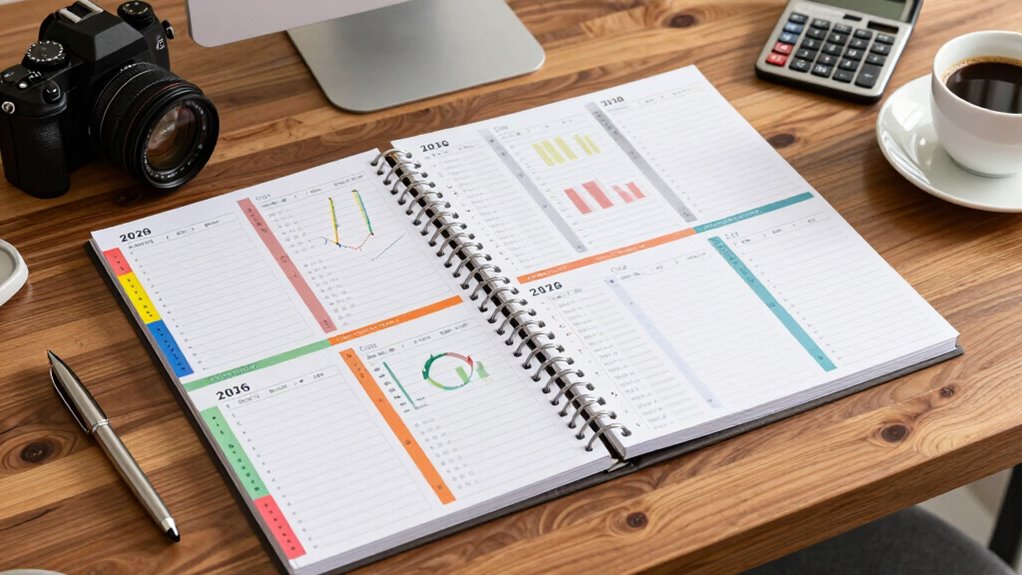

A cashflow planner helps you track money coming in and going out, but the right format depends on whether you manage business transactions, household bills, or a personal budget. My best overall pick is the Cash Flow & Bill Management Planner for its balance of cash tracking and bill organization. The Monthly Business Cash Flow Planner is a stronger fit for month-by-month business planning, while the 12-Month Household Budget and Cashflow Planner focuses on annual home finances. The main tradeoff is between detailed daily logging and broader monthly or yearly planning. Read on for how the eight options differ and which kind of planner suits your routine.

Get home office essentials delivered free with Prime
- Fast, free delivery on millions of items
- Prime Video, Amazon Music and more included
- Member-only deals all year
Key Takeaways
- Cash Flow & Bill Management Planner earns the best-overall position by addressing both cash movement and bill organization, rather than focusing only on transaction logs.
- The three Daily Cash Flow Log Book options point to a clear choice: compare their titles and listed formats for the level of detail and page size that best fits your recording habits.
- The Monthly Business Cash Flow Planner is the business-oriented pick; it is a better match for periodic planning than a ledger built around daily entries.
- Household and personal budgeting call for different structures: the 12-Month Household Budget and Cashflow Planner emphasizes the year, while the zero-based workbook centers on assigning money to budget categories.
- The roundup spans simple recordkeeping through broader planning, so buyers should choose by the decisions they need to make—not by the word “cashflow” on the cover.
| Daily Cash Flow Log Book: Petty Cash Ledger and Financial Record Journal |  | Best for Detailed Daily Petty Cash Records | Format: Large ledger book | Tracking frequency: Daily | Primary use: Cash-flow and financial record keeping | VIEW ON AMAZON | See Our Full Breakdown |
| Cash Flow & Bill Management Planner |  | Best for Coordinating Bills and Cash Flow | Product type: Planner | Named planning topics: Cash flow and bill management | Tracking period: Not specified | VIEW ON AMAZON | See Our Full Breakdown |
| Monthly Business Cash Flow Planner |  | Best for Monthly Business Planning | Planner focus: Business cash flow | Planning period: Monthly | Income section: Included | VIEW ON AMAZON | See Our Full Breakdown |
| Daily Cash Flow Log Book: Large Daily Cash Book and Financial Record Journal |  | Best for Straightforward Daily Cash Logging | Format: Large cash book and financial record journal | Tracking frequency: Daily | Primary use: Cash-flow and financial record keeping | VIEW ON AMAZON | See Our Full Breakdown |
| Monthly Budget Planner – Zero-Based Budgeting, Undated Bill Organizer & Expense Tracker Workbook |  | Best for Household Zero-Based Budgeting | Format: Workbook | Budgeting method: Zero-based budgeting | Dating: Undated | VIEW ON AMAZON | See Our Full Breakdown |
| Daily Cash Flow Log Book: Financial Journal for Cash In & Out, Business Record Keeping, Petty Cash Ledger, 8.5 x 11 inches, 100+ Pages |  | Best for Detailed Daily Records | Format: Daily cash flow log book | Primary tracking: Cash income and expenses | Intended uses: Business record keeping, petty cash, and personal finance tracking | VIEW ON AMAZON | See Our Full Breakdown |
| Cashflow Daily Financial Planner: Plan and Record Your Daily Finances |  | Best for Building a Daily Money Routine | Format: Daily financial planner | Planning focus: Plan and record daily finances | Income tracking: Daily income | VIEW ON AMAZON | See Our Full Breakdown |
| 12-Month Household Budget and Cashflow Planner |  | Best for Yearlong Household Budgeting | Format: Household budget and cashflow planner | Planning period: 12 months | Budget frequency: Monthly | VIEW ON AMAZON | See Our Full Breakdown |
| cashflow planner | Format |
|---|---|
| Daily Cash Flow Log Book: Pett | Large ledger book |
| Cash Flow & Bill Management Pl | — |
| Monthly Business Cash Flow Pla | — |
| Daily Cash Flow Log Book: Larg | Large cash book and financial record journal |
| Monthly Budget Planner | Workbook |
| Daily Cash Flow Log Book: Fina | Daily cash flow log book |
| Cashflow Daily Financial Plann | Daily financial planner |
| 12-Month Household Budget and | Household budget and cashflow planner |
More Details on Our Top Picks
Daily Cash Flow Log Book: Petty Cash Ledger and Financial Record Journal
For a small business that records frequent cash movements, this ledger’s large writing area is its main advantage: it gives daily entries room to stay readable rather than squeezed into a compact tracker. It is more suited to transaction-by-transaction record keeping than the Monthly Business Cash Flow Planner, which is described around monthly income, expenses, and goals. That distinction matters if you need a working log of petty cash, not just a monthly planning view. The tradeoff is that this is a paper-only record book with no stated templates or instructions, so you’ll need to decide how to structure entries and keep any digital backup separately. Its size may also be inconvenient to carry between locations.
Pros:- Large format provides room for detailed daily entries
- Designed for petty cash and routine cash-flow records
- Can keep small-business transactions together in one paper ledger
Cons:- No stated templates or instructions for setting up entries
- No digital backup or calculation features
- Large format may be cumbersome to carry
Best for: Small-business owners or office managers who record petty cash and daily cash transactions at a desk.
Not ideal for: People who need a portable planner, guided budgeting prompts, or automatic digital records.
- Format:Large ledger book
- Tracking frequency:Daily
- Primary use:Cash-flow and financial record keeping
- Transaction focus:Petty cash and daily transactions
- Intended users:Businesses, including small businesses
- Templates or instructions:Not stated as included
- Digital features:No digital backup options stated
Our verdict“Choose this ledger if spacious, paper-based daily petty-cash records matter more than portability or guided planning.”
Cash Flow & Bill Management Planner
The title points to a planner aimed at people who want to view cash flow alongside bills, rather than log business transactions one by one. That makes it a different kind of tool from the Daily Cash Flow Log Book: Petty Cash Ledger and Financial Record Journal, which is positioned for daily business records. However, the available product information provides no description, layout details, format, or stated features beyond the title, so I can’t verify how it organizes bills or whether it supports a particular planning period. That lack of detail makes this a more cautious choice than the Monthly Business Cash Flow Planner, whose stated sections include income, expenses, and financial goals. It may fit a household bill-planning need, but buyers who require confirmed worksheets or business tracking should choose a better-documented option.
Pros:- Title explicitly pairs cash-flow planning with bill management
- Appears aimed at planning rather than only recording transactions
- Could suit buyers seeking a single bill-and-cash-flow organizer
Cons:- No product description or confirmed layout details were provided
- Tracking period and included worksheets are unspecified
- No stated digital features or business-specific tools
Best for: A household budgeter specifically looking for a planner titled around cash flow and bill management, who is comfortable checking the product details before buying.
Not ideal for: Small-business bookkeepers or buyers who need confirmed page layouts, tracking periods, or detailed feature information.
- Product type:Planner
- Named planning topics:Cash flow and bill management
- Tracking period:Not specified
- Page format:Not specified
- Included worksheets:Not specified
- Intended user:Not specified
Our verdict“Consider this only if bill management is your main need and you can confirm its layout and contents before purchase.”
Monthly Business Cash Flow Planner
This planner is the clearest fit here for owners who want to review business finances by month: its stated sections cover income, expenses, and financial goals, connecting cash-flow tracking with planning decisions. Compared with the daily petty-cash ledgers, including the Daily Cash Flow Log Book: Large Daily Cash Book and Financial Record Journal, it gives more emphasis to the monthly picture than to recording each transaction as it happens. That can help a business spot whether planned income and spending align, but it won’t replace detailed bookkeeping or a daily cash log. The product information does not specify its size or finer layout details, so buyers can’t confirm how much writing space it offers. It is a more business-focused option than the household-oriented Monthly Budget Planner.
Pros:- Organizes monthly cash-flow planning
- Includes stated sections for income and expenses
- Financial goals connect tracking with business planning
- User-friendly layout is described as easy to track
Cons:- Size and detailed page features are not specified
- May need separate tools for full financial management
- Monthly focus is less suited to transaction-by-transaction logging
Best for: Small-business owners who want a monthly view of income, expenses, and financial goals to support planning.
Not ideal for: Users who need a daily transaction ledger, detailed bookkeeping functions, or confirmed page dimensions before buying.
- Planner focus:Business cash flow
- Planning period:Monthly
- Income section:Included
- Expense section:Included
- Financial goals:Included
- Layout:Organized sections; described as user-friendly
- Dimensions and page count:Not specified
Our verdict“Pick this for a business-focused monthly planning view, and pair it with a separate ledger if you track daily transactions.”
Daily Cash Flow Log Book: Large Daily Cash Book and Financial Record Journal
This is a practical choice for recording daily business cash transactions in a large-format paper journal, especially when a simple log is more useful than a monthly planning framework. It serves a similar purpose to the Daily Cash Flow Log Book: Petty Cash Ledger and Financial Record Journal, so the two are close alternatives rather than different kinds of planners. This title emphasizes a large daily cash book and financial record journal; the other ledger specifically calls out petty cash. Neither description confirms page capacity or digital functions, so the deciding factor may be which product’s full listing gives you clearer information about its pages. Compared with the Monthly Business Cash Flow Planner, this log favors recording transactions as they occur over organizing income, expenses, and goals at a monthly level.
Pros:- Designed for daily cash-transaction records
- Large format supports easier writing
- Useful for petty cash and small-business finance tracking
Cons:- No digital features are stated
- Page capacity is not specified
- Basic design may not provide guided planning or goal-setting
Best for: Small-business owners who want a basic large-format paper journal for daily cash transactions and financial records.
Not ideal for: People who need monthly goal-setting sections, digital records, or verified page capacity before choosing.
- Format:Large cash book and financial record journal
- Tracking frequency:Daily
- Primary use:Cash-flow and financial record keeping
- Transaction focus:Cash transactions and petty cash
- Intended users:Businesses, including small businesses
- Page capacity:Not specified
- Digital features:None stated
Our verdict“Choose this for straightforward daily cash logging, but favor a monthly planner if you need income, expense, and goal planning in one view.”
Monthly Budget Planner – Zero-Based Budgeting, Undated Bill Organizer & Expense Tracker Workbook
Unlike the business ledgers in this roundup, this workbook connects cash-flow worksheets with bills and expense tracking, using zero-based budgeting to give each part of a household budget a purpose. The undated format lets you begin when it suits you, rather than waiting for a calendar-year start. That makes it more flexible than the Monthly Business Cash Flow Planner for personal bill organization, though the business planner is the more directly targeted choice for tracking company income and financial goals. The added structure can support careful planning, but it also creates more work than a simple cash log: anyone who only wants to record money in and out may find the workbook too involved. Its described features do not specify page count or dimensions.
Pros:- Undated pages allow a flexible start
- Combines bill organization, expense tracking, and cash-flow worksheets
- Zero-based budgeting supports deliberate allocation of income
Cons:- Detailed structure may feel like extra work for simple tracking
- Page count and dimensions are not specified
- Household budgeting focus is less suited to business transaction records
Best for: Households that want an undated workbook for zero-based monthly budgeting, bills, expenses, and cash-flow planning.
Not ideal for: People seeking a quick daily transaction log or a business-oriented cash-flow planner with confirmed specifications.
- Format:Workbook
- Budgeting method:Zero-based budgeting
- Dating:Undated
- Bill organization:Bill organizer pages
- Expense tracking:Expense tracking sheets
- Cash-flow planning:Cash-flow worksheets
- Intended focus:Everyday personal budgeting
- Dimensions and page count:Not specified
Our verdict“Choose this workbook if you want structured household budgeting across bills and cash flow, not just a simple cash-in-and-out log.”
Daily Cash Flow Log Book: Financial Journal for Cash In & Out, Business Record Keeping, Petty Cash Ledger, 8.5 x 11 inches, 100+ Pages
This log book suits buyers who need a roomy paper record of cash moving in and out each day, rather than a planner built around monthly household budgeting. Its 8.5 x 11-inch pages give entries space, while 100+ pages support an ongoing transaction log for a small business or personal cash tracking. Compared with the 12-Month Household Budget and Cashflow Planner, this format centers on recording daily transactions, not organizing a year of monthly budgets and savings goals. That focus can make it easier to keep a straightforward cash ledger, but the listed details provide no prompts or instructions for setting up a tracking routine. The full-size format also favors a desk or filing area over a bag. Choose it for legible, detailed entries; skip it if you want a guided budget planner or portable log.
Pros:- Large pages leave room for readable, detailed transaction entries.
- 100+ pages support extended daily record keeping.
- The cash-in-and-out focus fits small-business petty cash and personal tracking.
- Durable cover and high-quality paper are listed product strengths.
Cons:- No prompts or instructions are listed to help establish a consistent tracking method.
- The 8.5 x 11-inch format is less convenient to carry than a compact planner.
- Its daily ledger emphasis does not provide the stated monthly household budgeting structure of the 12-Month Household Budget and Cashflow Planner.
Best for: Small-business owners or cash-focused households who want a large, paper-based daily record of income and expenses.
Not ideal for: People who need a compact planner, guided budgeting prompts, or a structured month-by-month household plan.
- Format:Daily cash flow log book
- Primary tracking:Cash income and expenses
- Intended uses:Business record keeping, petty cash, and personal finance tracking
- Size:8.5 x 11 inches
- Page count:100+ pages
- Cover:Durable cover
- Paper:High-quality paper
Our verdict“Choose this full-size log book if you want generous space for daily cash entries and do not need a guided monthly budget system.”
Cashflow Daily Financial Planner: Plan and Record Your Daily Finances
This planner is the most habit-oriented pick in this group: its stated purpose is to help users plan and record daily finances, with an emphasis on budgeting habits. That makes it a better fit for someone who wants a regular check-in than the Daily Cash Flow Log Book: Financial Journal for Cash In & Out, which is described more specifically as a spacious transaction record. The tradeoff is limited product detail: size, page count, and particular page layouts are not provided, so I cannot judge how much room it gives for entries or how its planning pages are organized. It also has no listed digital tools or apps, so tracking remains paper-based. Consider it if a daily routine matters more than specialized ledger detail; choose a better-documented option if you need clear format specifications before buying.
Pros:- Designed to organize both daily expenses and income.
- Daily planning can support consistent money check-ins.
- Its budgeting-habit focus distinguishes it from a transaction-only log book.
Cons:- Size, page count, and detailed page features are not specified.
- No digital tools or companion apps are listed.
- The available description does not clarify whether it offers monthly or long-term cashflow views.
Best for: People who want a paper planner centered on recording daily income and expenses and reinforcing regular budgeting habits.
Not ideal for: Buyers who need confirmed page dimensions, a specific ledger layout, extensive business cash records, or digital tracking tools.
- Format:Daily financial planner
- Planning focus:Plan and record daily finances
- Income tracking:Daily income
- Expense tracking:Daily expenses
- Intended outcome:Improve financial management and budgeting habits
- Size:Not specified
- Page count:Not specified
- Digital tools:No digital tools or apps listed
Our verdict“Pick this planner if a daily paper-based budgeting routine is your priority and unspecified layout details are acceptable.”
12-Month Household Budget and Cashflow Planner
Households planning across a full calendar of monthly budgets are the clearest audience for this option. Its stated structure covers income, expenses, and savings goals over 12 months, giving family finances a broader planning horizon than the Daily Cash Flow Log Book: Financial Journal for Cash In & Out, which is geared toward recording daily transactions. That difference matters if your main question is how household cash will be allocated month by month, rather than what came in or went out on a particular day. The available details do not specify dimensions, page count, or the exact layout, so buyers cannot confirm how much writing space or guidance they get. It also has no listed digital features and covers only one year. It is a more natural fit for annual household planning than for a business needing a daily ledger.
Pros:- Provides a stated 12-month horizon for household cashflow planning.
- Covers monthly budgets, income, expenses, and savings goals.
- Its household focus offers a wider planning view than a daily cash log.
Cons:- The planner is limited to 12 months, so continued planning may require another book.
- No digital features or apps are listed.
- Size, page count, and detailed page layouts are not specified.
Best for: Households that want to plan monthly income, expenses, and savings goals across a defined 12-month period.
Not ideal for: Small-business owners seeking a detailed daily transaction ledger, or users who want an ongoing multi-year planner or digital budgeting tools.
- Format:Household budget and cashflow planner
- Planning period:12 months
- Budget frequency:Monthly
- Income tracking:Included in the stated planning structure
- Expense tracking:Included in the stated planning structure
- Savings goals:Included in the stated planning structure
- Intended users:Personal and household finance planners
- Digital features:No digital features or apps listed
Our verdict“Choose this planner for a year of structured household budgeting, but look elsewhere for daily business records or digital tracking.”

How We Picked
I compared the planners by the job their titles and stated formats suggest: recording daily cash in and out, organizing bills, planning monthly business cashflow, or managing a household budget across months. I gave higher placement to options with a clear use case and broader planning utility, which puts the Cash Flow & Bill Management Planner first, followed by more specialized monthly and yearly planners. Daily log books remain useful, but their emphasis on recording transactions gives less support for forward planning than a planner that also organizes bills or budget periods.
I also considered how easily a buyer can match each format to an existing routine, whether the product appears focused on business or household finances, and how much flexibility its stated approach offers. The lineup includes overlapping daily log books, so I distinguish them by their listed size and purpose rather than treating them as interchangeable. Because the supplied product details do not specify every page layout or tracking field, I avoid assuming features beyond the titles and descriptions; buyers should check the current listing for those specifics before choosing.
| cashflow planner | Format |
|---|---|
| Daily Cash Flow Log Book: Pett | Large ledger book |
| Cash Flow & Bill Management Pl | — |
| Monthly Business Cash Flow Pla | — |
| Daily Cash Flow Log Book: Larg | Large cash book and financial record journal |
| Monthly Budget Planner | Workbook |
| Daily Cash Flow Log Book: Fina | Daily cash flow log book |
| Cashflow Daily Financial Plann | Daily financial planner |
| 12-Month Household Budget and | Household budget and cashflow planner |
Factors to Consider When Choosing Cashflow Planner
Before choosing a cashflow planner, decide what you want to do with the information after you record it. A ledger can help you maintain a transaction history, while a monthly or annual planner can help you spot patterns and plan ahead. These choices shape how often you update the book and which details deserve space.
Choose a recording rhythm you can keep
A planner only helps if its update schedule fits your real routine. Daily logging suits frequent cash transactions or business activity that would be hard to reconstruct at month-end; monthly planning is less demanding when income and bills are predictable. A common mistake is choosing a highly detailed format because it seems thorough, then leaving it unused when entries pile up. Think about whether you can record transactions as they happen or prefer a regular weekly session. If you are unsure, favor a simpler routine before adding more tracking detail.
Separate transaction history from cashflow planning
Recording money already received or spent is not the same as predicting what will be available later. A daily log can provide a useful record, but it may not help you anticipate a tight week unless you also plan upcoming bills and expected income. Buyers who need to prevent cash shortfalls should look for a layout that gives room for future commitments as well as past activity. Those who mainly need an audit trail may prefer a straightforward ledger. Avoid expecting one format to serve both jobs unless its pages clearly support both.
Match the planner to business or household money
Business cashflow and household budgeting may share the same basic inflow-and-outflow idea, but their categories and decisions differ. A business owner may need to distinguish operating receipts and expenses, while a household may care more about bills, savings goals, and spending by category. Using one planner for both can blur the picture if entries are not kept separate. Decide whether the planner is for one financial context or whether you will maintain separate records. The product title can suggest its intended audience, but check the sample pages or listing details for categories that match your needs.
Pick a planning horizon that answers your questions
A monthly view helps with near-term cash availability and recurring bills; a 12-month view can make seasonal expenses and longer patterns easier to see. Neither horizon replaces the other. Someone who needs to know whether next month’s bills are covered may get little immediate help from a yearly overview alone, while a monthly-only setup can make annual costs easy to forget. Consider which question you ask most often, then choose a format that puts that answer within easy reach. If you need both views, check whether the planner has enough space to carry monthly details into a year-level summary.
Decide how much structure helps rather than hinders
Zero-based budgeting assigns expected income to categories, which can be useful for deliberate spending plans but asks for regular decisions and adjustments. A blank or ledger-style format gives more freedom, though it may require you to create your own categories and summaries. Buyers sometimes mistake more structure for better planning; a rigid system can be frustrating when income varies or expenses are unpredictable. Choose a guided workbook if you want prompts and category discipline, or a simpler log if you already have a method. Check whether the structure supports changes without forcing you to rewrite the whole plan.
Think about where and how you will write
Page size and writing space affect whether a planner works at a desk, in a bag, or beside a register. A larger book can make frequent entries easier to read, but it is less convenient to carry; a compact format travels better while leaving less room for notes. Consider the amount of detail you actually record, including whether you need descriptions or just dates and amounts. Do not select a size based on the title alone: confirm dimensions and page count in the product listing. Also check whether the planner is undated if you want to start at any point in the year.
Frequently Asked Questions
Should I choose a daily cash log or a monthly cashflow planner?
Choose a daily log when transactions happen often and you need a reliable record of each one. A monthly planner is more useful when your main task is comparing expected income with bills or expenses across a period. If you need both, check whether the planner includes a way to summarize daily entries; otherwise, you may need separate books. Your choice should reflect the point where you usually lose track—individual transactions or the bigger monthly picture. A format that matches that gap is more useful than one with extra pages you will not fill.
Can a household budget planner work for a small business?
It can support basic tracking, but household and business finances often need different categories and records. A household planner may focus on bills, personal spending, and savings, while a business needs a clear view of business receipts and outflows. Mixing the two can make it harder to understand whether the business itself has enough cash. Check the planner’s actual page layout and category prompts before using it for business records. For business accounting or tax documentation, a paper planner should not replace any records or tools your reporting obligations require.
Is zero-based budgeting a good fit if my income changes each month?
It can be useful if you are willing to revise the plan when income changes, but it requires more active upkeep than a simple transaction log. With irregular income, plan around money already received rather than assigning unconfirmed income to expenses. Keep room for variable costs and update categories as circumstances change. If you prefer not to rework a detailed budget each month, a flexible cash-in-and-out record may be easier to maintain. The key distinction is whether you want a spending plan or primarily a record of what happened.
Do I need both a cashflow planner and a bill organizer?
Not always. A combined format may suit you if missed due dates and cash availability are linked problems, since it can keep upcoming obligations near your cash records. If bills are already managed reliably through another calendar or system, a dedicated ledger or budget planner may be enough. Look at how you currently track due dates and whether you can tell which bills are covered by expected income. Avoid duplicating the same information in several places unless you have a clear routine for keeping each record current.
What should I check before choosing between the three Daily Cash Flow Log Books?
Start with the distinctions stated in their titles and listings: one is described as a petty cash ledger and financial record journal, another as a large daily cash book, and one specifies an 8.5-by-11-inch format with more than 100 pages. Those descriptions point to different size or recordkeeping priorities, but they do not confirm every page field. Check dimensions, page count, entry layout, and whether the book has space for notes or running balances. Pick the option that matches how much you write per transaction and where you plan to keep the book. If you need forecasting or bill planning, compare these ledgers with the combined or monthly planners instead.
Conclusion
For most buyers who want one paper tool for cash movement and due dates, I recommend the Cash Flow & Bill Management Planner as the best overall. The Monthly Business Cash Flow Planner is my best value-style choice for business owners who want a focused monthly view without a daily-ledger emphasis, while the 12-Month Household Budget and Cashflow Planner is the best premium-style fit for people who want to organize home finances across the year. Beginners who want a guided spending method should start with the Monthly Budget Planner – Zero-Based Budgeting; those who want simpler recordkeeping can choose a Daily Cash Flow Log Book. For frequent cash transactions, pick the daily log whose size and stated format fit your workspace; for bills and household planning, choose a planner built around those needs. Check the current listing details to confirm page layouts before ordering.