For most buyers tracking a mix of bullion and jewelry, I’d start with the GemOro Platinum PRO1601: its 1,600 g capacity and 0.1 g readability offer a practical balance for routine portfolio weighing. The GemOro Platinum XP500 is a stronger fit when small pieces call for 0.01 g readability, while the Ohaus Scout SJX stands out for buyers prioritizing a more lab-oriented weighing setup. The main tradeoff is between fine readability and the capacity needed for larger items; portability, calibration, and trade-use requirements also affect the choice. A scale’s displayed precision does not by itself confirm its accuracy or suitability for financial transactions. Continue reading for the full breakdown of all 13 precious metals portfolio scales and how their differences match distinct weighing needs.

Get home office essentials delivered free with Prime
- Fast, free delivery on millions of items
- Prime Video, Amazon Music and more included
- Member-only deals all year
Key Takeaways
- The PRO1601 is the most balanced starting point: its 1,600 g capacity gives more room than the 500 g pocket models while retaining 0.1 g readability for general portfolio records.
- Capacity and readability pull in different directions: the XP500, SKEAP, WISHSOM, Bonvoisin, and other 0.01 g options favor finer displayed increments, while the PRO6000 is aimed at weighing heavier items within its 6,000 g capacity.
- GemOro covers several distinct weighing needs: the PRO1601, PRO6000, XP500, V600M, and PRO1001V differ in capacity, readability, or compactness, so brand alone does not determine the best fit.
- Compact pocket scales trade room for portability: the GPY, YONCON, SKEAP, WISHSOM, and MAXUS are easier to carry than higher-capacity formats, but their 500 g limits can rule out heavier pieces or grouped lots.
- Special-purpose models deserve a closer fit check: the A&D EK1200i is identified as legal-for-trade and the Bonvoisin as a lab scale, but intended use, local rules, and verification needs matter more than a model label alone.
| GemOro Platinum PRO1601 Professional Jewelry Scale, 1600 g x 0.1 g | 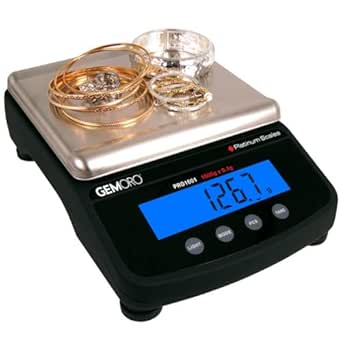 | Best Overall for Mid-Size Lots | Capacity: 1600 g | Readability: 0.1 g | Display: Backlit LCD | VIEW LATEST PRICE | See Our Full Breakdown |
| GPY Digital Jewelry Scale, 500 g Capacity |  | Best for Fine-Readability on a Budget of Space | Capacity: 500 g | Accuracy: 0.01 g (0.001 oz) | Weighing modes: g, oz, lb, tl, ozt, dwt, gn, ct, ml | VIEW LATEST PRICE | See Our Full Breakdown |
| GemOro Platinum PRO6000 Professional Jewelry Scale, 6000 g x 0.1 g |  | Best for High-Capacity Precious-Metal Lots | Capacity: 6000 g | Readability: 0.1 g | Platform: 6.5 x 4.5 in stainless steel | VIEW LATEST PRICE | See Our Full Breakdown |
| GemOro Platinum XP500 Extra-Precision Pocket Jewelry Scale, 500 g x 0.01 g |  | Best for Detailed Small-Item Weighing | Capacity: 500 g | Readout accuracy: 0.01 g | Platform: Stainless steel, extra-large | VIEW LATEST PRICE | See Our Full Breakdown |
| SKEAP Digital Jewelry Scale, 500 g x 0.01 g |  | Best Ready-to-Use Compact Pick | Maximum capacity: 500 g | Readout accuracy: 0.01 g | Display: Backlit LCD | VIEW LATEST PRICE | See Our Full Breakdown |
| Ohaus Scout SJX Jewelry Scale |  | Best for Trade-Ready Precious-Metals Weighing | Accuracy class: Class II and Class III | Display: 0.8-inch backlit LCD | Pan: 3.7-inch round | VIEW LATEST PRICE | See Our Full Breakdown |
| YONCON 500 g Digital Pocket Scale, 0.01 g Accuracy |  | Best Pocket Pick for Fine Readability | Maximum capacity: 500 g | Readout accuracy: 0.01 g | Weight graduation interval: 0.01 g | VIEW LATEST PRICE | See Our Full Breakdown |
| GemOro Platinum V600M Mini Digital Jewelry Scale, 600 g x 0.1 g | 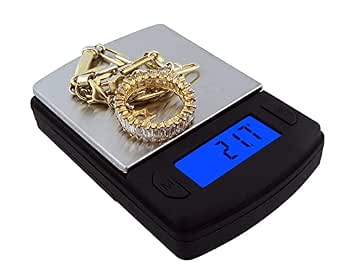 | Best Compact Scale for Jewelry Lots | Maximum capacity: 600 g | Readability: 0.1 g | Measurement units: g, ozt, oz, dwt | VIEW LATEST PRICE | See Our Full Breakdown |
| GemOro Platinum PRO1001V Professional Jewelry Scale, 1000 g x 0.1 g |  | Best for Larger Workbench Batches | Capacity: 1000 g | Readability: 0.1 g | Weighing modes: g, ozt, oz, dwt, ct, gn, kg | VIEW LATEST PRICE | See Our Full Breakdown |
| WISHSOM Digital Jewelry Scale, 500 g Capacity, 0.01 g Accuracy | 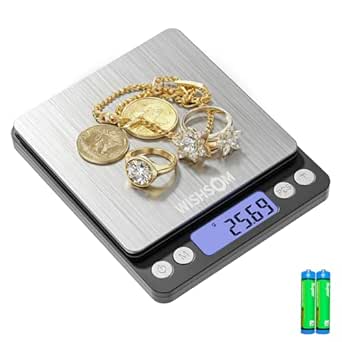 | Best Value Kit for Small-Item Weighing | Maximum capacity: 500 g | Readout accuracy: 0.01 g | Display: Backlit LCD | VIEW LATEST PRICE | See Our Full Breakdown |
| Bonvoisin Digital Lab Scale, 1000 g Capacity, 0.01 g Readability |  | Best for Bench-Top Precision | Brand and model: Bonvoisin LQ-86 | Capacity: 1,000 g (1 kg) | Readability: 0.01 g | VIEW LATEST PRICE | See Our Full Breakdown |
| MAXUS Digital Pocket Gram Scale, 500 g Capacity, 0.01 g Readability |  | Best Compact Pick | Brand and model: MAXUS ELITE | Capacity: 500 g | Readability: 0.01 g | VIEW LATEST PRICE | See Our Full Breakdown |
| A&D EK1200i Legal-for-Trade Gold Scale |  | Best for Commercial Trade Use | Brand and model: A&D EK1200i | Scale type: Balance scale | Maximum capacity: 1,200 g | VIEW LATEST PRICE | See Our Full Breakdown |
| precious metals portfolio scale | Display | Functions | Platform | Power |
|---|---|---|---|---|
| GemOro Platinum PRO1601 Profes | Backlit LCD | Calibration, tare, memory, hold, overload protection, parts counting, auto-off | Stainless steel | 6 AA batteries or 100V–240V AC adapter |
| GPY Digital Jewelry Scale | Backlit LCD | Tare and auto shut-off | Stainless steel | Battery-powered |
| GemOro Platinum PRO6000 Profes | Blue backlit LCD | Parts counting, push-button calibration, tare, memory, overload protection, stability indicator, low-battery indicator, auto-off | 6.5 x 4.5 in stainless steel | 6 AA batteries or included 100–240 V AC adapter |
| GemOro Platinum XP500 Extra-Pr | LCD | Calibration, tare, memory, parts counting, auto shutoff, low-battery indicator | Stainless steel, extra-large | 2 AAA batteries |
| SKEAP Digital Jewelry Scale | Backlit LCD | Auto shut-off, instant-on, tare, piece counting | Stainless steel | — |
| Ohaus Scout SJX Jewelry Scale | 0.8-inch backlit LCD | — | — | Included AC adapter or 4 AA batteries (not included) |
| YONCON 500 g Digital Pocket Sc | Backlit LCD | Tare, piece counting, auto shutoff | Stainless steel | — |
| GemOro Platinum V600M Mini Dig | Blue backlit LCD | Calibration, tare, memory, low-battery indicator, auto-off | Stainless steel | 2 AAA batteries included |
| GemOro Platinum PRO1001V Profe | Blue backlit LCD | Calibration, tare, memory, parts counting, overload protection, stability indicator, low-battery indicator, auto-off | Stainless steel | 4 AA batteries; AC adapter sold separately |
| WISHSOM Digital Jewelry Scale | Backlit LCD | Tare, piece-counting mode, easy calibration | Stainless steel | — |
| Bonvoisin Digital Lab Scale | Backlit LCD | Tare, hold, counting, adjustable auto-off | — | — |
| MAXUS Digital Pocket Gram Scal | Backlit LCD | — | — | Two AAA batteries, included |
| A&D EK1200i Legal-for-Trade Go | LCD | — | — | — |
More Details on Our Top Picks
GemOro Platinum PRO1601 Professional Jewelry Scale, 1600 g x 0.1 g
The PRO1601 is my balanced pick for buyers weighing mixed precious-metal lots: its 1600 g capacity gives more room than the 500 g GPY Digital Jewelry Scale or GemOro Platinum XP500, while its 0.1 g readability suits heavier batches better than a pocket-scale setup. Six units, including troy ounces and pennyweights, help keep common bullion and jewelry calculations convenient, and parts counting adds value when sorting repeated pieces. Battery or AC power makes it adaptable to a counter or occasional mobile use. The tradeoff is that it is not a fine-detail specialist: the GPY and XP500 read to 0.01 g, which better fits small stones or individual lightweight pieces. At 5.8 lb, it is portable in the countertop sense, not pocketable, and battery operation takes six AA cells.
Pros:- 1600 g capacity accommodates larger mixed lots than the 500 g GPY and XP500
- 0.1 g readability pairs with a higher capacity for routine metal weighing
- Six weighing units include troy ounces and pennyweights
- AC or six-AA power, plus a backlit display and leveling features
Cons:- Less precise by displayed increments than the 0.01 g GPY and XP500
- Six AA batteries are needed for battery-powered operation
- Its 5.8 lb weight limits convenient pocket or frequent travel use
Best for: Jewelry buyers and small dealers who weigh varied lots above pocket-scale capacity and want troy-ounce and pennyweight units.
Not ideal for: Gemstone handlers and buyers focused on tiny pieces who need 0.01 g readability, or anyone seeking a genuinely pocketable scale.
- Capacity:1600 g
- Readability:0.1 g
- Display:Backlit LCD
- Platform:Stainless steel
- Weighing units:g, ozt, oz, dwt, kg, lb
- Functions:Calibration, tare, memory, hold, overload protection, parts counting, auto-off
- Power:6 AA batteries or 100V–240V AC adapter
- Item weight:5.8 lb
- Warranty:5-year limited replacement warranty
Our verdict“Choose the PRO1601 for a flexible countertop scale that handles larger precious-metal lots, but choose the GPY or XP500 for finer readings on small items.”
GPY Digital Jewelry Scale, 500 g Capacity
The GPY is a practical choice when 0.01 g readability matters more than weighing a large batch. Its 500 g limit is shared by the GemOro Platinum XP500 and SKEAP, but the GPY adds nine weighing modes, including carats, grains, and milliliters, giving it a broader unit menu than the XP500’s six modes. Two removable trays also make it easier to contain small stones or loose pieces without adding a separate weighing dish. The stainless platform and backlit display support routine bench work, though the provided details do not list parts counting, unlike the SKEAP and XP500. Its main constraint is capacity: it cannot match the 1600 g GemOro PRO1601 for larger lots, and battery-powered operation makes it less convenient for extended fixed use than an AC-capable countertop model.
Pros:- 0.01 g readability for small jewelry and gemstone pieces
- Nine modes include carats, grains, and milliliters
- Two removable trays can contain small items during weighing
- Stainless steel platform and backlit LCD
Cons:- 500 g maximum capacity is far below the GemOro PRO1601
- Battery-powered design offers no listed AC adapter option
- Parts counting is not listed, unlike on the SKEAP and XP500
Best for: Gemstone sellers, jewelers, and collectors weighing individual small items who value fine readability and a wide choice of units.
Not ideal for: Dealers weighing heavy or bulk metal lots, or users who need documented parts counting or an AC power option.
- Capacity:500 g
- Accuracy:0.01 g (0.001 oz)
- Weighing modes:g, oz, lb, tl, ozt, dwt, gn, ct, ml
- Platform:Stainless steel
- Display:Backlit LCD
- Functions:Tare and auto shut-off
- Accessories:Two removable trays
- Power:Battery-powered
Our verdict“Pick the GPY for fine-readability and versatile units on small items, but move to the PRO1601 when your lots exceed 500 g.”
GemOro Platinum PRO6000 Professional Jewelry Scale, 6000 g x 0.1 g
With a 6000 g capacity, the PRO6000 is the clear fit when a precious-metals workflow includes substantial batches, containers, or multiple items at once. It keeps 0.1 g readability and the same useful six-unit selection as the PRO1601, but raises capacity well beyond that model’s 1600 g ceiling. A 6.5 x 4.5-inch stainless platform provides a stable weighing area, while parts counting, tare, calibration, and overload protection support repeated bench tasks. The cost of that range is a less delicate reading increment than the GPY or GemOro XP500, each of which reads to 0.01 g but tops out at 500 g. The platform is also not especially large for bulky objects, and the scale’s six-AA battery requirement can be inconvenient if it is not kept near the included AC adapter.
Pros:- 6000 g capacity handles lots far beyond the PRO1601’s 1600 g limit
- 0.1 g readability suits heavier batch weighing
- Six units include troy ounces and pennyweights, with parts counting
- Included AC adapter, backlit display, adjustable feet, and leveling bubble
Cons:- 0.1 g readability is coarser than the 0.01 g GPY and XP500
- 6.5 x 4.5-inch platform may constrain bulky items
- Battery operation requires six AA batteries
Best for: Small refiners, jewelers, and metal buyers who weigh heavy combined lots and need capacity far above 500 g.
Not ideal for: Gemstone specialists weighing tiny pieces, or buyers who need a compact scale with a larger platform for bulky objects.
- Capacity:6000 g
- Readability:0.1 g
- Platform:6.5 x 4.5 in stainless steel
- Weighing units:g, ozt, oz, dwt, kg, lb
- Display:Blue backlit LCD
- Functions:Parts counting, push-button calibration, tare, memory, overload protection, stability indicator, low-battery indicator, auto-off
- Power:6 AA batteries or included 100–240 V AC adapter
- Materials:Stainless steel platform and ABS construction
- Warranty:5-year limited replacement warranty
Our verdict“Choose the PRO6000 when batch capacity is the priority; choose the XP500 or GPY for finer readings on lightweight pieces.”
GemOro Platinum XP500 Extra-Precision Pocket Jewelry Scale, 500 g x 0.01 g
The XP500 focuses on fine readings for small precious-metal items, pairing 0.01 g readability with a 500 g ceiling. Compared with the GemOro PRO1601, it gives up capacity and countertop-style versatility in favor of a finer increment and a more compact format. Its extra-large stainless platform is a useful distinction from many pocket scales, while the protective covers double as trays for loose stones or jewelry parts. Six modes and parts counting make it more capable than a bare-bones pocket scale, and its two AAA batteries are simpler to source than the six AAs used by the PRO1601. Still, 500 g rules out larger combined lots, and the listed warranty is inconsistent: the description says five years, while item details say one year. Buyers should confirm coverage before relying on it for regular business use.
Pros:- 0.01 g readability for detailed weighing of small items
- Extra-large stainless platform for a pocket-scale design
- Protective covers double as weighing trays
- Six modes, parts counting, tare, calibration, and memory
Cons:- 500 g limit cannot handle the larger lots suited to the PRO1601 or PRO6000
- Warranty information conflicts between the description and item details
- LCD is listed, but a backlight is not specified
Best for: Jewelers and collectors weighing small pieces, stones, or individual precious-metal items who want 0.01 g readability in a portable format.
Not ideal for: Dealers weighing large lots, or buyers who need a clearly stated warranty term before purchasing.
- Capacity:500 g
- Readout accuracy:0.01 g
- Platform:Stainless steel, extra-large
- Weighing modes:g, ct, ozt, oz, gn, dwt
- Functions:Calibration, tare, memory, parts counting, auto shutoff, low-battery indicator
- Display:LCD
- Power:2 AAA batteries
- Accessories:Protective covers that double as weighing trays
- Warranty:Conflicting listing details: 5-year limited replacement warranty in description; 1-year warranty in item details
Our verdict“Choose the XP500 for portable, fine-readability weighing and useful tray covers, but skip it if capacity or clearly documented warranty coverage is your priority.”
SKEAP Digital Jewelry Scale, 500 g x 0.01 g
The SKEAP is the straightforward compact choice for weighing coins, gemstones, and small jewelry pieces: it offers 0.01 g readability, tare, piece counting, and a backlit display without the higher capacity and bench-focused setup of the GemOro PRO1601. Its strongest practical advantage over the GPY is what arrives in the box: two trays and two AAA batteries, so basic weighing can begin without sourcing power cells or separate containers. The tradeoff is a short feature list. Unlike the GPY, it does not list multiple weighing modes, and unlike the XP500, it does not specify calibration, memory, or protective covers that serve as trays. The 500 g cap is shared with both alternatives, so this is for small-item work rather than scaling up to substantial metal lots.
Pros:- 0.01 g readability for small coins, gemstones, and jewelry
- Two AAA batteries and two trays are included
- Tare and piece-counting functions support repeat weighing
- Backlit LCD and stainless steel platform
Cons:- 500 g maximum capacity is unsuitable for larger lots
- Weighing modes beyond the listed data are not specified, unlike the GPY
- Calibration and memory functions are not listed, unlike the XP500
Best for: Coin collectors and jewelry hobbyists who want a compact 0.01 g scale with batteries and trays included for small-item weighing.
Not ideal for: Precious-metal buyers handling large lots, or users who need documented multiple units, calibration features, or memory functions.
- Maximum capacity:500 g
- Readout accuracy:0.01 g
- Display:Backlit LCD
- Platform:Stainless steel
- Functions:Auto shut-off, instant-on, tare, piece counting
- Accessories:Two trays and two AAA batteries
- Weight:0.25 kg
- Recommended uses:Coins, gemstones, jewelry
Our verdict“Pick the SKEAP for a ready-to-use compact scale for small items, but choose the GPY for a broader listed unit selection or the GemOro models for larger lots.”
Ohaus Scout SJX Jewelry Scale
The Ohaus Scout SJX is the lineup’s trade-oriented choice: its Class II and Class III legal-for-trade design suits buyers who need more than a compact scale for occasional checks. It also offers a broad set of units, including troy ounces, pennyweight, carats, and tola, making it adaptable to different precious-metals workflows without unit conversion. Compared with the GemOro Platinum PRO1001V, it has lower stated capacity at 1000 g versus the Ohaus’s unspecified capacity in the supplied data, so I can’t make a direct capacity comparison; the Ohaus’s clearest distinction is its legal-for-trade classification. Fast stabilization and AC or battery power support flexible use, but its 4-pound, 12 × 10 × 4-inch body is less pocketable than the GemOro Platinum V600M. Batteries are not included, and the auxiliary display is optional.
Pros:- Class II and Class III classification supports legal-for-trade applications.
- Includes specialist units such as ozt, dwt, ct, and tola.
- Fast stabilization and a backlit display help with routine weighing.
- Can run from the included AC adapter or four AA batteries.
Cons:- At 4 pounds and 12 × 10 × 4 inches, it is bulkier than the GemOro V600M mini scale.
- Four AA batteries are not included.
- Auxiliary display is optional rather than included.
Best for: Jewelry and precious-metals businesses that need a portable balance with stated legal-for-trade classifications and several specialist weighing units.
Not ideal for: Buyers seeking a lightweight pocket scale, or anyone who needs a specified capacity before choosing; the supplied product data does not list maximum capacity.
- Accuracy class:Class II and Class III
- Display:0.8-inch backlit LCD
- Pan:3.7-inch round
- Weighing units:g, kg, ct, oz, ozt, dwt, lb, grn, hkt, sgt, twt, tical, tola
- Power:Included AC adapter or 4 AA batteries (not included)
- Construction:ABS housing with stainless steel pan
- Dimensions:12 × 10 × 4 inches
- Item weight:4 pounds
Our verdict“Choose the Ohaus Scout SJX when trade-oriented classification and varied precious-metals units matter more than pocketable size.”
YONCON 500 g Digital Pocket Scale, 0.01 g Accuracy
The YONCON 500 g puts 0.01 g readability in a handheld format, a useful fit for weighing small coins, findings, or individual pieces where tenth-gram increments feel too coarse. Its flip cover protects the stainless steel platform between uses, while tare and piece-counting functions support quick batch work. Compared with the GemOro Platinum V600M, YONCON offers finer stated readability, but the V600M’s 600 g capacity gives it more headroom for larger lots. The YONCON’s 500 g ceiling makes it a small-item tool rather than a scale for consolidating heavier holdings. Calibration before use is recommended, which adds a setup step for buyers expecting immediate out-of-box weighing. Its multiple units are useful, though the supplied data does not specify the exact unit list.
Pros:- 0.01 g readability supports finer readings than the GemOro V600M’s 0.1 g readability.
- Protective flip cover helps shield the stainless steel platform during storage.
- Tare and piece counting support common small-item weighing tasks.
- Backlit LCD and multiple measurement units aid flexible use.
Cons:- 500 g maximum capacity limits the size of combined lots.
- Calibration before use is recommended, adding a setup step.
- The supplied specs do not identify which measurement units are available.
Best for: Coin collectors and small-scale metals buyers who want a portable scale with 0.01 g readability for individual pieces and compact batches.
Not ideal for: Buyers who weigh larger combined lots or want a stated legal-for-trade classification; its 500 g capacity is limited and no such classification is listed.
- Maximum capacity:500 g
- Readout accuracy:0.01 g
- Weight graduation interval:0.01 g
- Display:Backlit LCD
- Functions:Tare, piece counting, auto shutoff
- Platform:Stainless steel
- Form factor:Handheld
- Item weight:0.13 kg
Our verdict“Pick the YONCON for portable, fine-readability checks on small precious-metal pieces, not for weighing larger portfolio batches.”
GemOro Platinum V600M Mini Digital Jewelry Scale, 600 g x 0.1 g
The GemOro Platinum V600M is a compact middle ground for buyers who need more capacity than a tiny pocket scale but do not need a full-size workbench model. Its 600 g capacity and 0.1 g readability suit jewelry, findings, and modest combined lots; the removable cover doubles as a tray, reducing the need to carry a separate container. Compared with the YONCON 500 g, the V600M trades finer 0.01 g readability for 100 g more capacity. It also includes two AAA batteries and a two-year limited replacement warranty, while the YONCON’s supplied data does not list included batteries or a warranty. The tradeoff is clear: this mini scale is not the choice for highly fine-grained readings or heavier batches, and its unit selection is narrower than the Ohaus Scout SJX’s.
Pros:- Mini form factor is easier to carry than the GemOro PRO1001V countertop-or-portable model.
- Removable cover doubles as a weighing tray.
- Supports grams, troy ounces, ounces, and pennyweight.
- Includes two AAA batteries and a two-year limited replacement warranty.
Cons:- 0.1 g readability is coarser than the YONCON’s 0.01 g increments.
- 600 g capacity restricts use with larger combined lots.
- Requires two AAA batteries for operation.
Best for: Traveling jewelers and collectors who want a compact scale for small jewelry lots and prefer a built-in tray solution.
Not ideal for: Buyers who need 0.01 g readability, a capacity above 600 g, or the wider specialist unit selection offered by the Ohaus Scout SJX.
- Maximum capacity:600 g
- Readability:0.1 g
- Measurement units:g, ozt, oz, dwt
- Platform:Stainless steel
- Display:Blue backlit LCD
- Functions:Calibration, tare, memory, low-battery indicator, auto-off
- Power:2 AAA batteries included
- Warranty:2-year limited replacement warranty
Our verdict“Choose the V600M when portability and a practical tray matter more than fine readability or high batch capacity.”
GemOro Platinum PRO1001V Professional Jewelry Scale, 1000 g x 0.1 g
For a buyer whose precious-metals batches outgrow pocket scales, the GemOro Platinum PRO1001V raises capacity to 1000 g while retaining 0.1 g readability. That makes it a more practical bench companion than the 500 g YONCON or WISHSOM when weighing accumulated jewelry or several pieces together. Its seven modes, parts counting, overload protection, and stability indicator support repeatable workshop routines, while adjustable feet and a leveling bubble help set the platform up evenly. Compared with the Ohaus Scout SJX, the GemOro has a stated 1000 g capacity but lacks the Ohaus’s stated Class II and Class III legal-for-trade classification. The main compromises are power and setup: it runs on four AA batteries, and the AC adapter and calibration weights are sold separately. Warranty details conflict between the description and item details, so I would confirm coverage before buying.
Pros:- 1000 g capacity accommodates larger batches than the 500 g YONCON and WISHSOM.
- 0.1 g readability pairs useful batch capacity with jewelry-scale increments.
- Seven weighing modes and parts counting support varied precious-metals tasks.
- Adjustable feet and a leveling bubble help establish a level weighing surface.
Cons:- AC adapter and calibration weights are sold separately.
- Requires four AA batteries for battery operation.
- Warranty term is inconsistent: the description states two years, while item details state one year.
Best for: Bench-based jewelers and portfolio holders who regularly weigh combined lots up to 1000 g and value parts counting and multiple units.
Not ideal for: Buyers who need a pocket-size scale, legal-for-trade classification, or a clearly stated warranty term and included AC power.
- Capacity:1000 g
- Readability:0.1 g
- Weighing modes:g, ozt, oz, dwt, ct, gn, kg
- Display:Blue backlit LCD
- Platform:Stainless steel
- Functions:Calibration, tare, memory, parts counting, overload protection, stability indicator, low-battery indicator, auto-off
- Power:4 AA batteries; AC adapter sold separately
- Warranty:Description states 2 years; item details state 1 year
Our verdict“Choose the PRO1001V for larger workshop batches when 1000 g capacity matters more than pocket portability or trade classification.”
WISHSOM Digital Jewelry Scale, 500 g Capacity, 0.01 g Accuracy
The WISHSOM Digital Jewelry Scale pairs 0.01 g readability with a 500 g limit and includes two removable pans and batteries, so a buyer can start weighing small coins, jewelry, or metal pieces without sourcing extra containers. Its tare and piece-counting modes cover routine sorting, while stabilized feet are intended to help keep the scale steady on a workshop surface. Compared with the YONCON 500 g, it offers a similar capacity and readability but adds two included pans; the YONCON instead specifies a protective flip cover. Neither is a batch scale: the GemOro PRO1001V doubles the capacity to 1000 g, though at 0.1 g readability. WISHSOM’s 0.01 g increments favor small-piece checks, but its compact form and 500 g ceiling make it a poor match for larger accumulated holdings.
Pros:- 0.01 g readability supports fine readings on small precious-metal pieces.
- Includes two removable weighing pans for different item shapes.
- Batteries are included, unlike the Ohaus Scout SJX’s AA battery option.
- Tare and piece counting support sorting and batch-counting tasks.
Cons:- 500 g capacity is far below the GemOro PRO1001V’s 1000 g limit.
- Handheld design is aimed at small items rather than larger portfolio batches.
- The supplied specs do not list specific measurement units.
Best for: New collectors or small-item jewelry buyers who want fine readability, included weighing pans, and batteries in one compact setup.
Not ideal for: Buyers weighing larger batches or needing a stated trade classification; the scale is limited to 500 g and no legal-for-trade status is listed.
- Maximum capacity:500 g
- Readout accuracy:0.01 g
- Display:Backlit LCD
- Functions:Tare, piece-counting mode, easy calibration
- Platform:Stainless steel
- Form factor:Handheld
- Included components:Scale, two removable weighing pans, batteries
- Item weight:0.24 kg
Our verdict“Pick WISHSOM for a ready-to-use small-item scale with fine readability and included pans, but skip it for heavier batches.”
Bonvoisin Digital Lab Scale, 1000 g Capacity, 0.01 g Readability
The Bonvoisin LQ-86 pairs 0.01 g readability with a 1,000 g capacity, making it a useful middle ground for buyers who weigh both small precious-metal pieces and heavier lots. Its built-in level bubble and adjustable feet help users set up a stable weighing surface, while the included 100 g calibration weight supports calibration without a separate purchase. Seven units, including carats, pennyweights, and troy ounces, suit varied metal workflows; the counting function can also help when handling repeated small pieces. Compared with the pocket-sized MAXUS ELITE, this model offers twice the capacity but takes more bench space. Its 4.8-inch platform still limits oversized items, and its ABS housing is less suited to rough handling than a more robust professional instrument.
Pros:- Combines 0.01 g readability with a 1,000 g maximum capacity
- Includes a 100 g calibration weight for user calibration
- Seven units include ct, dwt, and ozt for precious-metals weighing
- Level bubble and adjustable feet support stable setup
Cons:- The 4.8-inch platform may not accommodate larger pieces or containers
- Larger bench-top dimensions are less portable than pocket scales
- ABS plastic housing may be less resistant to hard knocks than professional-grade equipment
Best for: Home bullion and jewelry buyers who need fine readability for small pieces plus capacity for heavier batches, and who can dedicate bench space to a scale.
Not ideal for: Buyers who need a pocketable scale or regularly weigh wide objects that exceed the 4.8-inch platform.
- Brand and model:Bonvoisin LQ-86
- Capacity:1,000 g (1 kg)
- Readability:0.01 g
- Platform diameter:4.8 in
- Dimensions:9 × 6.3 × 2 in
- Display:Backlit LCD
- Measurement units:g, oz, ct, dwt, tl, gn, ozt
- Calibration:User calibration; 100 g calibration weight included
- Functions:Tare, hold, counting, adjustable auto-off
Our verdict“Choose the Bonvoisin if you want 0.01 g readability across a broad weighing range and have room for a bench-top scale.”
MAXUS Digital Pocket Gram Scale, 500 g Capacity, 0.01 g Readability
The MAXUS ELITE is the compact choice for weighing coins, jewelry, and small metal samples away from a fixed workstation. It offers 0.01 g readability and six units, including troy ounces and pennyweights, in a body measuring just 5.0 × 2.90 × 0.67 inches. The clear cover doubles as a weighing tray, a practical way to contain small pieces while keeping the kit portable. Compared with the Bonvoisin LQ-86, MAXUS is easier to carry but has half the capacity and lacks its built-in leveling aids. The 500 g ceiling rules out heavier batches, and the scale depends on two AAA batteries. Its included overload protection and calibration feature support routine use, but buyers seeking a larger platform or a more capable fixed setup should look elsewhere.
Pros:- Compact body is easy to store and carry
- 0.01 g readability suits small jewelry and coin measurements
- Clear cover doubles as a weighing tray
- Six units include ct, dwt, and ozt
Cons:- 500 g capacity is lower than the Bonvoisin LQ-86 and A&D EK1200i
- Small form factor limits the size of items and containers it can support
- Requires two AAA batteries for power
Best for: Traveling jewelry buyers and collectors who weigh coins or small precious-metal pieces and value a compact scale with common trade units.
Not ideal for: Users weighing lots above 500 g or those who need a larger platform and bench-top leveling features.
- Brand and model:MAXUS ELITE
- Capacity:500 g
- Readability:0.01 g
- Dimensions:5.0 × 2.90 × 0.67 in
- Item weight:4 oz
- Display:Backlit LCD
- Supported units:g, oz, ozt, dwt, ct, gn
- Power:Two AAA batteries, included
- Features:Tare, auto shut-off, overload protection, easy calibration
Our verdict“Pick the MAXUS for portable, fine-readability weighing of small pieces, but choose a higher-capacity model for larger lots.”
A&D EK1200i Legal-for-Trade Gold Scale
The A&D EK1200i stands apart from the consumer-oriented pocket and bench scales here through its Legal-for-Trade certification, which makes it the lineup’s clearest fit for commercial precious-metal transactions. Its 1,200 g capacity exceeds the Bonvoisin LQ-86’s 1,000 g limit, while the compact form and overload protection suit a working counter where equipment needs to stay manageable. Digital calibration adds a useful maintenance feature. The main buying limitation is a serious one: the supplied specifications do not state a numerical readability or accuracy figure. That makes it harder to judge whether its display detail matches the 0.01 g readability listed for the MAXUS ELITE and Bonvoisin. I would favor it for trade certification, not for buyers who need a clearly documented fine-resolution specification.
Pros:- Legal-for-Trade certification suits commercial weighing
- 1,200 g capacity exceeds the Bonvoisin LQ-86 and MAXUS ELITE
- Compact form factor supports portable or counter use
- Digital calibration and overload protection are specified
Cons:- The provided product data does not state numerical readability or accuracy
- No measurement-unit list is provided for checking compatibility with a preferred metals workflow
- Trade certification may add little value for personal bullion tracking
Best for: Jewelry businesses and precious-metals dealers who need a compact scale certified for trade use and can verify that its readout meets their specific weighing requirements.
Not ideal for: Private buyers who need a published readability figure for comparing small-item measurements or who do not need trade certification.
- Brand and model:A&D EK1200i
- Scale type:Balance scale
- Maximum capacity:1,200 g
- Display:LCD
- Form factor:Compact
- Recommended uses:Jewelry and metals
- Certification:Certified for trade use
- Special features:Auto shutoff, overload protection, full digital calibration
Our verdict“Choose the A&D EK1200i for certified commercial weighing, but confirm its required readability before using it for fine precious-metal measurements.”

How We Picked
I compared the 13 scales by the factors that shape portfolio weighing: stated capacity, displayed readability, portability, intended setting, and whether the model is positioned for specialized use. Capacity matters when a buyer weighs larger bars or multiple items together; readability matters when recording smaller pieces, but a finer displayed increment alone does not prove greater accuracy. I also considered whether each scale appears better suited to a desk, travel kit, jewelry work, or a more formal weighing environment.
The ranking favors useful fit over the smallest increment or largest capacity in isolation. The PRO1601 leads as a balanced general-purpose option; the XP500 ranks higher for fine readability on smaller loads, and the PRO6000 serves buyers who need much more capacity. Pocket models sit lower for broad portfolio use because their limited capacity narrows the range of pieces they can handle, while specialized choices such as the A&D EK1200i are most compelling when the buyer’s use case matches their designation. Before relying on any scale for transactions, I would check its instructions, calibration process, and applicable legal requirements.
Factors to Consider When Choosing Precious Metals Portfolio Scales
Choosing a scale for a precious metals portfolio is less about chasing the finest number on a display and more about matching the instrument to what you weigh and how you use the readings. These broader checks can help prevent a mismatch that product specifications alone may not reveal.
Match Capacity to Your Heaviest Weighing Task
Start with the heaviest item or combined lot you expect to put on the platform, then leave practical room for a container or weighing tray if you use one. A 500 g scale may suit coins and small pieces but can become restrictive for larger bars or grouped holdings. A higher-capacity model such as the PRO6000 gives more headroom, although that capacity is unnecessary if every item is small. Avoid treating maximum capacity as a target: weighing near a scale’s limit may leave little room for accessories. Check whether the stated capacity includes the weighing surface or any tare deduction. A little extra capacity can make a scale more versatile without requiring you to buy the largest model in the lineup.
Choose Readability for the Size of the Pieces
Readability describes the smallest increment shown on the display; it is not the same as verified accuracy. A 0.01 g display can be useful for small pieces or detailed records, while 0.1 g readability may be adequate for larger items and routine inventory. Fine increments can make small fluctuations more visible, but they do not remove errors caused by drafts, vibration, an uneven surface, or poor calibration. Buyers sometimes select the smallest increment without checking whether the scale’s capacity still covers their holdings. Decide what differences you need to record, then pair that need with an appropriate capacity. For high-value decisions, confirm performance using the manufacturer’s specifications and suitable calibration weights rather than relying on display digits alone.
Separate Portfolio Tracking From Trade Compliance
A scale used to maintain personal inventory has a different job from one used to determine a commercial transaction. A “legal-for-trade” label, as seen in the A&D EK1200i’s product name, should prompt buyers to check the device’s approval details and the rules that apply where it will be used. Requirements can depend on location, transaction type, and inspection status. Do not assume that a precise-looking reading or a product description automatically makes a scale compliant. For private records, consistency and a repeatable weighing routine may matter more than a trade designation. If customers are charged by weight, verify local requirements before purchase and before use.
Think Through Where and How You Will Weigh
A pocket scale makes sense when weighing away from home is part of the routine, but portability often comes with a lower capacity and a smaller working surface. A desk-oriented or lab-style scale may be easier to use for repeated inventory sessions, especially when the items or containers are awkward to handle. Consider whether the display is easy to read at your usual workstation and whether the weighing platform can accommodate your largest piece. A compact scale can be less convenient if you need to balance an item carefully on a small platform. Also check power requirements and the manufacturer’s operating instructions before assuming the scale is suitable for travel. The right format is the one that supports repeatable use in your actual weighing environment.
Build a Repeatable Weighing Routine
Scale selection is only part of producing useful portfolio records; setup and handling affect whether readings can be compared over time. Use a firm, level surface, follow the maker’s warm-up and calibration directions, and keep the platform free of dust and residue. Tare a container before adding metal, and use the same unit and method for repeat measurements. Do not place hot, wet, or unstable objects on the platform unless the manual permits it. Record the date, unit, and weighing method alongside the reading so a later measurement has context. If readings drift or vary unexpectedly, check the setup and calibration before treating the difference as a change in the metal.
Pay for Fit, Not Spec-Sheet Prestige
A premium or specialized scale makes sense when its capacity, construction, or intended setting solves a clear problem in your workflow. Buyers who weigh only a few small items may get more practical value from a compact 500 g model than from a large professional unit. On the other hand, frequent weighing, heavier pieces, or formal commercial use can make a more specialized model worth investigating. Compare the full operating requirements, including calibration, care, and any verification process, rather than focusing on one headline specification. A scale that rarely fits your items is poor value even if its display offers finer increments. Set your must-haves first, then choose the least complicated option that meets them.
Frequently Asked Questions
Is a 0.01 g scale automatically better for weighing gold?
No. A 0.01 g readability means the display changes in hundredths of a gram, but it does not establish that each reading is accurate to that level. The scale’s capacity, calibration, condition, and weighing environment also affect results. For small pieces, a model such as the XP500 may offer a useful combination of fine readability and a 500 g limit. For larger bars, a higher-capacity model may be the more practical choice even with 0.1 g readability. Check the manufacturer’s accuracy specifications and use the scale as directed before relying on its readings.
Will a 500 g pocket scale handle a full precious metals portfolio?
It may handle individual coins, jewelry, or small pieces, but a 500 g capacity will not suit every bar or combined lot. The relevant question is whether your heaviest planned weighing task fits within the scale’s limit, including any container you place on the platform. If you need to weigh heavier items, the PRO1601, PRO1001V, or PRO6000 offers a higher stated capacity than the pocket models. A portable scale can still be useful as a secondary tool for smaller pieces. For one-scale ownership, choose capacity based on the largest object you regularly expect to weigh.
Can I use a legal-for-trade scale for private portfolio records?
A trade designation may be unnecessary for private inventory, where consistent measurements and clear records are usually the main goals. The A&D EK1200i is identified as legal-for-trade, but that label alone does not tell you whether its approvals fit your location or planned transaction. If you sell metal by weight, check local regulations and the model’s current approval documentation before using it commercially. Private owners should still follow calibration and handling instructions. Choose a trade-oriented model for a specific compliance need, not simply because the designation sounds more precise.
Should I weigh metal in a container or directly on the platform?
Either method can work if the scale’s instructions allow it and the item sits securely. A container can protect small pieces and keep them from slipping, but it uses part of the scale’s capacity. Tare the empty container before adding metal, and confirm that the combined load remains below the stated limit. Direct weighing avoids container weight but may be awkward on a compact platform, especially with irregular pieces. Use the same method for repeated portfolio entries so comparisons remain consistent.
When is it worth choosing a higher-capacity scale instead of a more readable one?
Choose higher capacity when your usual items or grouped lots would exceed a smaller model’s limit, or when you want room for a tray and future holdings. Choose finer readability when you regularly weigh small pieces and need to record smaller displayed increments. The tradeoff is visible across this lineup: the PRO6000 prioritizes substantial capacity, while several 500 g models emphasize 0.01 g readability. Neither specification alone guarantees better real-world results. If both needs matter, compare models that balance the two and verify their stated accuracy, platform size, and calibration requirements.
Conclusion
For most personal portfolios, I’d choose the GemOro Platinum PRO1601 as best overall because its 1,600 g capacity and 0.1 g readability provide a sensible middle ground. The best value for a portable, fine-readability setup is a 500 g, 0.01 g pocket model such as the GPY, SKEAP, WISHSOM, or MAXUS, provided its capacity covers your needs; compare their individual operating details before choosing. For a premium or specialized pick, consider the Ohaus Scout SJX for a lab-oriented setting or the A&D EK1200i when its trade designation matches a verified compliance need. Beginners weighing ordinary pieces can start with the PRO1601 rather than paying for capacity or specialization they may not use. For heavier bars or grouped lots, look at the PRO6000; for small pieces and finer displayed increments, consider the XP500 or another 0.01 g model. Match capacity first, then choose the readability and format that fit your routine.