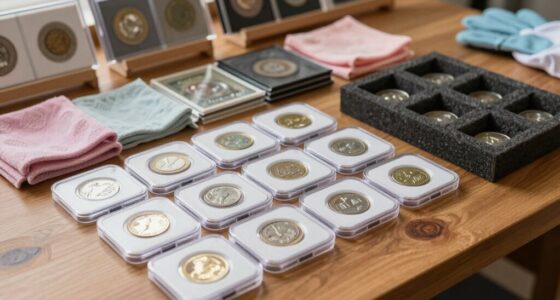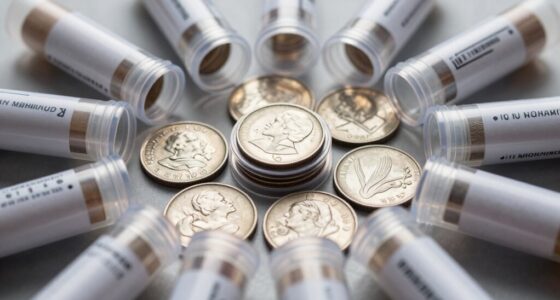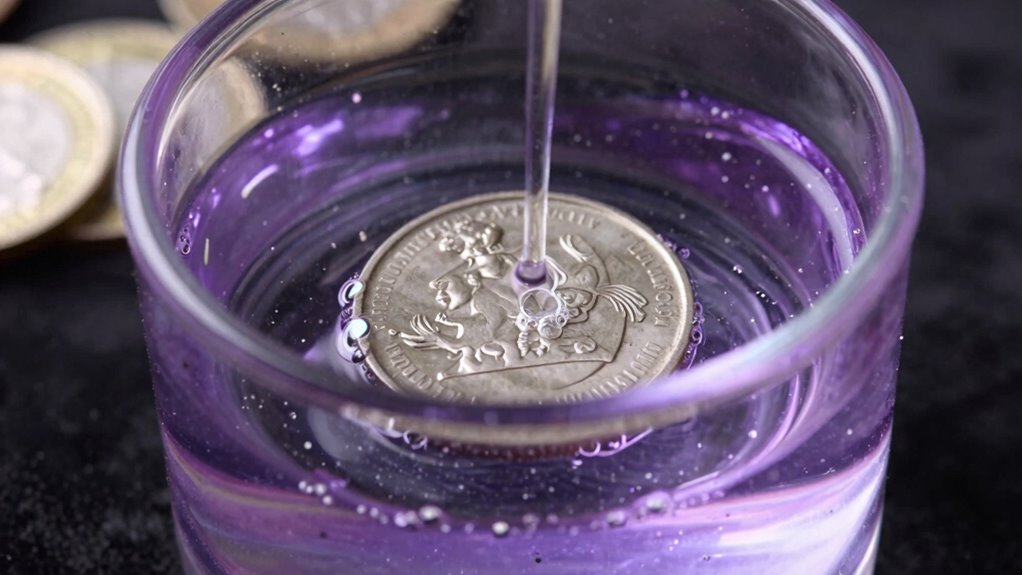

Ultrasonic cleaners can effectively restore the shine and detail of coins, especially for dirt or grime buildup, and are safe if you use gentle solutions and short cleaning cycles. However, they can also damage delicate surfaces or antique patinas, reducing your coin’s value. If you’re unsure about your coins’ condition or worth, it’s wise to get expert advice before cleaning. Keep exploring to learn when ultrasonic cleaning helps and when it might hurt your collection.
Key Takeaways
- Ultrasonic cleaning restores coin shine and detail but may damage delicate surfaces or patinas.
- Proper, gentle cleaning solutions prevent harm; harsh chemicals can reduce coin value.
- Short, controlled cycles avoid over-cleaning, preserving the coin’s natural character and worth.
- Valuable or antique coins should be professionally evaluated before cleaning to avoid devaluation.
- Collectors often prefer natural aging; cleaning can sometimes diminish historical or monetary value.
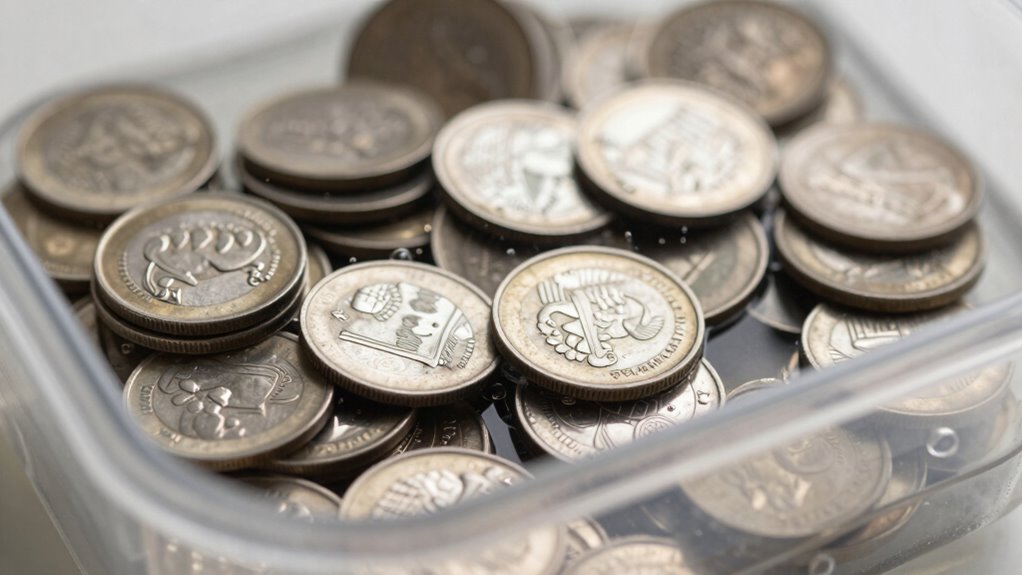
If you want to restore the shine and detail of your coin collection, ultrasonic cleaners offer an effective solution. These devices use high-frequency sound waves to loosen dirt, grime, and corrosion, making cleaning both efficient and thorough. However, before diving into ultrasonic cleaning, it’s essential to understand proper restoration techniques and prioritize cleaning safety. Not all coins respond well to ultrasonic cleaning, especially if they’re rare, old, or have sentimental value. Knowing when and how to clean your coins can prevent accidental damage that might diminish their worth.
When you’re considering using an ultrasonic cleaner, start by selecting the right cleaning solution. A gentle, non-abrasive cleaner designed for coins or jewelry is best. Avoid harsh chemicals or household cleaners, as these can damage the coin’s surface or patina. Immerse your coins carefully, ensuring they don’t touch each other or the sides of the tank, which could cause scratching. Set the device for a short cycle—usually a few minutes—to prevent over-cleaning. Afterward, rinse your coins with distilled water, avoiding tap water that might contain minerals or chemicals that leave residues. Pat them dry with a soft cloth, never rub vigorously, to maintain their integrity.
While ultrasonic cleaning is effective, it’s not suitable for every coin. Coins with delicate surfaces, ancient patinas, or those that are heavily tarnished may suffer damage or loss of detail if cleaned improperly. For valuable or unique pieces, consult with a professional before attempting any cleaning. Remember, some collectors prefer the natural aging process, as patina can add character and value. In such cases, rigorous cleaning might do more harm than good. Always weigh the potential benefits against the risks, and when in doubt, err on the side of caution.
Safety is another critical aspect of ultrasonic cleaning. Always operate your device in a well-ventilated area and keep it out of reach of children. Use gloves and eye protection if necessary, especially when handling cleaning solutions. Follow the manufacturer’s instructions carefully, including recommended cleaning times and solution concentrations. Properly maintain your ultrasonic cleaner by regularly checking for wear and replacing the solution as needed. This not only extends the device’s life but also ensures consistent cleaning results without damaging your coins. Additionally, understanding the importance of sound waves in ultrasonic cleaning can help you optimize the process for better results.
Frequently Asked Questions
Can Ultrasonic Cleaning Damage Rare or Delicate Coins?
Yes, ultrasonic cleaning can damage rare or delicate coins. The intense vibrations might cause surface erosion, especially on soft or aged surfaces. Additionally, if chemicals are used during cleaning, they can trigger unwanted chemical reactions that weaken the coin’s structure or tarnish its surface. Consequently, you should be cautious and avoid ultrasonic cleaners for fragile coins, as improper use can reduce their value and cause irreversible harm.
What Cleaning Solutions Are Safest for Ultrasonic Coin Cleaning?
You should use gentle, chemical-safe solutions like distilled water or a mild soap for ultrasonic coin cleaning. Avoid harsh chemicals that can damage delicate surfaces. For alternative cleaning, consider using acetone or isopropyl alcohol sparingly, but only if you know they’re safe for your coin’s material. Always research each solution’s chemical safety and test on a small area first to prevent potential harm and preserve your coin’s value.
How Often Should I Ultrasonic Clean My Coin Collection?
You should ultrasonic clean your coin collection sparingly, about once every few years or when they’re visibly dirty. Over-cleaning can strip away patina and diminish value, so follow strict frequency guidelines and cleaning intervals. Think of ultrasonic cleaning as a rare treat, not a routine chore. This guarantees your coins stay pristine without risking damage, preserving their beauty and worth for generations to come.
Are There Specific Coin Types That Shouldn’T Be Cleaned Ultrasonically?
You should avoid ultrasonically cleaning special coin types like ancient coins, proof coins, and those with delicate toning or engravings. Cleaning restrictions apply because ultrasonic cleaning can damage surfaces, remove patina, or diminish value. If you’re unsure, consult a professional before cleaning, as improper methods might reduce your coin’s worth. Always prioritize preservation over aggressive cleaning to maintain both the coin’s integrity and its collector value.
Does Ultrasonic Cleaning Affect Coin Grading or Appraisal?
Think of ultrasonic cleaning as a double-edged sword—you might sharpen your coin’s shine, but it can also cut into its grading impact. Ultrasonic cleaning can alter a coin’s surface, potentially affecting grading and appraisal considerations. If your coin’s value hinges on its original patina or marks, cleaning could diminish its worth. Always consider professional advice before cleaning, as improper methods might harm your coin’s true collectible value.
Conclusion
Remember, ultrasonic cleaners are like double-edged swords—they can restore your coins’ shine or cut into their story if used unwisely. Think of your coins as silent storytellers; over-cleaning can erase their history, leaving you with a shiny shell but no tales to tell. Use these tools wisely, respecting their power to preserve history rather than erase it. When in doubt, sometimes a gentle touch preserves the true value of your treasured coins.