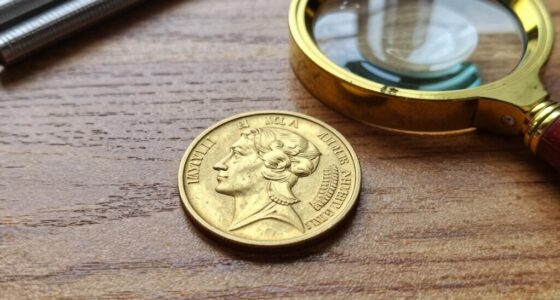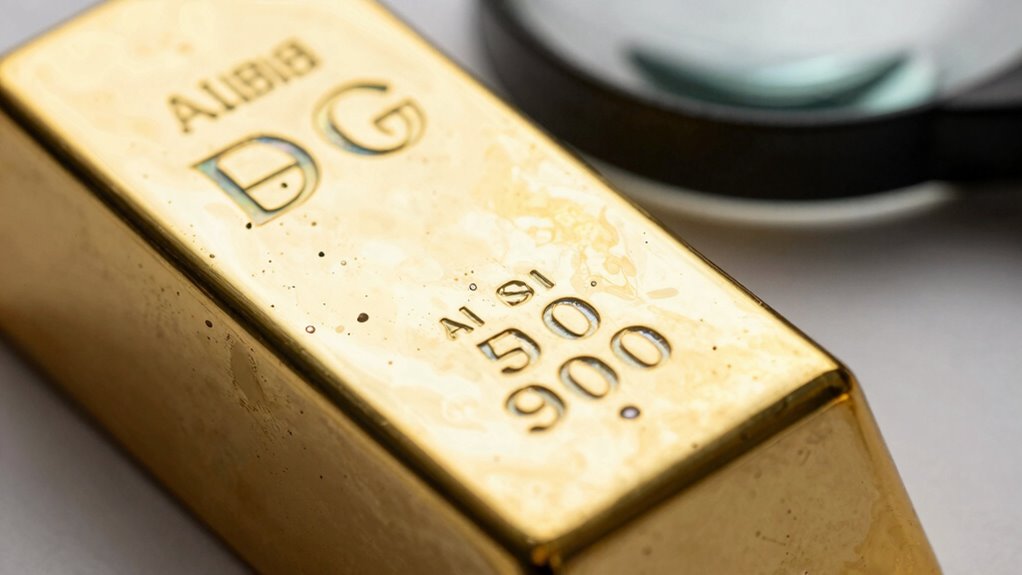

Counterfeit bullion often looks convincing but is made from cheap metals like brass, copper, or plated layers to mimic gold or silver. scammers cast or layer these fakes, using poor markings, uneven surfaces, or inconsistent color to deceive buyers. They may also rely on low-cost techniques like coating base metals or using indistinct stamps. Recognizing these fakes involves examining details, testing materials, and understanding production tricks—if you stay alert, you’ll uncover how genuine items truly differ.
Key Takeaways
- Common fake bullion is made from inexpensive metals like brass or copper, often plated with a thin layer of precious metal.
- Counterfeiters use casting or layering techniques to mimic authentic coins or bars’ appearance and weight.
- Fakes may exhibit surface irregularities, poor stamping, or inconsistent coloration when inspected closely.
- Sophisticated counterfeits can include convincing alloys or surface treatments that require advanced testing to identify.
- Recognizing genuine hallmarks, serial numbers, and using proper testing methods helps distinguish authentic bullion from fakes.
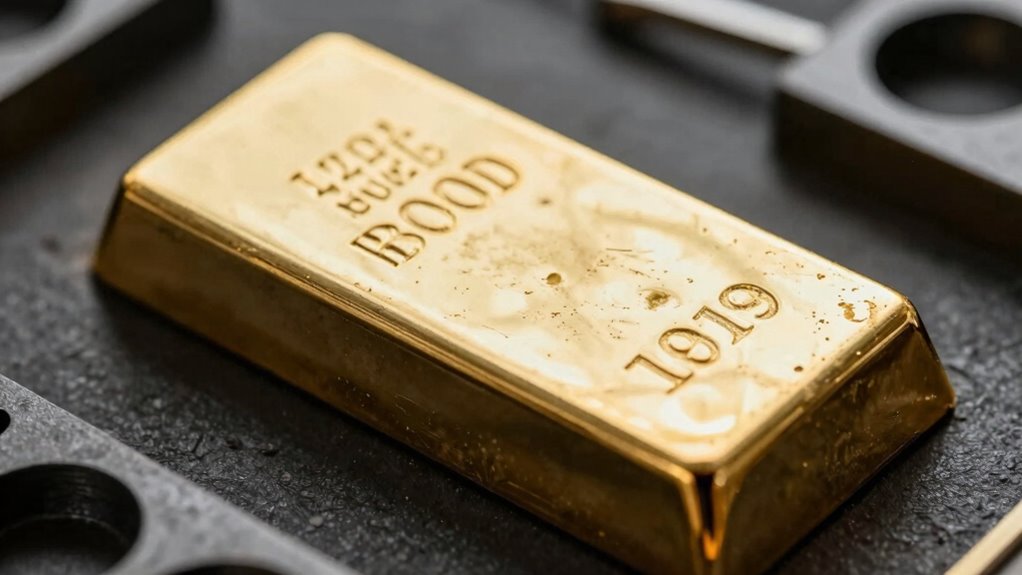
Have you ever wondered how to spot fake gold or silver bullion? It’s a crucial skill if you’re investing in precious metals, especially given how convincing some counterfeits can be. Understanding authentication techniques is key. Legitimate bullion typically bears specific hallmarks, serial numbers, and markings that are difficult to replicate precisely. You can start by examining the weight and dimensions; genuine coins and bars are manufactured with strict tolerances, so any discrepancy could be a red flag. Visual inspection is also essential—look for inconsistencies in color, surface finish, and detail. Counterfeiters often use inferior materials that don’t shine or feel right, and close inspection with a loupe can reveal poorly stamped markings or uneven surfaces. A magnet test can be helpful too—real gold and silver are non-magnetic, so if a magnet sticks strongly, it’s likely fake. But don’t rely solely on this; some fakes use non-magnetic metals coated with a thin layer of precious metal. Additionally, understanding counterfeit bullion production techniques can help you recognize more sophisticated fakes. Knowing how these fakes are made helps you understand their market impact. Counterfeit bullion is often produced with inexpensive metals like brass, copper, or plated base metals, then stamped or coated to mimic real coins or bars. Some counterfeiters go further, casting fakes from more convincing alloys or even layering precious metals onto base metals to create a more authentic appearance. These fakes are then sold at a fraction of real bullion’s value but can deceive even experienced collectors and investors if they aren’t cautious. The market impact of these counterfeits can be significant; they diminish trust, cause financial losses, and can even distort market prices. When fake coins seep into circulation, they undermine the integrity of the entire bullion market, making it harder for honest traders to discern real from fake, especially in high-volume transactions.
To protect yourself, always buy from reputable sources and ask for certificates of authenticity or assay reports when possible. Using professional authentication techniques, like X-ray fluorescence (XRF) analyzers or acid tests, can further verify the metal’s purity. Remember, if something seems too good to be true—like a bargain price or suspicious markings—it probably is. Staying vigilant with a basic understanding of how counterfeit bullion is made and the authentication techniques available will help you avoid falling victim to these scams. Ultimately, safeguarding your investments requires a mix of knowledge, skepticism, and verified purchasing channels. Being aware of the market impact of counterfeits also encourages a more secure and transparent trading environment for everyone involved.
Frequently Asked Questions
How Can I Verify the Authenticity of Rare or Vintage Bullion?
To verify the authenticity of rare or vintage bullion, you should use a combination of authentication methods and grading standards. Start by examining the bullion for clear markings, weight, and finish, then compare these details with official specifications. Consider professional appraisal or certification from reputable grading services, which can confirm authenticity. Always scrutinize for signs of tampering or irregularities, and avoid deals from untrusted sources to guarantee you’re getting genuine items.
Are There Specific Tools to Detect Counterfeit Bullion at Home?
Yes, you can detect counterfeit bullion at home using specific tools. A magnifying glass helps you examine fine details, such as mint marks and surface texture, to spot irregularities. Additionally, counterfeit detection kits are available, offering tests like magnetic and density checks. These tools make it easier to identify fakes quickly, giving you peace of mind before making any transactions. Always combine tools for more accurate results.
What Are the Legal Penalties for Producing Fake Bullion?
Producing fake bullion can lead to serious legal consequences, including hefty fines and imprisonment. You might face criminal penalties for counterfeiting, which can vary based on your jurisdiction and the scale of your operation. Laws are strict to protect investors and uphold market integrity. If caught, authorities will likely pursue charges that could result in significant financial and legal repercussions, so it’s best to steer clear of counterfeit activities altogether.
How Do Counterfeiters Acquire Genuine Bullion for Faking?
Imagine a shadowy marketplace where the shimmering glow of genuine precious metals is secretly traded. You might acquire real bullion through stolen or illegally obtained sources, or by exploiting counterfeit markets that blend authentic-looking pieces with fakes. Counterfeiters often buy or steal genuine bullion, then meticulously replicate it, using these real pieces as a base to craft convincing fakes, making it challenging to distinguish between real and counterfeit in the murky world of precious metals.
Can Digital or Blockchain Technology Help Prevent Bullion Counterfeiting?
Yes, digital verification and blockchain authentication can help prevent bullion counterfeiting. By using digital verification, you can instantly confirm a bullion’s authenticity through secure, electronic records. Blockchain authentication creates an immutable ledger that tracks each bullion piece’s origin and ownership, making it nearly impossible for counterfeiters to alter or duplicate. These technologies empower you to verify your bullion’s authenticity quickly and with confidence, reducing the risk of fakes.
Conclusion
Now that you know how counterfeit bullion is made and spotted, you’re better equipped to avoid falling for a fake. Remember, the devil’s in the details—look for subtle signs that reveal a counterfeit’s true nature. By sharpening your eye, you turn the tables and become your own best defender. After all, in the world of bullion, knowledge isn’t just power; it’s your shield against deception. Stay vigilant, and trust your instincts—they’re your greatest tool.