
TL;DR

Get home office essentials delivered free with Prime
- Fast, free delivery on millions of items
- Prime Video, Amazon Music and more included
- Member-only deals all year
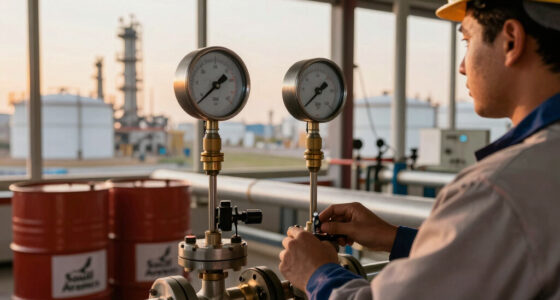
In an interview published by the European Central Bank on Sept. 30, Christine Lagarde identified energy disruption linked to the Middle East conflict as the most immediate threat to the euro-area economy. She also acknowledged that the ECB misjudged the 2021 energy shock and warned that France’s growth outlook and public debt require attention, while declining to predict a crisis.
Lagarde said the ECB’s priority remains **price stability**, but described the current energy crisis as a threat that reaches beyond consumer prices. Higher raw-material costs can also weigh on economic activity, she said, an effect that can receive less attention. The ECB cannot restore energy supplies or create oil and gas reserves, she added; its role is to prevent a supply shock from becoming embedded in broader inflation.
That response can involve higher interest rates, which make borrowing more expensive and may further restrain growth. Lagarde said the bank examines the strength of economic activity closely before acting. Asked about the rate increases in June and September, she recognized the tension between limiting inflation and avoiding an excessive drag on the economy. The interview does not provide a new rate decision or signal a specific next move.
Lagarde also acknowledged a past policy error. In **2021**, she said, the ECB expected the energy shock to be temporary and concluded it did not require an immediate response. She said events proved that judgment wrong, pointing to the scale of post-pandemic demand and what she described as a deliberate reduction in Russian gas reserves. She also said policymakers had not anticipated how interconnected the crises would become.
Energy Costs Test ECB’s Balancing Act
The interview sets out the central difficulty facing the ECB: energy disruptions can raise inflation while also weakening output, leaving policymakers to weigh competing risks. Higher rates may curb inflation pressures but can increase financing costs for households, businesses and governments. Lagarde’s comments are significant as an account of the bank’s approach, but they do not establish what the ECB will decide at a future meeting.
She described Europe’s economic model as under pressure from changes to **energy supply, export markets and security arrangements**. Europe had relied on comparatively cheap Russian energy, access to China’s large market and the US security umbrella, she said. Those supports have been shaken by the loss of Russian energy supplies, growing Chinese competition in advanced industries and questions about US security commitments. The interview presents these as broad strategic pressures, not as a forecast of a particular economic outcome.
Lagarde also pointed to competing demands for financing. Governments need funds while private firms seek capital, including for artificial intelligence, she said. In her account, that competition could raise the cost of financing public debt, particularly for countries whose debt levels are high and whose plans to control them lack credibility.
As an affiliate, we earn on qualifying purchases.
From Pandemic Shock to Energy Risks
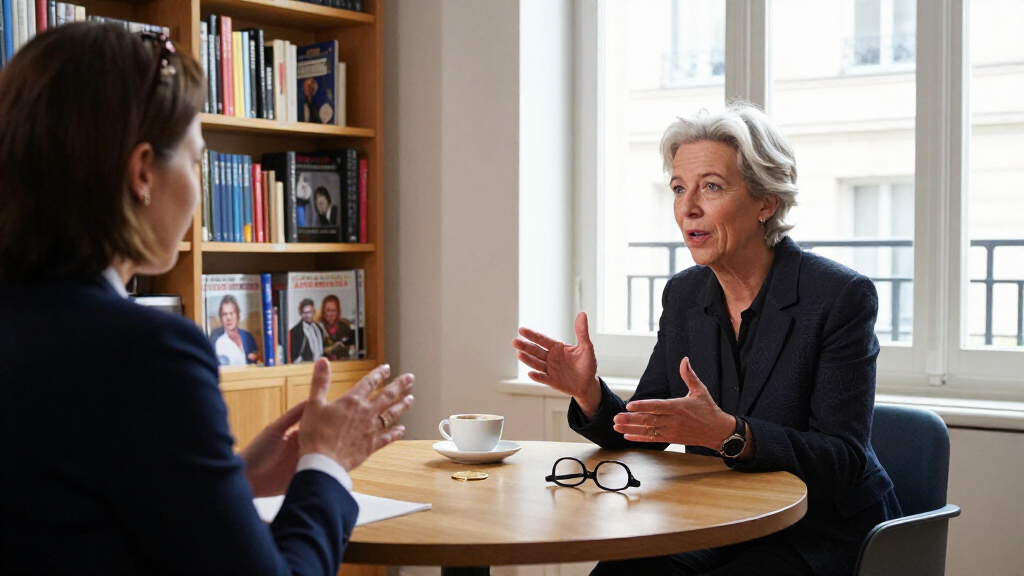
La Croix reporters Jean-Claude Bourbon and Marie Dancer conducted the interview on **Sept. 16 and 28, 2026**; the ECB published it on Sept. 30. Lagarde reflected on economic disruptions during her public service, including the 2008 financial crisis, the European sovereign debt crisis, the COVID-19 pandemic, Russia’s invasion of Ukraine and the conflict in the Middle East.
Her account links those events through their economic effects. The pandemic put pressure on energy and raw materials; Russia’s invasion of Ukraine intensified energy disruption and inflation, she said. In her view, crises now interact and can reinforce one another rather than simply occur in sequence. She said the ECB must respond while maintaining agreement among policymakers with differing views on interest rates.
Lagarde described herself as an “owl,” rather than a hawk or dove, to reject fixed labels on monetary policy. She said she is guided by the facts and prepared to adjust as conditions change. Her comments frame the ECB’s decisions as dependent on incoming evidence, rather than on a fixed preference for tighter or looser policy.
““What is new is how they are linked.””
— Christine Lagarde, ECB president, in the La Croix interview
As an affiliate, we earn on qualifying purchases.
Policy Path and French Outlook
The interview does not specify how long the Middle East-linked energy disruption may last, how large its eventual effect on inflation or growth could be, or whether the ECB will raise rates again. Lagarde described the risks and the factors the bank watches, but gave no forward rate commitment. The scale and timing of future energy-price movements remain unclear.
France’s economic figures in the interview are forecasts, not final results. Lagarde cited expected euro-area growth of **0.9% this year**, compared with **0.5% for France**. She said France’s debt was close to 120% of gross domestic product and was not on a path to control, but the interview does not detail the assumptions behind that debt estimate or set out a specific corrective plan.
Lagarde declined to label France Europe’s “sick country” or make predictions about its prospects. She said the situation was not like the crises of 2008 or 2011 and described Europe’s financial system as stronger. The supplied interview excerpt ends during her answer about reforms, so it does not include the full set of measures she went on to discuss.
inflation protection investment books
As an affiliate, we earn on qualifying purchases.
As an affiliate, we earn on qualifying purchases.
ECB Decisions Depend on Incoming Data
The ECB’s next policy steps will depend on how energy costs, inflation and economic activity develop. Lagarde said policymakers examine the strength of activity closely before acting, but the interview gives no date for a next decision and announces no new measure. Any shift in rates would need to be confirmed through a formal ECB decision.
For France, Lagarde called for a credible approach to restoring confidence, shared commitment and reforms. She mentioned simplifying administrative and regulatory rules, continuing labour-market reforms and addressing pension policy as life expectancy rises. The interview does not set deadlines for these changes or identify a specific government plan.
Readers can distinguish the interview’s confirmed policy statements from its projections: the ECB’s price-stability priority and Lagarde’s account of past decisions are direct remarks; the growth figures are expectations for the year, while the effects of energy disruption and future rate decisions remain uncertain. Further ECB communications and updated economic data will clarify whether those risks intensify or ease.
As an affiliate, we earn on qualifying purchases.
Key Questions
What did Christine Lagarde identify as the euro area’s immediate economic threat?
She identified the **energy crisis linked to the conflict in the Middle East**, saying it affects prices and economic growth.
Did Lagarde announce another ECB interest-rate increase?
No. She explained why the ECB may use rates to stop a supply shock from feeding into wider inflation, but the interview announced no new decision or specific future move.
What did Lagarde say the ECB got wrong in 2021?
She said the bank expected the energy shock to be temporary and thought it did not require an immediate response. She also said it had not anticipated the scale of post-pandemic demand or the interconnected nature of the crises.
What growth forecasts did Lagarde cite for France and the euro area?
She cited expected growth of **0.5% in France** and **0.9% in the euro area** for the year. These are forecasts quoted in the interview, not confirmed final growth results.
Did Lagarde predict a crisis in France?
No. She declined to make predictions, said the current situation was not like 2008 or 2011, and described Europe’s financial system as stronger. She nevertheless called France’s debt and economic outlook serious concerns.
Source: primary
Halloween Picks
halloween
As an affiliate, we earn on qualifying purchases.