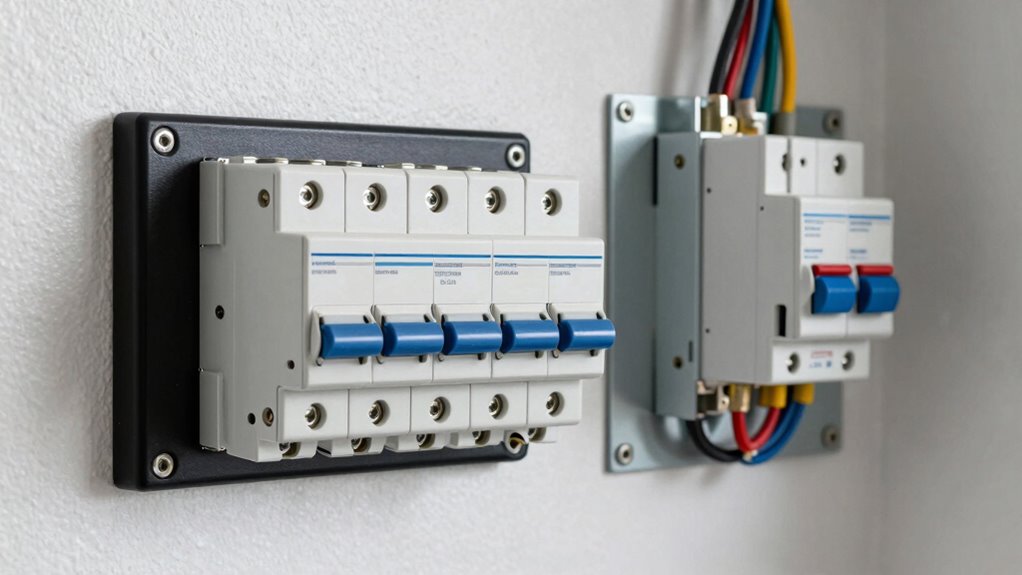

When connecting home backup power, a transfer switch automatically or manually switches your electrical system from grid to generator, offering safety and convenience but at a higher cost. An interlock kit, on the other hand, is a simpler, mechanical device added to your existing breaker panel, allowing manual switching at a lower price. Both options keep your home safe; if you want to understand which best suits your needs, there’s more to explore.
Key Takeaways
- Transfer switches connect generators directly to the electrical system, allowing automatic or manual safe switching during outages.
- Interlock kits are mechanical devices installed on existing panels that manually prevent simultaneous grid and generator power connection.
- Transfer switches offer more safety features and convenience, often with automatic switching, but are more costly and complex to install.
- Interlock kits are budget-friendly, simpler to install, and suitable for smaller generators and DIY projects, requiring manual operation.
- The choice depends on your generator type, budget, safety preferences, and whether you prioritize automation or simplicity.
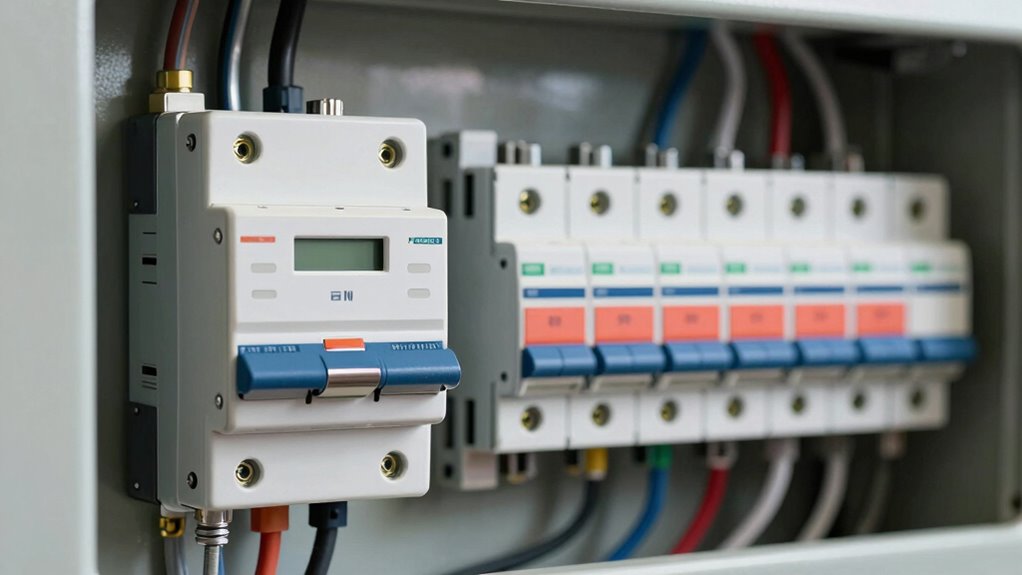
When preparing for power outages, choosing the right backup power transfer method is essential for safety and convenience. Whether you’re considering a transfer switch or an interlock kit, understanding how each works can make all the difference in protecting your home and ensuring a seamless power supply. The decision often hinges on factors like generator types, installation costs, and safety features. Transfer switches are dedicated devices that connect your generator directly to your home’s electrical system, allowing you to switch power sources safely. They come in different types—manual, automatic, and split-phase—each suited for specific generator setups. For example, automatic transfer switches can detect outages and start your generator automatically, providing convenience but often at a higher installation cost. Manual switches require you to flip a switch during a blackout, which is simpler but demands your active participation. Installation costs for transfer switches vary depending on the complexity, the number of circuits they control, and whether you opt for a single- or multi-phase system. Generally, they can range from a few hundred to over a thousand dollars, especially if your electrical system needs modifications or if you hire a professional electrician. Proper installation is critical for ensuring safety and reliable operation when using transfer switches.
In contrast, interlock kits are simpler and more affordable options. They are fundamentally mechanical devices that prevent the main breaker and generator breaker from being on at the same time, reducing the risk of backfeeding into the grid. You install an interlock kit directly onto your existing breaker panel, and it’s a cost-effective solution for many homeowners. The installation costs are usually lower than a transfer switch because they don’t require complex wiring or additional equipment, and many do-it-yourselfers find them straightforward to install. However, an interlock kit requires you to manually switch between grid power and generator power, which might be less convenient but is perfectly safe when installed correctly.
Both transfer switches and interlock kits serve the purpose of connecting your generator to your home’s electrical system, but they offer different levels of convenience, safety, and cost. Transfer switches tend to be more professional-grade, offering automatic switching and tailored circuit control, but they come with higher installation costs and more complex setup requirements. Interlock kits, on the other hand, provide a budget-friendly and straightforward way to connect your generator, especially suitable if you have a smaller generator or are comfortable with basic electrical work. Ultimately, your choice should consider your generator types, your budget for installation, and your preference for convenience versus simplicity.

Apple 2024 Mac mini Desktop Computer with M4 chip with 10‑core CPU and 10‑core GPU: Built for Apple Intelligence, 16GB Unified Memory, 512GB SSD Storage, Gigabit Ethernet. Works with iPhone/iPad
SIZE DOWN. POWER UP — The far mightier, way tinier Mac mini desktop computer is five by five...
As an affiliate, we earn on qualifying purchases.
Frequently Asked Questions
Can I Install a Transfer Switch Myself?
You can attempt a DIY installation of a transfer switch, but it’s not recommended unless you have electrical experience. Many areas require professional licensing for safe and code-compliant work. To guarantee safety and legality, it’s best to hire a licensed electrician for the job. They understand local codes and can handle the wiring properly, preventing potential hazards and ensuring your backup power system functions reliably when needed.
What Are the Cost Differences Between the Two Options?
The cost comparison between a transfer switch and an interlock kit varies, but generally, a transfer switch costs more upfront, including installation, while an interlock kit offers a lower-cost, DIY-friendly solution. If budget considerations matter, you might prefer the interlock kit for affordability and ease of setup. However, weigh the long-term benefits and safety features, as the transfer switch provides a more reliable, professional-grade connection.
Are There Specific Generator Sizes Compatible With Each System?
You need to consider generator compatibility and size limitations for both systems. Transfer switches typically support a wide range of generator sizes, but always check the manufacturer’s specifications to ensure your generator fits the required capacity. Interlock kits are more flexible but may have size limitations based on your panel’s design. Measure your generator’s wattage and consult your system’s guidelines to ensure compatibility and safe operation.
How Often Should I Test My Backup Power System?
You should test your backup power system at least once a month to guarantee it’s ready when needed. Regular generator maintenance helps identify issues early, extending your system’s lifespan and maintaining reliable power. During testing, run the generator under load for about 15-20 minutes. This keeps the system in good condition, reduces surprises during an outage, and ensures your generator performs when you truly need it.
Do Local Building Codes Affect Installation Choices?
Local building codes do affect your installation choices. You must guarantee local code compliance by following specific regulations, which may include permit requirements. These rules dictate safe installation methods, whether you opt for a transfer switch or an interlock kit. Ignoring local codes can lead to fines, unsafe setups, or failed inspections. Always check with your local authorities before proceeding, ensuring your backup power system is both legal and safe.
Apple 2024 Mac mini Desktop Computer with M4 chip with 10‑core CPU and 10‑core GPU: Built for Apple Intelligence, 16GB Unified Memory, 256GB SSD Storage, Gigabit Ethernet. Works with iPhone/iPad
SIZE DOWN. POWER UP — The far mightier, way tinier Mac mini desktop computer is five by five...
As an affiliate, we earn on qualifying purchases.
Conclusion
Choosing between a transfer switch and an interlock kit is like picking the right key for your home’s backup power. Both keep you safe and make sure your generator’s power flows smoothly, but they serve different needs. Think of it as finding the perfect fit for your home’s electrical puzzle. By understanding their differences, you can confidently shield your household from power outages and keep your home running seamlessly, no matter what the storm throws your way.
Apple 2024 Mac mini Desktop Computer with M4 Pro chip with 12‑core CPU and 16‑core GPU: Built for Apple Intelligence, 24GB Unified Memory, 512GB SSD Storage, Gigabit Ethernet. Works with iPhone/iPad
SIZE DOWN. POWER UP — The far mightier, way tinier Mac mini desktop computer is five by five...
As an affiliate, we earn on qualifying purchases.
Apple 2024 Mac mini Desktop Computer with M4 chip with 10‑core CPU and 10‑core GPU: Built for Apple Intelligence, 24GB Unified Memory, 512GB SSD Storage, Gigabit Ethernet. Works with iPhone/iPad
SIZE DOWN. POWER UP — The far mightier, way tinier Mac mini desktop computer is five by five...
As an affiliate, we earn on qualifying purchases.