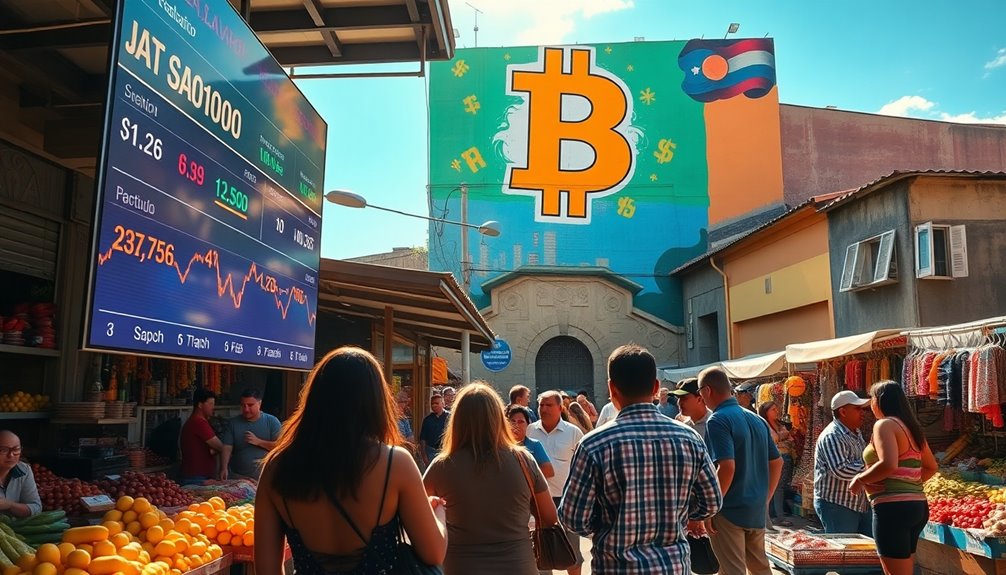

You might be surprised to learn that a new law in El Salvador could undermine Bitcoin's status as legal tender. Recent changes reflect a shift in government attitude, influenced by the International Monetary Fund. As the ability to use Bitcoin for tax payments is repealed, the future of cryptocurrency adoption in the country hangs in the balance, raising questions about its viability for everyday transactions. What could this mean for Salvadorans who embraced Bitcoin?

Get home office essentials delivered free with Prime
- Fast, free delivery on millions of items
- Prime Video, Amazon Music and more included
- Member-only deals all year
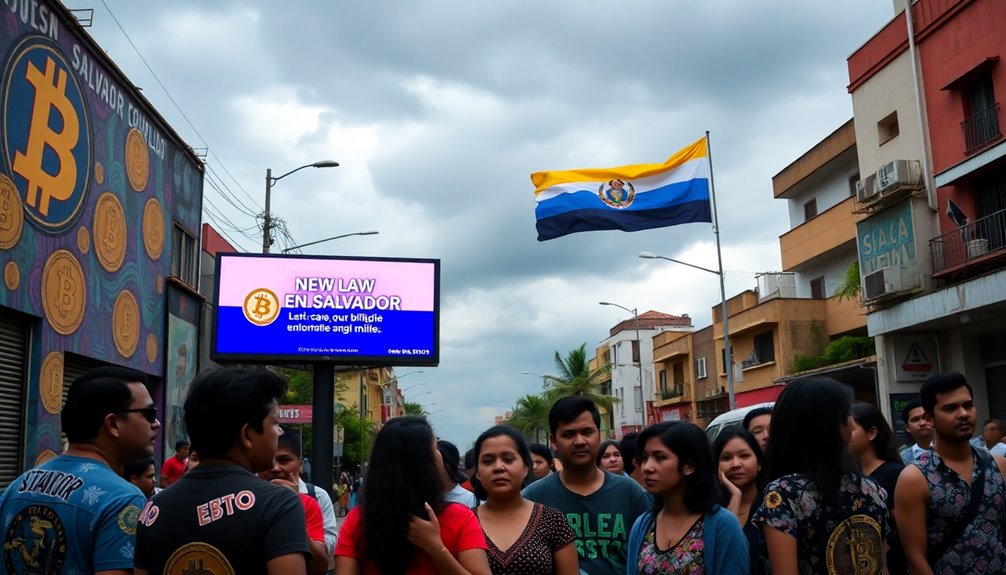
Since its historic adoption on September 7, 2021, Bitcoin's status in El Salvador has undergone significant changes. Initially, the government aimed to boost financial inclusion and cut down remittance costs by making Bitcoin legal tender. As the first country to take this bold step, the excitement was palpable, but skepticism loomed large, especially from international financial institutions. The government even established a system for automatic conversion of Bitcoin to U.S. dollars to ease the transition.
Fast forward to today, and while Bitcoin still holds its legal tender status, it's no longer regarded as a currency in practical terms. The use of Bitcoin has shifted to being voluntary for businesses, meaning they aren't obligated to accept it anymore. This change came alongside an agreement with the International Monetary Fund (IMF), which demanded modifications to the Bitcoin Law as part of a $1.4 billion loan deal. Such alterations included repealing some articles of the original law and scaling back the government's involvement in initiatives like the Chivo Wallet. Bitcoin can no longer be used for tax payments, highlighting a significant shift in its operational framework. Additionally, the risks associated with investing in Bitcoin have become more pronounced as economic conditions evolve.
Despite the initial optimism, the economic impact of Bitcoin has been minimal. Surveys indicate that an overwhelming 92% of Salvadorans didn't use Bitcoin for transactions by 2024. The anticipated reduction in remittance costs hasn't materialized, and the economy remains heavily dependent on the U.S. dollar. Concerns about Bitcoin's volatility have raised red flags for the IMF, which warns of significant risks to financial stability.
Public perception has shifted, too. Many Salvadorans remain skeptical of Bitcoin, often citing its unpredictable nature and technical issues with platforms like Chivo Wallet as major deterrents. Financial inclusion, a core goal of the initiative, hasn't seen the success the government hoped for, highlighting a lack of public awareness and education regarding Bitcoin's functionalities and benefits.
As regulatory changes continue to unfold, El Salvador's experiment with Bitcoin may face additional challenges. The government's reduced role in promoting the cryptocurrency could hinder future adoption. International financial institutions are closely monitoring the situation, and if public sentiment doesn't shift, the dream of Bitcoin thriving in El Salvador may be at risk.
With these ongoing dynamics, it's clear that Bitcoin's status as legal tender could face further scrutiny and change, leaving many to wonder what the future holds for this ambitious initiative.
Products Worth Considering

Canon SELPHY CP1500 Wireless Compact Photo Printer with RP-108 Ink and Paper Set

FLEXISPOT 42-Inch Electric Standing Desk Converter

Canon imagePROGRAF PRO-1100 17-Inch Professional Wireless Inkjet Photo Printer
As an affiliate, we earn on qualifying purchases.