
When you hold foreign dividend stocks in an IRA, you usually can’t claim the foreign tax credit because the IRS treats withholding taxes within IRAs differently. The account’s tax-deferred status means foreign taxes paid don’t qualify for credits to avoid double taxation. While this simplifies tax reporting, it also means missed opportunities to offset foreign withholding. Want to understand how to minimize these effects and optimize your investments? Keep exploring to learn more.
Key Takeaways
- IRAs are tax-deferred, so foreign withholding taxes are absorbed without triggering foreign tax credits.
- Foreign taxes paid within IRAs cannot typically be claimed as credits, reducing double-taxation relief.
- The IRS treats IRA withholding as part of overall tax treatment, limiting the applicability of foreign tax credits.
- Tax treaties often do not apply within IRAs, preventing reduction or elimination of withholding taxes.
- Foreign dividends in IRAs grow tax-deferred, but foreign tax credits are generally unavailable, leading to potential tax loss.
IRA foreign dividend stock investing guide
As an affiliate, we earn on qualifying purchases.
As an affiliate, we earn on qualifying purchases.
Why Do You Lose the Foreign Tax Credit in an IRA?

When you hold foreign dividend stocks inside an IRA, you typically lose the ability to claim the foreign tax credit. This happens because IRAs are tax-advantaged accounts that defer taxes, so the IRS considers IRA withholding as part of your overall tax treatment. Even if foreign governments withhold taxes based on tax treaty benefits, these withholdings are usually not creditable within an IRA. The primary reason is that the IRS treats IRAs differently from taxable accounts, preventing you from claiming the foreign tax credit to avoid double taxation. Instead, any foreign taxes paid are effectively absorbed by the IRA’s tax-deferred status. This means you won’t get the same tax relief benefits as you would in a taxable account, where foreign tax credits can be claimed directly. Additionally, the tax treatment of IRAs generally excludes foreign tax credits, reinforcing the inability to offset foreign withholding taxes in these accounts.
As an affiliate, we earn on qualifying purchases.
How Does the Foreign Tax Credit Work in Taxable Accounts?

In taxable accounts, the foreign tax credit helps you avoid double taxation on dividends earned from foreign stocks. When you receive dividends, foreign governments often withhold tax—called withholding tax—which reduces your earnings. However, US tax laws allow you to claim a credit for these taxes, reducing your US tax bill. To benefit, you need to understand how tax treaty benefits can lower withholding tax rates and maximize your credit. Keep in mind, the credit is limited to the amount of US tax on that income, so it might not cover all foreign taxes paid. Proper documentation is essential to claim the credit.
- Claiming foreign tax credit limits
- Impact of tax treaty benefits
- Withholding tax reduction strategies
- IRS rules for foreign tax credits
- Foreign tax credit forms to file
tax-efficient international stock ETFs
As an affiliate, we earn on qualifying purchases.
As an affiliate, we earn on qualifying purchases.
What Are the Tax Implications of International Dividends in IRAs?
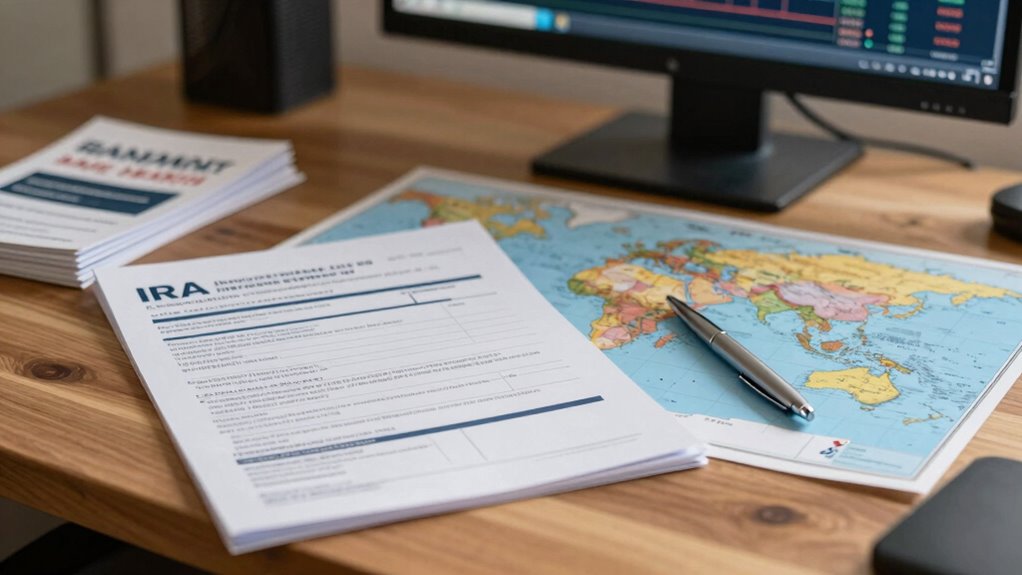
International dividends received within IRAs generally aren’t taxed when earned, which simplifies your tax planning. Since IRAs are tax-advantaged accounts, they typically shield you from immediate cross border taxation on foreign dividends. This means you don’t face withholding taxes or reporting requirements for dividends from foreign stocks while the assets stay in the IRA. Additionally, tax treaty benefits that often reduce withholding taxes for investors in taxable accounts usually don’t apply within IRAs, because the tax deferral or exemption overrides treaty provisions. As a result, your foreign dividends grow tax-deferred, but you won’t benefit from foreign tax credits or treaty reductions during the accumulation phase. This setup makes international dividend investing in IRAs straightforward, with fewer tax complications than in taxable accounts. Furthermore, the role of the foreign tax credit generally diminishes in an IRA context, since the account’s tax-deferred nature means the credit is effectively lost. A better understanding of tax treaty benefits can help investors optimize their strategies outside of IRAs, especially considering the complexities of cross-border taxation. Additionally, understanding how wave and wind factors can influence currency exchange rates and international market volatility may assist investors in managing risks associated with foreign investments.
IRA tax-deferred investment accounts
As an affiliate, we earn on qualifying purchases.
As an affiliate, we earn on qualifying purchases.
How Can You Reduce Withholding Taxes on International Dividends in Your IRA?

While IRAs generally shield you from withholding taxes on foreign dividends, you can still take steps to reduce any remaining tax impact. Implementing effective withholding strategies can help minimize taxes before they reach your account. One key approach is to leverage tax treaty benefits, which many countries offer to reduce or eliminate withholding rates for residents or treaty traders. Additionally, you can:
- Research the specific withholding rates for each country
- Submit necessary forms, like the W-8BEN, to claim treaty benefits
- Work with a tax professional familiar with international tax treaties
- Consider holding international stocks in accounts outside IRAs if treaties are limited
- Stay updated on treaty changes that could affect withholding rates
- Understand withholding tax regulations to better navigate international investing and avoid surprises
These strategies help optimize your IRA’s tax efficiency on international dividends.
What Should Investors Know About International Dividends and IRA Tax Rules?

Understanding how IRA tax rules apply to international dividends is essential for making informed investment decisions. When engaging in cross-border investing, you should be aware that U.S. tax laws treat foreign dividends differently than domestic ones. Typically, IRA investments shield you from immediate taxation, but international dividends may still be subject to foreign withholding taxes. Tax treaty benefits can sometimes reduce these taxes, but the benefits vary by country and may not fully eliminate withholding. It’s indispensable to understand that, within an IRA, foreign taxes often can’t be claimed as credits, causing the foreign tax credit to disappear. Additionally, foreign withholding taxes can significantly impact your overall returns if not properly managed. Recognizing these rules helps you optimize your international dividend strategy**** and avoid surprises that could erode your investment returns. Being aware of Tax treaty benefits can also help you minimize withholding taxes, though these benefits are not always guaranteed. Moreover, many investors overlook the fact that **foreign tax credits** generally cannot be used within IRAs, which can lead to unexpected tax liabilities.
Frequently Asked Questions
Can I Claim a Foreign Tax Credit on Dividends Within a Roth IRA?
You can’t claim a foreign tax credit on dividends within a Roth IRA because of IRA taxation rules. Since Roth IRAs are tax-advantaged accounts, dividend withholding taxes paid on foreign stocks are not deductible or creditable. The foreign tax credit typically applies to taxable accounts, but inside a Roth IRA, the IRS considers dividends as tax-free qualified distributions, so the foreign withholding tax fundamentally disappears, preventing you from claiming a credit.
How Do Treaty Benefits Affect Foreign Withholding Taxes in IRAS?
Think of treaty benefits as a secret handshake that unlocks withholding tax reductions. When you invest in foreign stocks through an IRA, tax treaty complexities can lower withholding taxes on dividends. These treaties often specify reduced rates, but within IRAs, the benefits usually don’t apply because of tax rules. So, while treaties can help, your IRA’s structure often limits these advantages, making it tricky to benefit fully from treaty provisions.
Are There Specific Foreign Countries With Better Tax Treaties for IRAS?
Some countries offer better tax treaty nuances, resulting in more favorable country-specific withholding rates for IRAs. For example, countries like the UK, Canada, and Switzerland often have treaties that reduce withholding taxes on dividends. You should review each treaty’s details, as they vary and can substantially impact your after-tax returns. Understanding these specifics helps you optimize your investments and potentially minimize the foreign tax impact on your IRA.
What Are the Reporting Requirements for International Dividends in IRAS?
You don’t need to report international dividends earned within your IRA; the IRS considers these accounts tax-deferred. However, you should retain withholding documentation from foreign companies or brokers to substantiate any foreign taxes paid. While tax reporting isn’t necessary for the IRA itself, maintaining accurate records guarantees that if you withdraw funds or transfer assets, you can verify foreign tax credits or withholding amounts, avoiding potential issues down the line.
How Does Currency Fluctuation Impact Taxed Dividends in Foreign IRAS?
Currency fluctuations can impact taxed dividends in your foreign IRAs because exchange rates change over time, affecting the value of your dividends when converted to USD. Currency risk means that if the foreign currency weakens against the dollar, your dividends might be worth less, potentially reducing your overall returns. Conversely, favorable exchange rates can boost your gains, but you should be aware of this risk when investing internationally.
Conclusion
Understanding the tax rules around foreign dividends in your IRA is like maneuvering a maze—you need to know the right turns to avoid dead ends. While the foreign tax credit often disappears in an IRA, knowing how to minimize withholding taxes and plan your investments wisely can help you keep more of your earnings. Stay informed and proactive, and you’ll steer through international investing with confidence, just like a skilled navigator charting a course through unfamiliar waters.