Among these high-end chef knives, I’d name the Wüsthof Classic 8-inch Chef’s Knife the best overall for its versatile, familiar Western-style profile and practical everyday build. The Miyabi Birchwood SG2 is a standout premium choice for cooks who prioritize a fine Japanese edge and distinctive handle, while the Victorinox Fibrox Pro offers a useful lower-maintenance alternative for buyers who value function over luxury finishes. The main tradeoff is between hard, thin blades that can make precise cuts but need more careful handling, and tougher, more forgiving knives suited to varied kitchen work. Handle shape, sharpening habits, and comfort matter as much as steel names. Read on for the full breakdown and help matching a knife to your cooking routine.

Get home office essentials delivered free with Prime
- Fast, free delivery on millions of items
- Prime Video, Amazon Music and more included
- Member-only deals all year
Key Takeaways
- The Wüsthof Classic is the strongest all-around fit: its conventional Western-style design makes more sense for varied daily prep than choosing a knife mainly for a striking Damascus pattern.
- Miyabi Birchwood SG2 is the premium specialist: it pairs a high-performance Japanese steel approach with distinctive materials, but calls for more attentive care than a forgiving workhorse.
- Shun’s lineup is not one single experience: Shiranami, Sora, Classic Blonde, and Premier offer different handle and finish choices, so buyers should compare fit and intended use rather than assume the most decorated model is best.
- There is a meaningful value distinction: the Victorinox Fibrox Pro gives up luxury materials and presentation, yet can suit buyers who want a practical kitchen knife without paying for an upscale finish.
- Steel and upkeep travel together: several Japanese-style and Damascus-pattern options reward careful cutting and hand washing; buyers who regularly tackle hard squash or bones should favor a tougher profile and use a separate tool for those tasks.
| 8-inch Japanese Chef Knife with Hand-Forged Damascus VG10 Steel Core |  | Best for Damascus Craftsmanship | Blade length: 8 inches | Steel: Japanese VG10 Damascus steel | Layer construction: 67-layer Damascus | VIEW ON AMAZON | See Our Full Breakdown |
| Wüsthof Classic 8″ Chef’s Knife, Black |  | Best for Everyday Professional Use | Blade length: 8 inches | Blade material: Stainless steel | Handle material: High carbon stainless steel (as listed) | VIEW ON AMAZON | See Our Full Breakdown |
| Victorinox Fibrox Pro 8 Inch Chef’s Knife, Dishwasher Safe, Black | 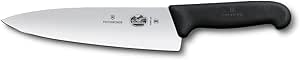 | Best Low-Fuss Workhorse | Blade length: 8 inches | Blade material: Stainless steel | Handle material: Fibrox TPE | VIEW ON AMAZON | See Our Full Breakdown |
| Dalstrong 8″ Japanese Chef Knife Gyuto – 66-Layer Damascus AUS-10V |  | Best for Edge Retention | Blade length: 8 inches | Steel core: AUS-10V | Layer construction: 66-layer Damascus | VIEW ON AMAZON | See Our Full Breakdown |
| Shun Shiranami 8-Inch Chef’s Knife |  | Best Premium Japanese Craftsmanship | Blade length: 8 inches | Blade material: Dual-core VG10 / VG2 Damascus steel | Layer construction: 71-layer Damascus | VIEW ON AMAZON | See Our Full Breakdown |
| Dalstrong Chef Knife – 8 inch – Valhalla Series – Premium 9CR18MOV Steel – Celestial Resin & Wood Handle | 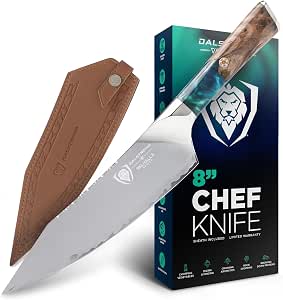 | Best for Distinctive Design | Blade material: 9CR18MOV high-carbon stainless steel | Blade length: 8 inches | Handle material: Celestial resin and stabilized wood | VIEW ON AMAZON | See Our Full Breakdown |
| Shun Sora 8-Inch Chef’s Knife |  | Best for Japanese-Style Precision | Blade length: 8 inches | Blade material: VG10 steel edge with 420J stainless steel upper | Handle material: Polymer blend (PP/TPE) | VIEW ON AMAZON | See Our Full Breakdown |
| Miyabi Birchwood SG2 Japanese Chef’s Knife, 8-inch, Karelian Birch Handle, Damascus Pattern, Handcrafted in Seki, Japan |  | Best for Artful Premium Craftsmanship | Blade material: SG2 Damascus steel; description also cites a VG10 micro-carbide core | Blade length: 8 inches | Total length: 14.75 inches | VIEW ON AMAZON | See Our Full Breakdown |
| Japanese Chef Knife 8 Inch Handcrafted with Damascus VG10 Steel |  | Best for a Classic Damascus Look | Blade material: VG-10 steel core with Damascus cladding | Blade length: 8 inches | Handle material: Stabilized wood and resin | VIEW ON AMAZON | See Our Full Breakdown |
| Miyabi Black 8-inch Chef’s Knife |  | Best for Lightweight High-Performance Cutting | Blade material: MC66 micro-carbide steel | Blade length: 8 inches | Handle material: Bigleaf maple | VIEW ON AMAZON | See Our Full Breakdown |
| Dalstrong 8″ Chef Knife – AUS-12V Steel, Black Damascus, Honeycomb Handle |  | Best for a Bold, Dark-Kitchen Look | Blade material: AUS-12V steel | Blade length: 8 inches | Blade edge: Straight edge | VIEW ON AMAZON | See Our Full Breakdown |
| Shun Classic Blonde 8″ Chef’s Knife |  | Best for Refined Japanese Precision | Brand: Shun | Model: DM0706W | Blade length: 8 inches | VIEW ON AMAZON | See Our Full Breakdown |
| Shun Premier 8-Inch Chef’s Knife |  | Best for Reduced Food Sticking | Blade length: 8 inches | Blade material: VG-MAX steel with Damascus cladding | Blade finish: Hammered tsuchime | VIEW ON AMAZON | See Our Full Breakdown |
| HOSHANHO 8-inch Japanese High Carbon Steel Chef’s Knife |  | Best for Hard-Steel Value | Blade material: Japanese high-carbon steel 10Cr15CoMoV | Blade length: 8 inches | Hardness: 60 HRC | VIEW ON AMAZON | See Our Full Breakdown |
| Wüsthof Classic Ikon 8″ Chef’s Knife |  | Best for a Western-Style Workhorse | Blade material: High-carbon stainless steel | Blade length: 8 inches | Handle material: Resilient synthetic material | VIEW ON AMAZON | See Our Full Breakdown |
| high end chef knife | Blade length | Handle material | Blade material | Construction |
|---|---|---|---|---|
| 8-inch Japanese Chef Knife wit | 8 inches | — | — | Forged, full tang |
| Wüsthof Classic 8" Chef’s Knif | 8 inches | High carbon stainless steel (as listed) | Stainless steel | Forged |
| Victorinox Fibrox Pro 8 Inch C | 8 inches | Fibrox TPE | Stainless steel | Stamped |
| Dalstrong 8" Japanese Chef Kni | 8 inches | G-10 | — | — |
| Shun Shiranami 8-Inch Chef’s K | 8 inches | Jute Micarta | Dual-core VG10 / VG2 Damascus steel | Forged |
| Dalstrong Chef Knife | 8 inches | Celestial resin and stabilized wood | 9CR18MOV high-carbon stainless steel | Forged |
| Shun Sora 8-Inch Chef’s Knife | 8 inches | Polymer blend (PP/TPE) | VG10 steel edge with 420J stainless steel upper | — |
| Miyabi Birchwood SG2 Japanese | 8 inches | Karelian birch | SG2 Damascus steel; description also cites a VG10 micro-carbide core | Forged |
| Japanese Chef Knife 8 Inch Han | 8 inches | Stabilized wood and resin | VG-10 steel core with Damascus cladding | Forged |
| Miyabi Black 8-inch Chef’s Kni | 8 inches | Bigleaf maple | MC66 micro-carbide steel | Forged |
| Dalstrong 8" Chef Knife | 8 inches | Honeycomb-pattern G10 | AUS-12V steel | Forged |
| Shun Classic Blonde 8" Chef’s | 8 inches | Pakkawood | VG-MAX core with Damascus stainless steel cladding | Forged |
| Shun Premier 8-Inch Chef’s Kni | 8 inches | Pakkawood | VG-MAX steel with Damascus cladding | Forged |
| HOSHANHO 8-inch Japanese High | 8 inches | Wood | Japanese high-carbon steel 10Cr15CoMoV | — |
| Wüsthof Classic Ikon 8" Chef’s | 8 inches | Resilient synthetic material | High-carbon stainless steel | Forged |
More Details on Our Top Picks
8-inch Japanese Chef Knife with Hand-Forged Damascus VG10 Steel Core
This knife suits buyers who want VG10 cutting performance paired with a pronounced handmade look. Its 67-layer Damascus construction and Kurouchi finish give it a darker, more textured appearance than the polished blade of the Shun Shiranami, while the full-tang build and 7.36-ounce weight provide a substantial feel without making it especially heavy. The stabilized wood-and-resin handle and included leather sheath add to its gift appeal. Compared with the Dalstrong Gyuto, which specifies a harder AUS-10V core and G-10 handle, this model gives less detail about edge hardness but offers a different, more traditional-looking finish. The tradeoff is maintenance: the dark surface can show scratches, and a hand-forged blade calls for careful cleaning and storage. I’d choose it for its balance of presentation and everyday use, not for a low-maintenance setup.
Pros:- VG10 core and 67-layer construction are aimed at sharp, precise cutting.
- Full-tang construction and a 7.36-ounce weight offer a balanced, substantial feel.
- Stabilized wood-and-resin handle is designed for comfortable use.
- Includes a genuine leather sheath and gift box.
Cons:- The black Kurouchi finish may show scratches with regular use.
- Hand-forged construction calls for careful cleaning and storage.
- Product data does not specify blade hardness, making edge-care expectations harder to compare.
Best for: Home cooks seeking an 8-inch VG10 knife with a distinctive dark Damascus finish, a full-tang build, and gift-ready storage.
Not ideal for: Cooks who want a low-maintenance knife or prefer clearly specified hardness and edge-retention details; the dark finish may also show wear.
- Blade length:8 inches
- Steel:Japanese VG10 Damascus steel
- Layer construction:67-layer Damascus
- Handle:Stabilized wood and resin
- Weight:7.36 ounces
- Overall length:13.3 inches
- Finish:Black Kurouchi forged
- Construction:Forged, full tang
Our verdict“Choose this knife if you want a gift-ready VG10 Damascus blade with a dark forged look and are willing to care for its finish.”
Wüsthof Classic 8″ Chef’s Knife, Black
The Wüsthof Classic is the lineup’s strongest fit for cooks who want a forged, work-focused knife rather than a patterned Damascus showpiece. Its 8-inch stainless-steel blade and 58 HRC rating point to a practical balance of durability and sharpness for chopping, mincing, and slicing. At 8 ounces, it is slightly heavier than the VG10 Damascus knife in this roundup, a difference some cooks may welcome for a planted feel during repetitive prep. It has a more conventional stainless blade than the Shun Shiranami, whose dual-core Damascus construction puts greater emphasis on Japanese craftsmanship and presentation. The Wüsthof’s plain, versatile design is its advantage, but it lacks the listed sheath and gift-box extras found with several Japanese picks. It also needs routine sharpening and proper care to keep its edge performing well.
Pros:- Forged stainless-steel construction is suited to regular kitchen work.
- 8-inch blade handles a broad mix of chopping, slicing, and mincing.
- 58 HRC rating reflects a balance aimed at durability and edge performance.
- Ergonomic handle is designed for comfort and control.
Cons:- Requires regular sharpening and proper maintenance to retain its edge.
- At 8 ounces, it is heavier than the listed VG10 Damascus knife.
- Lacks the Damascus styling and included sheath offered by some other picks.
Best for: Frequent home cooks and working cooks who want a forged stainless-steel chef’s knife for varied daily prep.
Not ideal for: Buyers seeking a lightweight Japanese-style blade, Damascus detailing, or a knife that comes with a protective sheath.
- Blade length:8 inches
- Blade material:Stainless steel
- Handle material:High carbon stainless steel (as listed)
- Weight:8 ounces
- Hardness:58 HRC
- Edge:Plain edge
- Construction:Forged
- Blade color:Silver
Our verdict“Pick the Wüsthof Classic if you prioritize a durable, forged stainless knife for daily prep over Japanese Damascus styling.”
Victorinox Fibrox Pro 8 Inch Chef’s Knife, Dishwasher Safe, Black
The Victorinox Fibrox Pro is the practical outlier in a group dominated by premium finishes and specialist steel. Its non-slip Fibrox handle, tapered stainless blade, and dishwasher-safe design make it the easiest pick here for cooks who value uncomplicated cleanup and dependable control over Damascus layers. Unlike the forged Wüsthof Classic, this knife uses stamped construction; that makes it a different proposition for buyers focused on traditional forged build, though it keeps the design straightforward. The grippy handle is particularly useful when hands are wet, but its feel and appearance are less refined than the stabilized wood-and-resin handle on the VG10 knife or the Jute Micarta on the Shun Shiranami. This is a capable prep tool, not the choice for someone seeking a high-end presentation piece. Its 8-inch blade may also feel limiting for cooks who prefer a longer knife for large ingredients.
Pros:- Tapered stainless-steel blade is designed for precise everyday cutting.
- Fibrox TPE handle provides a non-slip grip and ergonomic handling.
- Dishwasher-safe construction simplifies cleanup.
- 8-inch blade covers common chopping, slicing, and dicing tasks.
Cons:- Stamped construction lacks the forged build of the Wüsthof and Japanese Damascus picks.
- Fibrox handle has a utilitarian feel that may not suit buyers who prefer wood or Micarta.
- The 8-inch blade may be short for cooks who favor a longer knife for larger prep jobs.
Best for: Busy home cooks and practical-minded professionals who want a grippy, easy-clean 8-inch knife for everyday prep.
Not ideal for: Collectors or gift buyers seeking forged Damascus construction, premium handle materials, or a more refined presentation.
- Blade length:8 inches
- Blade material:Stainless steel
- Handle material:Fibrox TPE
- Overall length:13.4 inches
- Weight:22.68 g (listed)
- Construction:Stamped
- Care:Dishwasher safe
- Blade color:Silver
Our verdict“Choose the Fibrox Pro for a grippy, easy-clean daily knife, not for premium materials or Damascus presentation.”
Dalstrong 8″ Japanese Chef Knife Gyuto – 66-Layer Damascus AUS-10V
The Dalstrong Gyuto is the most clearly specified choice here for buyers prioritizing a hard, long-lasting edge: its AUS-10V core is listed at 62+ HRC, alongside 66-layer Damascus cladding. That hardness sets it apart from the Wüsthof Classic at 58 HRC, though a harder edge also calls for more careful handling and sharpening habits. Its contoured G-10 handle offers a durable, control-focused alternative to the wood-and-resin handle on the first VG10 knife and the Micarta handle on the Shun Shiranami. The hand-finished edge and stated food-release performance suit cooks who value precise slicing and clean cuts. This is a less forgiving pick for rough work or casual care, and the product data does not list its weight. A sheath and presentation box add useful storage and gifting value, but do not offset the need for attentive edge care.
Pros:- AUS-10V steel core and 62+ HRC hardness are specified for edge retention.
- 66-layer Damascus construction gives the blade a distinctive layered finish.
- Hand-finished edge is suited to precise slicing and general prep.
- G-10 handle, sheath, and presentation box offer a durable grip and useful storage.
Cons:- Hardness calls for careful handling and can make edge maintenance less forgiving.
- Product data does not specify weight, limiting balance comparisons.
- The more specialized hard-edge profile may not suit rough or careless use.
Best for: Experienced cooks who want a hard Japanese-style edge, prioritize edge retention, and are comfortable handling and sharpening harder steel.
Not ideal for: New cooks or anyone who regularly uses a knife for rough tasks and prefers a more forgiving blade that needs less careful handling.
- Blade length:8 inches
- Steel core:AUS-10V
- Layer construction:66-layer Damascus
- Hardness:62+ HRC
- Handle material:G-10
- Blade style:Japanese Gyuto
- Edge:Hand-finished
- Included accessories:Sheath and presentation box
Our verdict“Choose this Dalstrong if you want a hard AUS-10V Damascus edge and can give it careful handling and maintenance.”
Shun Shiranami 8-Inch Chef’s Knife
The Shun Shiranami is the most craft-led choice in this group, pairing a 71-layer dual-core VG10/VG2 Damascus blade with a Jute Micarta handle. That construction gives it a more distinctive material story than the conventional stainless Wüsthof Classic, while the handle offers a different feel from the G-10 on the Dalstrong Gyuto. Its 8-inch blade is sized for familiar all-purpose prep, and the listed 0.33 kg weight gives buyers a useful sense of its heft. The appeal is not just layered steel: this is the pick for cooks who value Japanese styling and a crafted finish as much as day-to-day versatility. The tradeoff is that its premium materials demand more care than the dishwasher-safe Victorinox, and the Micarta handle may need upkeep to preserve its appearance. It is a less practical choice for rough, unattended kitchen use.
Pros:- 71-layer Damascus construction uses dual-core VG10 and VG2 steel.
- Jute Micarta handle offers a distinct alternative to G-10 and synthetic grips.
- 8-inch blade suits a broad range of slicing, dicing, and mincing tasks.
- Forged construction and traditional Japanese styling make it a strong craft-focused choice.
Cons:- Handle may need careful maintenance to preserve its appearance.
- Requires more attentive care than the dishwasher-safe Victorinox Fibrox Pro.
- The premium, craft-focused design is less suited to rough everyday handling.
Best for: Experienced home cooks who value Japanese craftsmanship, dual-core Damascus steel, and a secure Micarta handle for precise everyday prep.
Not ideal for: Cooks seeking dishwasher-safe convenience, low-maintenance materials, or a rugged knife for careless handling.
- Blade length:8 inches
- Blade material:Dual-core VG10 / VG2 Damascus steel
- Layer construction:71-layer Damascus
- Handle material:Jute Micarta
- Weight:0.33 kg
- Overall length:14.25 inches
- Edge:Plain edge
- Construction:Forged
Our verdict“Choose the Shiranami if Japanese craftsmanship and a dual-core Damascus blade matter more to you than easy-care convenience.”
Dalstrong Chef Knife – 8 inch – Valhalla Series – Premium 9CR18MOV Steel – Celestial Resin & Wood Handle
I’d choose the Dalstrong Valhalla for buyers who want a substantial chef knife with a handle that stands apart from the lineup. Its forged 9CR18MOV stainless steel blade and 8-inch length suit everyday chopping and slicing, while the included leather sheath gives it a practical storage option beyond the block. Compared with the Shun Sora, this model puts more emphasis on a bold, weighty feel and presentation than on a Japanese-style profile for precise, controlled cuts. That heft may appeal to cooks who prefer a solid-feeling knife, but its listed 1.8-pound weight is a notable commitment for extended prep. The resin-and-wood handle is distinctive, though its shape and feel may not suit every grip. I’d skip it if delicate knife work or a light, nimble feel is the priority.
Pros:- Forged 9CR18MOV stainless steel blade is suited to regular kitchen work.
- Eight-inch blade handles a broad range of chopping and slicing tasks.
- Celestial resin and stabilized wood handle gives the knife a distinctive look and substantial feel.
- Included leather sheath offers blade protection during storage or transport.
Cons:- Listed weight of 1.8 pounds may feel tiring during long prep sessions.
- Handle design may not fit every hand or grip preference.
- Full-size blade is less convenient for delicate, close-control tasks.
Best for: Home cooks who want a forged 8-inch chef knife with a visually distinctive handle and a protective sheath for storage or transport.
Not ideal for: Cooks who prefer a lightweight knife, have a smaller grip, or often do delicate prep that feels unwieldy with a full-size blade.
- Blade material:9CR18MOV high-carbon stainless steel
- Blade length:8 inches
- Handle material:Celestial resin and stabilized wood
- Bolster:Stainless steel
- Construction:Forged
- Edge:Plain
- Item weight:1.8 pounds
- Included accessory:Leather sheath
Our verdict“Choose the Valhalla if you want a substantial, design-forward chef knife with a sheath, but look elsewhere for a lighter or more precise-feeling option.”
Shun Sora 8-Inch Chef’s Knife
The Shun Sora is the lineup’s more approachable route to a Japanese-style cutting feel: its 16-degree edge and VG10 steel edge favor clean slicing and fine control. The polymer-blend handle also makes it a more practical everyday choice than the Karelian birch handle on the Miyabi Birchwood, especially for cooks who want a less ornate, easier-to-live-with design. Its blade profile is less curved than a Western chef knife, so cooks accustomed to rocking a knife may need to adjust their technique. That shape rewards forward slicing, but is not the natural fit for every prep style. The Sora suits buyers seeking Japanese precision without the Miyabi models’ elaborate materials; those who want the most refined steel or a traditional Western curve should look elsewhere.
Pros:- VG10 steel edge is designed for sharp, precise cutting.
- Sixteen-degree edge angle supports a fine slicing feel.
- Textured polymer-blend handle offers a practical, balanced grip.
- Handcrafted in Japan.
Cons:- Less-curved profile may require a change in technique for Western-style rock chopping.
- The edge calls for careful maintenance to retain its cutting performance.
- Less visually elaborate than the Miyabi Birchwood and Miyabi Black options.
Best for: Cooks who favor forward slicing and want an 8-inch Japanese-style knife with a practical polymer-blend handle.
Not ideal for: Rock-chop users who rely on a pronounced Western curve, or buyers seeking an ornate handle and high-end Damascus presentation.
- Blade length:8 inches
- Blade material:VG10 steel edge with 420J stainless steel upper
- Handle material:Polymer blend (PP/TPE)
- Edge angle:16 degrees
- Origin:Japan
- Handcrafted:Yes
- Knife style:Japanese-style
Our verdict“Pick the Shun Sora if controlled Japanese-style slicing matters more than a Western curve or showpiece materials.”
Miyabi Birchwood SG2 Japanese Chef’s Knife, 8-inch, Karelian Birch Handle, Damascus Pattern, Handcrafted in Seki, Japan
I’d put the Miyabi Birchwood on the shortlist for cooks who want a high-end knife to serve as both a working tool and a centerpiece. Its SG2 Damascus blade, flower pattern, and Karelian birch handle give it a more decorative, natural-material character than the simpler polymer handle of the Shun Sora. The 8-inch forged blade keeps it capable of everyday chef-knife work rather than limiting it to display. That premium presentation comes with extra care: the handle and patterned blade call for thoughtful cleaning and storage, not rough treatment. The supplied product description also conflicts on the steel core, citing both SG2 and a VG10 micro-carbide core; I would verify the exact specification with the seller before buying. Skip it if easy-care practicality matters more than craftsmanship and appearance.
Pros:- Forged 8-inch blade suits a wide range of chef-knife tasks.
- Flower Damascus pattern gives the blade a distinctive finish.
- Karelian birch handle offers a natural-material alternative to the Shun Sora’s polymer blend.
- Handcrafted in Seki, Japan.
Cons:- Natural handle and patterned blade call for careful cleaning and storage.
- Product data names both SG2 and a VG10 micro-carbide core, so the exact core specification is unclear.
- Full-size blade may feel cumbersome for delicate, small-scale prep.
Best for: Experienced home cooks seeking a handcrafted Japanese chef knife with a natural birch handle and an ornamental Damascus finish.
Not ideal for: Buyers who want a low-maintenance workhorse, need a knife for careless handling, or require unambiguous steel specifications before purchase.
- Blade material:SG2 Damascus steel; description also cites a VG10 micro-carbide core
- Blade length:8 inches
- Total length:14.75 inches
- Handle material:Karelian birch
- Blade pattern:Flower Damascus
- Construction:Forged
- Edge type:Plain
- Weight:1.2 pounds
Our verdict“Choose the Miyabi Birchwood for Japanese craftsmanship and natural-material presentation if you’re comfortable with careful upkeep and confirm the steel details first.”
Japanese Chef Knife 8 Inch Handcrafted with Damascus VG10 Steel
This VG-10 Damascus chef knife offers a classic-looking alternative to the more established Japanese models in this group. Its forged 8-inch blade has a VG-10 core with Damascus cladding, while the stabilized wood-and-resin handle adds visual warmth and a slip-resistant grip. Compared with the Miyabi Black, it has a listed weight of 1.1 pounds rather than a notably light 7.04 ounces, so buyers should expect a more substantial feel instead of an especially nimble one. The listing leaves out details such as edge angle and origin, which makes it harder to judge its cutting geometry against the Shun Sora. The larger handle may also be awkward for smaller hands. I’d shortlist it for its materials and classic style, but not if precise fit information is a must.
Pros:- VG-10 core with Damascus cladding pairs a high-end steel choice with a patterned finish.
- Forged 8-inch blade suits general chef-knife tasks.
- Stabilized wood-and-resin handle is described as ergonomic and slip-resistant.
- Listed weight of 1.1 pounds gives it a more substantial feel than the lighter Miyabi Black.
Cons:- Handle may be too large for cooks who prefer a smaller grip.
- Product data does not specify edge angle or country of origin.
- Damascus finish and blade call for careful maintenance.
Best for: Home cooks who want a forged VG-10 Damascus chef knife with a stabilized wood-and-resin handle and a substantial feel.
Not ideal for: Cooks with smaller hands, buyers who prefer a lightweight knife, or shoppers who need detailed information on edge geometry and origin.
- Blade material:VG-10 steel core with Damascus cladding
- Blade length:8 inches
- Handle material:Stabilized wood and resin
- Weight:1.1 pounds
- Construction:Forged
- Edge:Plain
- Blade color:Silver
- Style:Classic
Our verdict“Consider this knife if a substantial VG-10 Damascus design appeals to you, but choose a better-documented model if grip fit and geometry guide your decision.”
Miyabi Black 8-inch Chef’s Knife
The Miyabi Black stands apart here for pairing premium steel with a listed weight of just 7.04 ounces. Its thin 8-inch blade, MC66 micro-carbide steel, and stated 66 Rockwell hardness are aimed at cooks who value a sharp, nimble cutting feel over heft. Compared with the Dalstrong Valhalla, which is listed at 1.8 pounds, the Miyabi is the clear choice for buyers who want less weight in hand; it is also more technically specified than the Damascus VG-10 knife, with hardness and handwashing guidance included. That refinement asks for care: it is handwash-only, and the thin blade can be damaged by drops or rough handling. The Bigleaf maple handle and Damascus floral pattern add premium character, but this is not a casual, toss-in-the-sink workhorse.
Pros:- Listed weight of 7.04 ounces favors nimble handling over heavier options such as the Dalstrong Valhalla.
- MC66 micro-carbide steel and stated 66 Rockwell hardness indicate a hard, high-performance blade.
- Handcrafted in Seki, Japan, with a Damascus floral pattern.
- Bigleaf maple handle gives it a natural-material finish.
Cons:- Handwash-only care rules out dishwasher cleanup.
- Thin blade may be damaged if dropped or mishandled.
- Requires careful upkeep compared with a more forgiving everyday knife.
Best for: Experienced cooks who prefer a light, thin Japanese blade and are willing to handwash and handle it carefully.
Not ideal for: Busy kitchens that need a dishwasher-safe or drop-tolerant knife, or cooks who prefer a heavier Western-style feel.
- Blade material:MC66 micro-carbide steel
- Blade length:8 inches
- Handle material:Bigleaf maple
- Weight:7.04 ounces
- Construction:Forged
- Blade edge:Plain
- Blade pattern:Damascus floral pattern
- Hardness:66 Rockwell
- Care:Handwash only
Our verdict“Choose the Miyabi Black if you want a light, hard Japanese blade and can commit to careful handwashing and handling.”
Dalstrong 8″ Chef Knife – AUS-12V Steel, Black Damascus, Honeycomb Handle
This Dalstrong pairs a 66+ HRC AUS-12V blade with a black Damascus finish, giving design-minded cooks a distinctive alternative to the more restrained Shun Classic Blonde. Its 8-inch straight edge suits everyday chopping, slicing, and precision prep, while the G10 honeycomb handle offers a different feel from the Pakkawood grips on both Shun knives here. The included sheath is useful for protected storage, especially if the knife will not live in a block. The tradeoff is a notably substantial 1.4-pound weight, which may feel tiring during long prep sessions and is much heavier than the Shun Classic Blonde’s listed 10.88 ounces. Its dark styling also will not suit every kitchen, and harder steel calls for careful handling and sharpening. I’d choose it for its combination of visual drama and edge-focused performance, not for a light, low-maintenance daily knife.
Pros:- AUS-12V steel with listed 66+ HRC hardness supports a sharp, durable edge
- Black Damascus blade gives it a more dramatic look than the Shun Classic Blonde
- Honeycomb-pattern G10 handle offers a distinct alternative to wood-based handles
- Protective sheath is included for storage
Cons:- At 1.4 pounds, it is substantially heavier than the Shun Classic Blonde and may tire the wrist
- Dark Damascus styling may feel out of place in a traditional kitchen
- High hardness calls for careful sharpening and handling
Best for: Cooks who want a high-hardness 8-inch knife with distinctive black Damascus styling and a sheath for drawer storage
Not ideal for: Anyone who prefers a lightweight knife, a traditional appearance, or a forgiving blade for rough handling
- Blade material:AUS-12V steel
- Blade length:8 inches
- Blade edge:Straight edge
- Hardness:66+ HRC
- Handle material:Honeycomb-pattern G10
- Construction:Forged
- Weight:1.4 lbs
- Item length:13.78 inches
Our verdict“Choose this Dalstrong if you want a visually striking, heavy-duty-feeling knife and are comfortable trading lightness and classic styling for its hard steel and black finish.”
Shun Classic Blonde 8″ Chef’s Knife
The Shun Classic Blonde is the clearest fit here for cooks who want a light, precise Japanese-style knife with a traditional-looking handle. Its VG-MAX core, Damascus cladding, and listed 16-degree edge support fine slicing and controlled prep; at 10.88 ounces, it is far lighter than the 1.4-pound Dalstrong Black Damascus. The D-shaped Pakkawood handle is described as suitable for both left- and right-handed users, a useful contrast with handles that favor a particular grip. Compared with the Shun Premier, this model has no listed hammered tsuchime finish, so it may be the simpler choice for cooks who prioritize a clean blade profile over a textured look. The tradeoff is a thin, hard edge that rewards careful use and upkeep rather than forceful chopping or careless storage. Its premium Japanese build makes most sense for attentive home cooks who value precision.
Pros:- VG-MAX core with a listed 16-degree edge supports precise slicing
- Light 10.88-ounce weight is easier to maneuver than the Dalstrong Black Damascus
- D-shaped Pakkawood handle is specified for both left- and right-handed users
- Handcrafted Japanese construction and sharpening support are included in the product information
Cons:- Hard, fine edge calls for careful handling and maintenance
- Damascus cladding and Pakkawood handle may need more attention than a simpler knife
- Lacks the Shun Premier’s listed hammered finish for cooks seeking that textured detail
Best for: Careful home cooks who prioritize light handling, fine slicing, and a Japanese-style edge for daily prep
Not ideal for: Cooks who regularly tackle hard ingredients with force or want a knife that needs little attention to its edge
- Brand:Shun
- Model:DM0706W
- Blade length:8 inches
- Blade material:VG-MAX core with Damascus stainless steel cladding
- Edge angle:16 degrees
- Handle material:Pakkawood
- Weight:10.88 ounces
- Construction:Forged
- Origin:Japan
Our verdict“Pick the Shun Classic Blonde if light, precise Japanese-style cutting matters more than a forgiving edge or a low-care routine.”
Shun Premier 8-Inch Chef’s Knife
The Shun Premier earns its place through a feature the Classic Blonde does not list: a hammered tsuchime finish intended to reduce drag and food sticking. That detail may matter when repetitive slicing leaves ingredients clinging to a smooth blade. Like the Classic Blonde, it uses a VG-MAX core with Damascus cladding and a Pakkawood handle, so the choice between them is less about the broad style of knife and more about the Premier’s textured finish and slightly longer listed overall length. At 214 grams, it stays in a relatively light format compared with the weighty Dalstrong Black Damascus. Its forged Japanese construction suits cooks who value careful cutting, but the product data does not list an edge angle, so I would not choose it on that specification alone. The Pakkawood needs care, and this is still a precision-oriented knife rather than a rough-use workhorse.
Pros:- Hammered tsuchime finish is designed to reduce drag and food sticking
- VG-MAX steel core with Damascus cladding combines a refined blade design
- Pakkawood handle provides a familiar wood-based grip
- At 214 grams, it is much lighter than the Dalstrong Black Damascus
Cons:- Pakkawood handle may need care to prevent drying
- The listed specs do not provide an edge angle for buyers comparing sharpening geometry
- Precision-focused Japanese construction is less suited to forceful, rough handling
Best for: Frequent slicers who want a Japanese-style chef knife with a textured blade finish intended to limit sticking
Not ideal for: Cooks who prefer a low-maintenance handle or want a knife specified for rough chopping and hard use
- Blade length:8 inches
- Blade material:VG-MAX steel with Damascus cladding
- Blade finish:Hammered tsuchime
- Handle material:Pakkawood
- Weight:214 g
- Item length:14.25 inches
- Blade color:Silver
- Construction:Forged
Our verdict“Choose the Shun Premier if reduced blade drag and a hammered finish matter more to you than simpler styling or a low-care handle.”
HOSHANHO 8-inch Japanese High Carbon Steel Chef’s Knife
HOSHANHO offers a straightforward route into a hard Japanese-steel blade without the layered Damascus presentation of either Shun. Its 10Cr15CoMoV steel is listed at 60 HRC, with an 8-inch blade and matte finish, making it a practical match for cooks who want sharp, general-purpose slicing and chopping rather than a showpiece. That simpler finish sets it apart from the Shun Premier’s hammered blade and the Dalstrong’s black Damascus styling. The description also highlights rust resistance, but the handle is wood and still calls for careful care. The main caution is that a very sharp knife can feel less forgiving to someone new to controlled cutting; the product description itself flags it as potentially too sharp for beginners. With no listed weight or construction type, buyers who need those details for balance comparisons have less information than they do for the Shun models.
Pros:- 10Cr15CoMoV Japanese high-carbon steel is listed at 60 HRC
- Eight-inch blade suits a wide range of slicing, chopping, and dicing tasks
- Matte finish offers a restrained alternative to the Shun Premier’s hammered look
- Description highlights rust resistance
Cons:- Sharpness may be less forgiving for beginners
- Wood handle requires careful maintenance
- Weight and construction type are not provided in the listed specifications
Best for: Experienced home cooks seeking a Japanese high-carbon steel blade for varied prep without ornate Damascus styling
Not ideal for: New cooks who are still developing knife control, or buyers who need detailed weight and construction specifications
- Blade material:Japanese high-carbon steel 10Cr15CoMoV
- Blade length:8 inches
- Hardness:60 HRC
- Handle material:Wood
- Blade finish:Matte
Our verdict“HOSHANHO suits experienced cooks who want a hard, practical Japanese-steel knife and do not need the finish or detail of the Shun models.”
Wüsthof Classic Ikon 8″ Chef’s Knife
The Wüsthof Classic Ikon is the Western-style counterpoint to the lighter, more precision-oriented Shun Classic Blonde. Its forged high-carbon stainless steel blade and resilient synthetic handle point toward a practical all-rounder for cooks who want one familiar 8-inch knife for chopping, slicing, and dicing. At 9.6 ounces, it is listed as lighter than the 10.88-ounce Shun Classic Blonde, while its 14-inch overall length is close to the Shun Premier’s 14.25 inches. The product description emphasizes balance and durability, but no hardness or edge-angle figures are supplied, so buyers who compare knives by those details may prefer the better-specified Shun Classic Blonde. Its plain silver blade also skips the Damascus and hammered finishes offered by the Shun models and Dalstrong. The tradeoff is a conventional, less decorative design, with some cooks finding its weight tiring over prolonged prep.
Pros:- Forged high-carbon stainless steel is suited to everyday chopping, slicing, and dicing
- Resilient synthetic handle avoids the wood-care concerns of the Shun models
- 9.6-ounce listed weight is lighter than the Shun Classic Blonde
- Plain silver blade offers a straightforward alternative to Damascus finishes
Cons:- Listed weight may still feel tiring during long prep sessions for some cooks
- No hardness or edge-angle specification is provided
- Lacks the hammered or Damascus finishes that distinguish the Shun and Dalstrong options
Best for: Home and professional cooks who want a forged stainless-steel Western-style knife with a synthetic handle for broad daily prep
Not ideal for: Cooks seeking Damascus detailing, a Japanese-style fine edge, or a knife with published hardness and edge-angle figures
- Blade material:High-carbon stainless steel
- Blade length:8 inches
- Handle material:Resilient synthetic material
- Weight:9.6 ounces
- Item length:14 inches
- Blade color:Silver
- Blade edge:Plain
- Construction:Forged
Our verdict“Choose the Classic Ikon if you favor a practical forged Western-style knife and synthetic handle over Japanese-style detailing or published edge geometry.”

How We Picked
I compared the 15 knives by the factors that change daily ownership: cutting profile, stated steel and construction, handle comfort cues, likely care demands, versatility, and build details. A high-end label or decorative pattern did not automatically earn a higher position; the question was whether the knife’s design offers a clear benefit for a particular cook without hiding meaningful upkeep or handling tradeoffs.
The ranking favors knives with a strong balance of performance, usability, and everyday practicality, then recognizes specialist strengths such as premium materials, Japanese-style cutting, or simpler maintenance. The Wüsthof Classic leads as the broadest fit, while the Miyabi Birchwood SG2 ranks higher for buyers seeking a refined premium experience. The Victorinox remains a practical value pick, and other entries are best judged by their individual steel, handle, and care needs rather than by appearance alone.
| high end chef knife | Construction |
|---|---|
| 8-inch Japanese Chef Knife wit | Forged, full tang |
| Wüsthof Classic 8" Chef’s Knif | Forged |
| Victorinox Fibrox Pro 8 Inch C | Stamped |
| Dalstrong 8" Japanese Chef Kni | — |
| Shun Shiranami 8-Inch Chef’s K | Forged |
| Dalstrong Chef Knife | Forged |
| Shun Sora 8-Inch Chef’s Knife | — |
| Miyabi Birchwood SG2 Japanese | Forged |
| Japanese Chef Knife 8 Inch Han | Forged |
| Miyabi Black 8-inch Chef’s Kni | Forged |
| Dalstrong 8" Chef Knife | Forged |
| Shun Classic Blonde 8" Chef’s | Forged |
| Shun Premier 8-Inch Chef’s Kni | Forged |
| HOSHANHO 8-inch Japanese High | — |
| Wüsthof Classic Ikon 8" Chef’s | Forged |
Factors to Consider When Choosing High End Chef Knives
Choosing among high-end chef knives is less about finding the most elaborate blade and more about matching its geometry, care needs, and handle to the work you actually do. I’d use these factors to narrow the field before choosing a specific model.
Choose a Cutting Style Before a Steel Type
Start with the way you move through ingredients, not a steel acronym. A thinner Japanese-style blade can suit precise slicing and fine vegetable work, while a more robust Western-style profile may feel steadier for varied prep and less exact technique. Harder, thinner blades can be less forgiving if twisted in a dense ingredient or used against a hard surface. A common mistake is buying a highly refined edge for tasks better handled by a cleaver or utility knife. If your cooking varies widely, favor a balanced shape over a narrow specialty. The best steel is the one whose strengths match your habits and whose limitations you can respect.
Treat Maintenance as Part of the Purchase
Every knife needs sharpening eventually, but the interval and sharpening method depend on the blade and your use. Before choosing a premium knife, decide whether you are comfortable learning whetstone sharpening or plan to use a qualified sharpener. A honing rod can help realign some edges, but it does not replace sharpening and may not suit every harder Japanese-style blade. Hand washing and immediate drying are sensible habits for fine knives, even when a listing emphasizes easy care. Avoid leaving a blade wet, soaking it in a sink, or putting it in a dishwasher. If those routines sound unrealistic, prioritize a tougher, simpler workhorse over delicate finishes.
Let Handle Comfort Outrank Handle Materials
Wood, resin, and synthetic handles each bring different feel and care considerations, but the material name alone cannot tell you whether a knife will suit your hand. Grip thickness, balance, bolster shape, and the way the handle meets the blade all affect control during repeated chopping. If possible, hold a similar handle style before buying, especially if you use a pinch grip or have smaller hands. A striking handle can make a knife feel special, yet it should not compensate for awkward balance or a slippery grip. Pay attention to how you hold a knife when your hand is damp, not only how it looks in a product photo. Comfort is personal, so treat it as a fit issue rather than a prestige feature.
Buy for Kitchen Tasks, Not for Bone-Cutting Claims
An eight-inch chef’s knife is a general prep tool, not a substitute for every blade in the kitchen. Hard bones, frozen food, and forceful prying can chip or damage a refined edge, even on a costly knife. For those jobs, use a cleaver, boning knife, or another tool designed for the force involved. If you mostly chop vegetables, herbs, and boneless proteins, a fine chef’s knife can cover a wide range of work. Buyers often mistake a premium knife’s sharpness for toughness; those qualities are not interchangeable. Matching each task to the right tool protects both the edge and your investment.
Decide What You Are Paying For
Higher-end knives may justify their place through steel, heat treatment, fit and finish, balance, or a handle that suits the buyer—not simply a patterned surface. Damascus layers can be visually appealing, but a pattern does not by itself prove that a knife will cut better or hold an edge longer. Compare construction and intended use, then ask whether the premium feature will matter in your kitchen. Paying more can make sense for a blade you enjoy using and can maintain, or for a carefully made knife that fits a specific style of cutting. It makes less sense if the knife will be neglected, used on unsuitable surfaces, or chosen only for its appearance. Set the budget around performance and ownership needs rather than a prestige label.
Plan for Sharpening and Storage Before the Knife Arrives
A sharp knife can be damaged in a drawer, where its edge may strike other utensils. A blade guard, knife block, or magnetic strip gives it a safer home and reduces accidental contact. Check that the storage method fits the blade length and will not expose the edge to frequent bumps. Also decide how you will keep the knife sharp before relying on it for daily prep. A premium blade without a realistic sharpening plan can become frustrating faster than a less expensive knife that receives regular care. Think of storage and sharpening as part of the knife system, not optional accessories.
Frequently Asked Questions
Is a Japanese-style chef knife a better choice than a Western-style knife for everyday cooking?
Neither style is automatically better; they suit different preferences and handling habits. Japanese-style knives often appeal to cooks who value precise slicing and a fine edge, while Western-style models can feel more familiar and forgiving during varied prep. The harder or thinner a blade is, the more carefully it may need to be used around dense ingredients and hard surfaces. If you want one knife for mixed household cooking, choose the profile that feels controlled in your grip rather than relying on country of origin. A separate cleaver or heavy-duty knife can cover tasks that are unsuitable for a chef’s knife.
Does a Damascus pattern mean a chef knife will cut better?
No; a Damascus-style pattern is not, by itself, proof of better cutting performance. The blade’s steel, heat treatment, geometry, edge quality, and balance have more direct influence on how it cuts and feels. Patterned finishes can add visual character, which may matter to someone choosing a knife as a long-term personal tool. They should not replace questions about care, handle comfort, or the knife’s intended use. Compare those functional details before paying extra for appearance.
Can I put a high-end chef knife in the dishwasher?
Hand washing and drying are the safer routine for a high-end chef knife, even if a product listing describes a model as dishwasher safe. Dishwasher heat, detergent, movement, and contact with other items can dull or damage an edge and may affect the handle over time. Wash the blade soon after use, dry it fully, and store it where the edge will not knock against other tools. This small routine protects both premium and practical knives. If dishwasher convenience is non-negotiable, check the maker’s care instructions and weigh that need against the wider selection of knives suited to hand care.
Should I buy a premium knife if I have never sharpened one?
You can, but plan for sharpening before the edge starts to feel dull. A premium knife is not maintenance-free, and some harder or thinner blades call for more careful sharpening than a forgiving everyday model. You can learn on a whetstone, use a reputable sharpening service, or choose a knife whose care demands better fit your routine. Avoid aggressive pull-through sharpeners unless the manufacturer approves them, since they may remove more material than needed. If learning a new maintenance skill is not appealing, a durable, straightforward knife may be a happier first choice.
Is an eight-inch chef knife too large for a small kitchen or smaller hands?
An eight-inch blade is common, but comfort depends on more than blade length: handle shape, balance, and the amount of clear cutting-board space matter too. A smaller kitchen does not automatically rule it out, though a cramped board can make longer strokes awkward. If you have smaller hands, pay particular attention to handle thickness and how the heel and bolster sit during a pinch grip. A shorter knife can be easier to control, while a full-size blade may make large produce faster to prep. Where possible, compare handle dimensions or hold a similar knife before committing.
Conclusion
My best overall recommendation is the Wüsthof Classic 8-inch Chef’s Knife for cooks who want a versatile, familiar daily blade. For best value, the Victorinox Fibrox Pro makes the most sense when practical handling matters more than premium materials or presentation. Choose the Miyabi Birchwood SG2 as the best premium pick if you want refined Japanese-style performance and are prepared to care for it attentively. Beginners who want an approachable, all-purpose profile should start with the Wüsthof Classic rather than a more demanding specialist blade. For a specific need, compare the Shun and Dalstrong options by handle feel, finish, and care preferences; choose the Shun Sora for a more straightforward entry into that lineup, and reserve highly decorated models for buyers who value their distinctive materials as well as their cutting role.
Evergreen bestsellers Picks
bestsellers
As an affiliate, we earn on qualifying purchases.