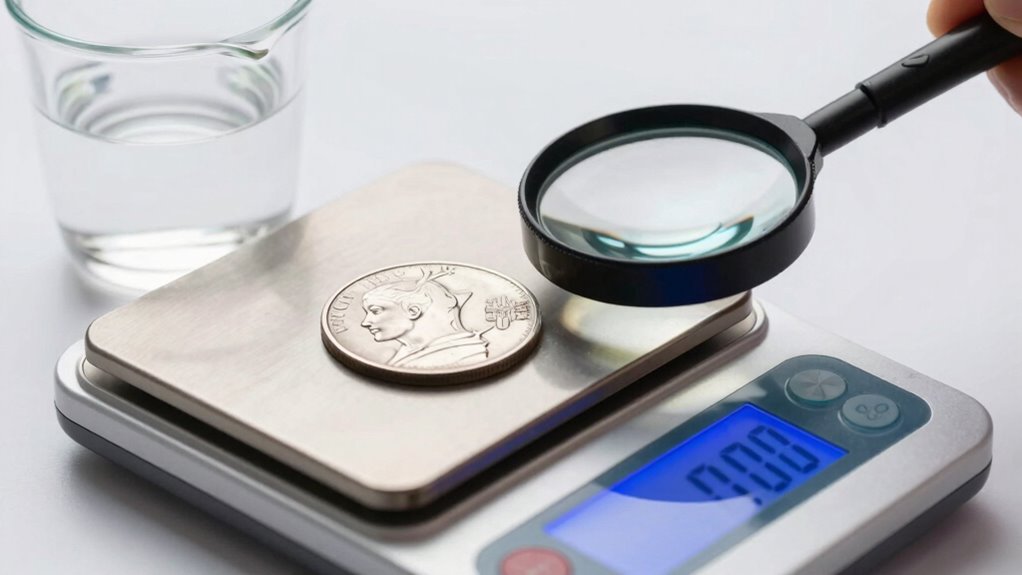

To weigh and measure coins accurately, use a precise digital scale with 0.01g accuracy and gentle handling to prevent damage. Measure the coin’s diameter and thickness with calipers, then compare these figures to official standards or trusted guides. Watch for deviations in weight or size that could signal a fake or damaged coin. Mastering these techniques helps you spot counterfeits and assess value confidently—you’ll discover more proven methods if you keep exploring.
Key Takeaways
- Use a high-precision digital scale (0.01g) and gently place coins for accurate weight measurement.
- Measure diameter and thickness with calibrated calipers to compare against official standards.
- Handle coins carefully to avoid adding wear or damage that can skew measurements.
- Record all measurements meticulously to track changes and verify authenticity over time.
- Cross-reference measurements with trusted coin catalogs to identify deviations indicating counterfeits.

When it comes to coin collecting or verifying currency, weighing and measuring coins are fundamental steps. These practices help you determine a coin’s authenticity, value, and condition. A counterfeit detection process often begins with precise measurements because fake coins typically don’t match the official specifications for weight, diameter, or thickness. Understanding and adhering to grading standards is also indispensable, as these standards specify the exact physical attributes a genuine coin should have. By carefully weighing and measuring, you can quickly spot irregularities that suggest a coin might be counterfeit or damaged.
To start, use a high-quality digital scale that provides readings to at least two decimal places, such as 0.01 grams. Place the coin gently on the scale, ensuring it’s stable and level, so you get an accurate weight. Compare this measurement to the official weight listed in trusted grading standards or coin catalogs. If the weight is off by a considerable margin, it might be a counterfeit or a heavily worn coin that has lost metal. Keep in mind that some genuine coins can vary slightly due to wear or minting differences, but substantial deviations are a red flag. Along with weight, measure the coin’s diameter and thickness using a precise caliper. These dimensions are equally critical because counterfeit coins often have slight but detectable differences from genuine specimens.
Use a digital scale and caliper to verify coin weight, diameter, and thickness for authenticity and grading accuracy.
Measuring your coin against established standards helps you verify its authenticity and avoid being fooled by high-quality fakes. Fake coins can sometimes mimic the appearance of real ones but fail to meet the exact specifications. For example, a counterfeit might be slightly lighter or thicker, which is a telltale sign. Learning to recognize these subtle differences is essential for accurate grading and valuation. When evaluating a coin’s grade, physical measurements help you determine its condition—whether it’s mint state, circulated, or damaged. Proper grading impacts the coin’s value, and precise measurements ensure you’re applying grading standards correctly.
Additionally, consistent measurement techniques are vital to maintaining accuracy and reliability in your assessments. Always keep a record of your measurements for future reference, especially if you’re building a collection or dealing with potential sales. This documentation can help you compare coins over time or prove authenticity if questions arise. Remember, the key is consistency: always handle coins carefully, avoid adding wear during measurement, and use reliable tools designed for precision. When you combine accurate weighing and measuring with a knowledge of grading standards, you markedly reduce the risk of accepting counterfeit or misgraded coins. Ultimately, mastering these techniques keeps your collection authentic and valuable, and it helps you avoid costly mistakes in the long run.
Frequently Asked Questions
Can Counterfeit Coins Pass Standard Weight and Measurement Tests?
Counterfeit coins can sometimes pass standard weight and measurement tests, making counterfeit detection tricky. To spot fakes, you need to check weight consistency carefully, as genuine coins maintain precise weights. Use a reliable scale and compare your coin to authentic ones. Remember, counterfeiters improve their techniques, so don’t rely solely on measurement; combine this with visual inspection and other detection methods for better accuracy.
How Do Environmental Factors Affect Coin Weighing Accuracy?
Environmental factors, like humidity interference and temperature fluctuations, can throw off your coin weighing game. High humidity might add moisture, making coins weigh more than they should, while temperature swings can cause metal expansion or contraction, skewing measurements. So, if you’re aiming for precision, keep your scale in a climate-controlled environment. Otherwise, you’re just playing a game of “Guess the Weight,” and we all know how fun that is.
What Are the Best Tools for Measuring Coin Diameter Precisely?
You should use coin calipers or digital micrometers for precise measurement of coin diameter. Coin calipers are user-friendly and give quick, accurate readings, making them ideal for most purposes. Digital micrometers offer even higher precision, perfect for detailed assessments or professional grading. Always verify your tools are calibrated correctly, and handle the coins gently to avoid distortions that could affect measurement accuracy.
How Often Should I Calibrate My Coin Scale?
If you want accurate results, calibrate your coin scale every month, especially if you weigh frequently. For example, a coin dealer who skipped regular calibration found inconsistent weights, leading to disputes. Proper scale maintenance and appropriate calibration frequency guarantee precision. Regular calibration, even if you don’t use the scale daily, helps avoid errors and keeps your measurements trustworthy, saving you from potential fraud or misjudgments.
Are Digital or Analog Scales More Reliable for Coin Weighing?
Digital scales are generally more reliable for coin weighing because they provide precise, easy-to-read measurements and often include calibration features. Analog scales can be accurate but are more prone to user error and drift over time. If you want consistency and accuracy, especially for valuable coins, go with a quality digital scale. Just remember to calibrate it regularly to keep your measurements trustworthy.
Conclusion
Mastering measurements makes money matters more manageable. By weighing and measuring coins correctly, you prevent pitfalls and promote precision. Practice patience, pay attention to details, and prevent problems before they start. With consistent care and clever calculations, you’ll confidently classify coins and avoid costly confusion. Remember, meticulous measurement maximizes your monetary mastery. So, stay sharp, scrutinize smartly, and safeguard your stash — because proper pounds and proportions protect your pennies and peace of mind.