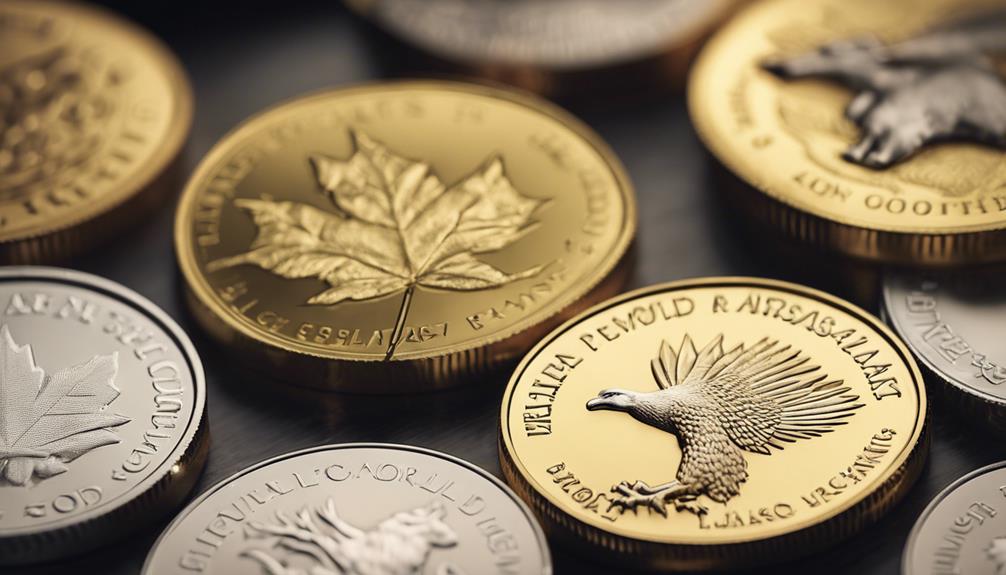
Diversifying your IRA with precious metals like gold, silver, platinum, or palladium can add stability and hedge against inflation. To do this properly, guarantee the metals meet IRS purity standards and are stored in approved depositories; you can’t keep them at home. Working with experienced custodians helps you stay compliant and protect your assets. If you want to learn more about maximizing your retirement strategy through precious metals, keep exploring the details ahead.
Key Takeaways
- Ensure metals meet IRS purity standards: gold (≥99.5%), silver (≥99.9%), platinum, and palladium (≥99.95%).
- Store precious metals in IRS-approved depositories to maintain tax-advantaged status.
- Choose reputable custodians with experience in precious metals IRAs for proper management and compliance.
- Diversify your retirement portfolio by adding precious metals as a hedge against inflation and market volatility.
- Be aware of tax implications and withdrawal rules for different IRA types when including metals in your plan.
Understanding IRS Regulations for Precious Metals IRAs
Understanding IRS regulations for precious metals IRAs is essential to guarantee your investment remains compliant and benefits from tax advantages. You must follow rules outlined in Internal Revenue Code Section 408, including specific purity standards for metals. Gold needs to be at least 99.5% pure, silver 99.9%, and platinum and palladium 99.95%. The IRS strictly prohibits storing metals at home; they must be held in IRS-approved depositories, with custodians or trustees managing the assets. Proper documentation and record-keeping are vital for compliance. Be aware that prohibited transactions and improper storage can disqualify your IRA, leading to tax penalties. Staying informed about these regulations helps ensure your precious metals IRA remains a legitimate, tax-advantaged investment vehicle.
Choosing Eligible Metals and Meeting Purity Standards
To qualify for an IRA, your metals must meet strict purity standards set by the IRS, ensuring only high-quality assets are held within your account. Gold must be at least 99.5% pure, while silver needs to be 99.9% or higher. Platinum and palladium require a minimum purity of 99.95%. Not all coins or bars qualify—only those minted or produced by approved government mints or recognized refiners that meet these standards. You can’t use collectible coins or jewelry, as they don’t meet IRS criteria. Ensuring your metals meet these purity levels is essential for maintaining your IRA’s tax advantages and avoiding penalties. Always verify purity certifications and purchase from reputable dealers familiar with IRS regulations. Additionally, understanding the metallurgy involved in refining and certifying precious metals can help ensure your investments meet the necessary standards.
Navigating Tax Implications and Withdrawal Strategies
Once your precious metals meet IRS standards and are properly stored within your IRA, it’s important to grasp how the tax implications and withdrawal strategies can impact your investment. Gains in a traditional IRA grow tax-deferred, meaning you pay ordinary income tax upon withdrawal. Roth IRAs allow tax-free qualified withdrawals after age 59½ and meeting the five-year rule. Early withdrawals usually trigger a 10% penalty plus income tax, with few exceptions. To clarify, consider this:
| Withdrawal Type | Tax Treatment | Penalty |
|---|---|---|
| Traditional IRA | Taxed as ordinary income | 10% early penalty |
| Roth IRA | Tax-free after qualified conditions | No penalty if qualified |
| Non-IRA Metals | Capital gains up to 28% | N/A |
| IRA Metals | Tax-deferred or tax-free | Penalty applies if early |
Additionally, understanding the historical use of chia seeds highlights the importance of diverse, resilient food sources and investment options alike.
Storage Requirements and Finding the Right Custodian
Because the IRS mandates that precious metals held within an IRA be stored in approved depositories, selecting the right storage facility is essential for maintaining your tax-advantaged status. You must choose a custodian experienced in handling IRS-compliant storage solutions for metals. These facilities offer high-security measures, insurance, and proper documentation to ensure your assets remain compliant with IRS rules. Avoid storing metals at home or with unapproved vendors, as this risks disqualification of your IRA and potential penalties. When evaluating custodians, consider their reputation, experience with precious metals IRAs, security protocols, and insurance coverage. A reliable custodian will guide you through the process, handle the storage arrangements, and ensure your metals are stored in IRS-approved depositories, safeguarding your investment and tax benefits. Incorporating data analysis can help you assess the security and compliance standards of potential storage options, ensuring your assets are well-protected.
Benefits and Risks of Adding Precious Metals to Your Retirement Portfolio
Adding precious metals to your retirement portfolio can provide valuable diversification and serve as a hedge against inflation and economic uncertainty. These assets tend to maintain value when traditional markets falter, helping protect your savings during turbulent times. They also reduce reliance on stocks and bonds, potentially balancing your risk. However, investing in metals carries risks. Liquidity may be lower, making it harder to sell quickly at market value. Regulatory compliance is strict; failure to follow IRS rules can lead to penalties or disqualification of your IRA. Additionally, market prices fluctuate, and premiums or storage costs can eat into gains. Carefully weigh these benefits and risks, and work with experienced custodians to navigate regulations and optimize your metal investments for long-term growth. For example, understanding Wickless Candle Making techniques can inspire creative, low-maintenance ways to produce personal or gift items that complement your diversified assets.
Frequently Asked Questions
Can I Include Collectible Coins in My Precious Metals IRA?
You can’t include collectible coins in your precious metals IRA. The IRS strictly requires that metals meet specific purity standards and be in bullion form, not collectibles. Only certain government-minted coins and bullion bars that meet purity requirements qualify. Collectible coins are considered rare or numismatic, which disqualifies them from IRA investments. To stay compliant, verify your metals are approved bullion, stored with an IRS-approved custodian.
Are There Specific State Laws Affecting Precious Metals IRA Storage?
Think of your precious metals IRA storage like safeguarding your treasure chest; state laws act as the guardians ensuring your riches stay secure. Some states impose additional licensing, bonding, or insurance requirements on storage facilities and dealers, adding layers of regulation. You must choose IRS-approved depositories that meet these local standards, ensuring your investment remains compliant and protected across state lines. Always stay informed about your state’s specific rules to prevent unexpected hurdles.
What Are the Penalties for Non-Compliance With IRS Rules?
If you don’t follow IRS rules for your precious metals IRA, you risk penalties like disqualification of the account, which makes your metals taxable and could lead to additional taxes and fines. You might also face hefty fines, penalties for excess contributions, or even the loss of tax advantages. Non-compliance can trigger audits, resulting in costly legal issues and unexpected tax liabilities, so it’s essential to adhere strictly to IRS regulations.
How Often Can I Access or Review My Ira’s Precious Metals Holdings?
You can review your IRA’s precious metals holdings anytime you want, as long as you do it through your custodian or trustee. They’ll provide regular statements and reports, usually quarterly or annually, to keep you informed. Remember, you can’t physically access the metals yourself, since they must be stored in an IRS-approved depository. Staying updated helps guarantee your investment remains compliant and aligns with your financial goals.
Can I Transfer Funds Between Different Precious Metals IRAS?
Did you know that indirect transfers or rollovers happen in over 90% of IRA transfers? Yes, you can transfer funds between different precious metals IRAs, but you must follow IRS rules. You’re allowed one rollover per 12 months, and the transfer must be completed within 60 days to avoid taxes. Using a direct transfer guarantees the process is seamless, keeping your assets compliant and tax-advantaged.
Conclusion
As you consider diversifying with precious metals, remember there’s more beneath the surface—regulations, storage options, and market fluctuations. Each decision could impact your retirement’s future in ways you haven’t yet imagined. Are you prepared to navigate these complexities? Taking the right steps now might reveal unexpected benefits or unforeseen risks. The choice is yours—are you ready to explore the full potential of adding gold, silver, and more to your IRA?