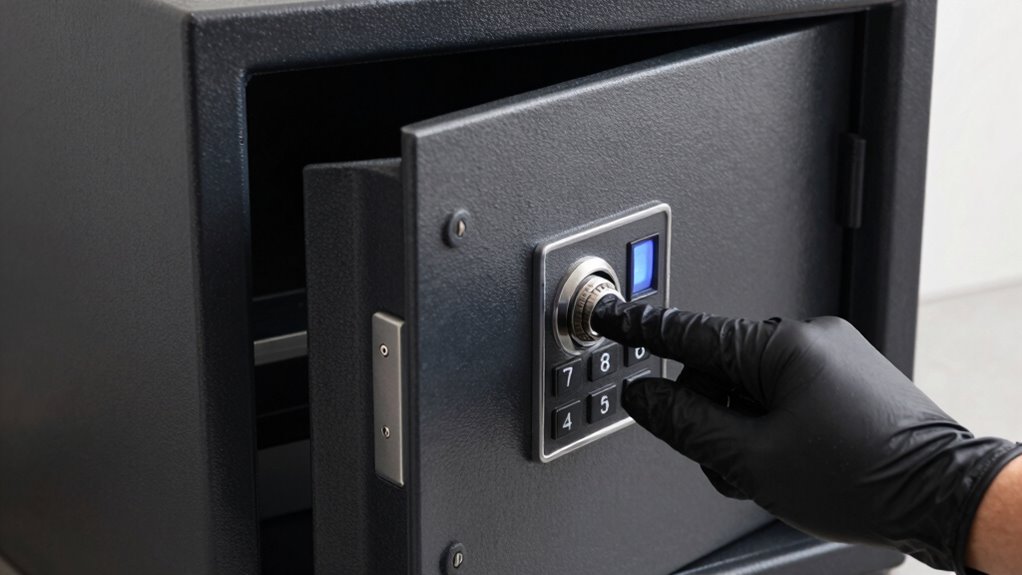
If your safe won’t open, start by inspecting the keypad for dirt, debris, or low batteries, replacing batteries if needed. Double-check that you’re entering the correct code and look for any signs of lockout or tampering. If that doesn’t work, consult your manual for reset procedures or backup keys, but avoid forcing the safe open. For persistent issues, professional help may be necessary—continue next to discover more troubleshooting tips.
Key Takeaways
- Verify the lockout period and follow manufacturer reset instructions or wait for the lockout to expire.
- Inspect and clean the keypad, and replace batteries if needed to ensure proper electronic function.
- Confirm that the correct code is entered, watching for button issues or input mistakes.
- Check for internal faults or wiring problems; avoid forcing the safe open and seek professional help if necessary.
- Use backup methods like a physical key or reset button, following manufacturer guidelines for safe access.

Troubleshooting equipment or technical issues can be stressful, but safety should always come first. When your safe won’t open, it’s easy to feel frustrated, especially if you’re unsure of what’s causing the problem. Many issues stem from lockout scenarios or keypad errors, which are common and often fixable with a calm, methodical approach. First, assess whether your safe has experienced a lockout scenario. Lockouts happen when the safe’s security system detects multiple incorrect codes or tampering attempts, locking you out temporarily to prevent unauthorized access. If this is the case, check the manufacturer’s instructions for how long the lockout lasts and whether there’s a reset procedure. Usually, waiting out the lockout period or following specific reset steps will restore access.
Assess lockout scenarios and follow reset instructions to regain safe access calmly and safely.
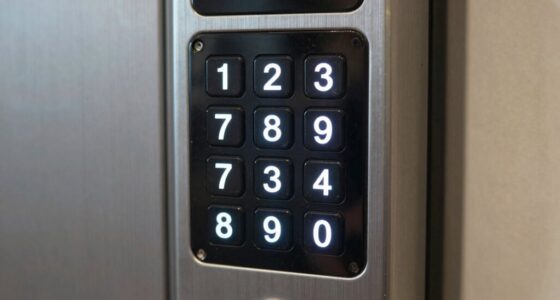
Next, consider keypad errors. These can occur due to power issues, dirt, or malfunctioning buttons. If your keypad isn’t responding or if entering your code doesn’t open the safe, start by inspecting the keypad for dirt, debris, or moisture. Clean it gently with a dry cloth, making sure no dust or grime is blocking the buttons. If your safe has batteries, check and replace them if they’re low or dead. Weak batteries can cause the keypad to malfunction or prevent the safe from recognizing your code. Always use fresh, high-quality batteries recommended by the manufacturer to guarantee proper function. Additionally, understanding electronic lock mechanisms can help you better troubleshoot and maintain your safe.
If replacing batteries doesn’t work, double-check that you’re entering the correct code. Sometimes, simple mistakes happen—especially if you’re in a hurry or under stress. Confirm that you’re pressing the right sequence and that no buttons are sticking or unresponsive. If you’re certain your code is correct but the safe still won’t open, consult the user manual for troubleshooting tips specific to your model. Many safes have backup methods, such as a physical key or a reset button, which can override electronic errors. Use these backup options carefully, following the instructions precisely to avoid further complications.
In some cases, the issue might be internal, such as a faulty electronic lock or wiring problem. If you’ve exhausted all troubleshooting steps without success, it’s safest to contact a professional locksmith or the safe’s manufacturer. Avoid forcing the safe open, as this can cause damage or compromise its security features. Remember, patience and safety come first—never attempt to bypass security mechanisms without proper guidance. By systematically checking for lockout scenarios, keypad errors, and following the correct reset procedures, you’ll increase your chances of opening your safe without unnecessary damage or risk.

Gun Safe Lock with Solenoid, Electronic Safe Lock Replacement Kit with Chrome Keypad, 3-8 Digit Code, 2 Override Keys, Reset Cable & PCB Board for Rifle Safe, Home Safe
DURABLE ZINC ALLOY KEYPAD Made of fire-resistant zinc alloy, this gun safe lock offers reliable performance for daily…
As an affiliate, we earn on qualifying purchases.
As an affiliate, we earn on qualifying purchases.
Frequently Asked Questions
Can I Open My Safe Without the Original Key or Combination?
You can try opening your safe without the original key or combination by contacting a professional locksmith or safe technician. Before doing so, make sure you follow safety measures to avoid damage. Keep emergency contacts handy in case of urgent needs. Avoid forcing the safe open, as this could cause further damage or compromise security. Instead, trust trained experts to open it safely and maintain your safe’s integrity.
What Should I Do if My Safe’s Keypad Is Unresponsive?
If your safe’s keypad is unresponsive, start by checking the batteries and replacing them if needed. For electronic troubleshooting, verify the keypad connections are secure and look for visible damage. If it still doesn’t work, consider keypad repair or contacting a professional locksmith. Avoid forcefully pressing buttons, as this could cause further issues. Regular maintenance can prevent future problems with electronic safes, keeping your valuables secure.
How Can I Prevent My Safe From Locking Permanently?
Your safe’s locking mechanism isn’t a fortress for nothing, so prevent it from locking permanently by regularly testing your security system and updating your emergency plan. Keep your keypad and lock components clean and well-maintained, and avoid rushing your entries. Use strong, unique codes and change them periodically. This proactive approach guarantees your safe remains accessible, giving you peace of mind and avoiding costly lockouts or permanent lock-ins.
Are There Professional Services That Can Open a Jammed Safe?
Yes, there are professional locksmiths who specialize in safe opening. If your safe is jammed, you should contact a reputable locksmith experienced in safe opening services. They have the tools and expertise to open your safe without causing damage. Don’t try to force it open yourself, as this could worsen the problem. Instead, rely on these professionals to handle the situation efficiently and securely.
What Safety Precautions Should I Take When Attempting to Open My Safe?
Think of safety as your shield when opening a stubborn safe. Always wear proper safety gear like gloves and eye protection to prevent injuries. Keep emergency contacts handy in case things go wrong, and work in a well-lit area to avoid accidents. Remember, if you’re unsure, don’t hesitate to call professionals. Your safety comes first—it’s better to be cautious than risk damage or injury.

Young Dance Electrical Lockout Tagout Kit -Lock Out Tag Kits for OSHA Compliance with Hasps,Universal Circuit Breaker Locks, Loto Tags,Safety Padlock(2 Keys Per Lock) for Safe Electrical Lockouts
【19 PCS OSHA-compliant Lockout Tagout Kit】 Do you work in a hazardous electrical environment and need an extra…
As an affiliate, we earn on qualifying purchases.
As an affiliate, we earn on qualifying purchases.
Conclusion
If your safe stubbornly refuses to open, don’t panic—your valuables aren’t lost to the abyss! Follow these steps, and you’ll be back to your treasure trove faster than a superhero saving the day. Remember, patience is your best ally; even the toughest lock will surrender with the right approach. Soon, you’ll be unsealing your safe like a pro, victorious and triumphant, as if you’ve just cracked the code to a hidden treasure chest buried deep beneath the earth!
Vintage Electronics Restoration & Troubleshooting for Beginners: Step-by-Step Guide to Repairing and Servicing Turntables, Radios, and Tube Amplifiers with Soldering, Alignment, and Safe Testing
As an affiliate, we earn on qualifying purchases.
As an affiliate, we earn on qualifying purchases.

Bonsaii Safe, 0.6 Cubic Safe Box with Electronic Keypad, Removable Shelf, for Valuables Jewelry and Documents in Home, Hotel, or Business, 9.84" x 13.78" x 9.84" Inches, SF002
SIZE: 13.78* 9.84* 9.84 inches. (The power bank and charging cable are not included)
As an affiliate, we earn on qualifying purchases.
As an affiliate, we earn on qualifying purchases.