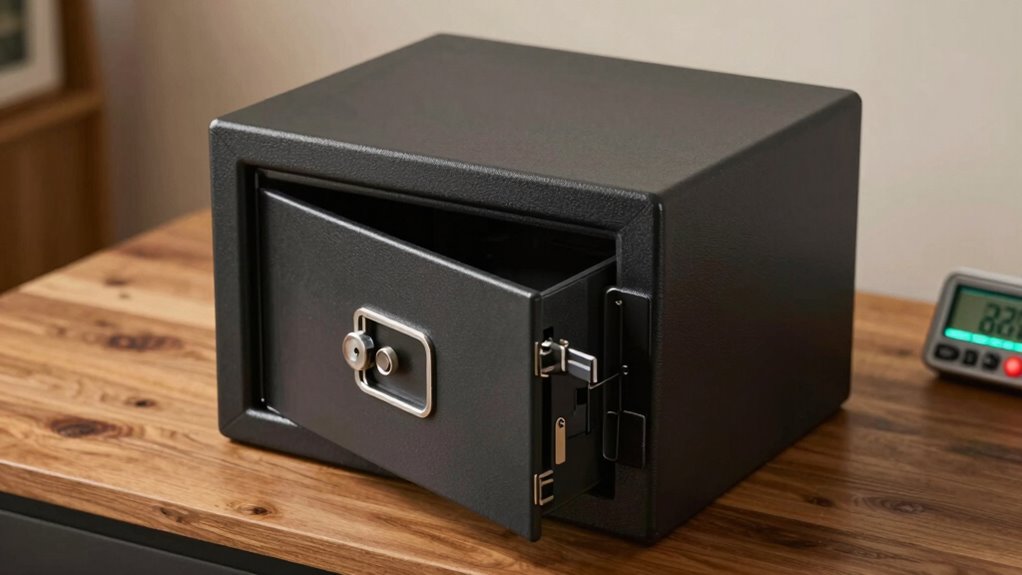

Portable fire safes are smart for quick fires or heat exposure, offering fast access and protection for documents, small valuables, and digital drives. However, they provide limited safety during extended or intense fires, as most can only withstand high heat temporarily. Relying solely on one isn’t enough for long-term safety—it’s better to use them as part of a layered fire plan. Want to understand exactly when they’ll help and when they won’t? Keep going.
Key Takeaways
- Portable fire safes are effective for quick fires and heat exposure but may not withstand prolonged or intense fires.
- They provide peace of mind for small valuables but should not be solely relied upon for long-term or irreplaceable items.
- Their fireproof materials have limitations; some safes only resist heat for a limited time, creating a false sense of security.
- Proper placement away from heat sources enhances their effectiveness; they should complement a comprehensive fire safety plan.
- Using safes as the only security measure can be misleading; layered safety strategies and backup copies of critical documents are essential.
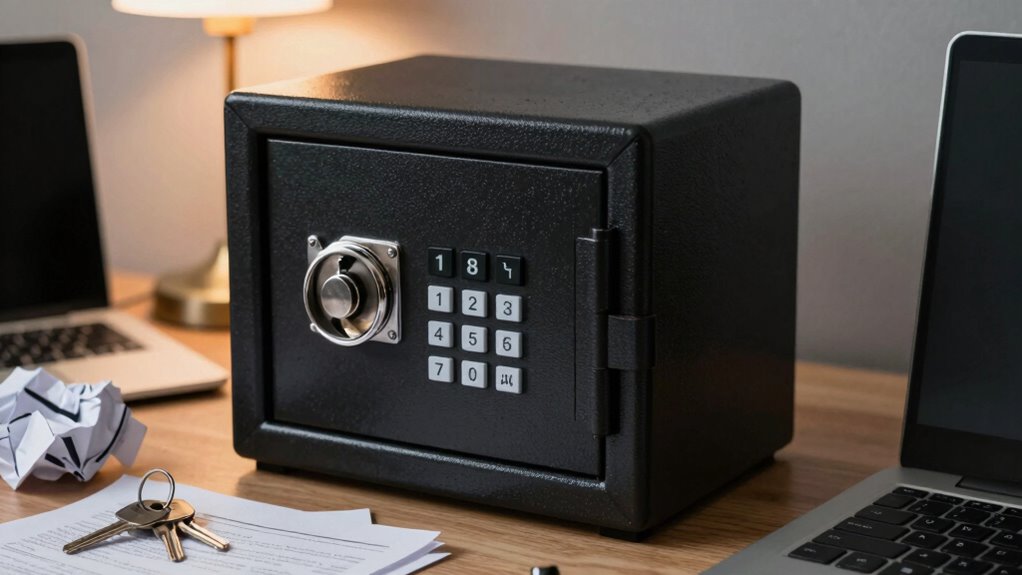
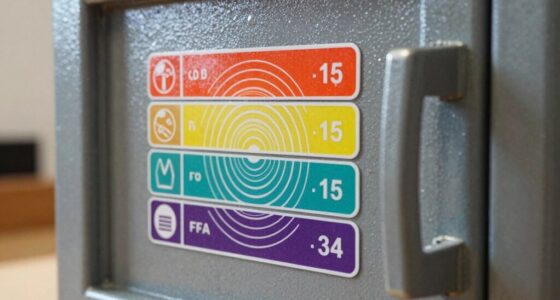
Are you worried about protecting your valuables and important documents from fire emergencies? If so, portable fire safes might seem like an easy solution. These compact containers are designed to provide portable security, giving you peace of mind knowing your items are protected from heat and flames. But before you rely solely on a portable fire safe, it’s important to understand how they work and their limitations. Many of these safes use fireproof materials, such as ceramic fibers or insulated walls, to withstand high temperatures for a certain period. This can be effective for small-scale fires, especially if you’re able to quickly grab and move the safe to a safer location. Their portability makes them convenient for storing in different spots or taking with you during emergencies, which is a significant advantage over fixed safes. However, it’s equally crucial to recognize that not all fireproof materials are created equal, and some safes offer only minimal protection. Many products claim to be fireproof but can only withstand heat for a limited time, often less than the duration of a serious house fire. This means that if a fire burns intensely for an extended period, your valuables might still be at risk.
While portable security is appealing, it can create a false sense of safety if you assume these safes can handle every fire scenario. They are best suited for protecting documents, small valuables, or digital drives from quick fires or heat exposure, but they shouldn’t be your sole line of defense for irreplaceable or highly valuable items. Think about how they’re used in real emergencies—if a fire consumes your home or extends beyond the safe’s rated protection time, the contents inside may still be compromised. It’s also essential to think about placement—storing the safe near heat sources or in vulnerable areas can reduce its effectiveness. Additionally, understanding the limitations of fireproof materials helps you set realistic expectations and develop a comprehensive fire safety plan.
In the end, portable fire safes are a smart choice for supplemental protection, especially when you need portability and quick access. But don’t rely solely on them for all-encompassing security. Use them as part of a layered approach: keep copies of critical documents elsewhere, consider a fire-resistant safe for long-term storage, and always have an emergency plan. Remember, while fireproof materials and portable security features make these safes useful, understanding their limitations ensures you don’t fall into a false sense of security during a real fire emergency.

Gold Silver Jewelry Tester Appraisal Kit 10K 14K 18K 22K 24K Platinum Palladium Test Precious Metals 999 925 Scrap
FUN, FAST, AND ACCURATE! DETERMINES THE KARAT OF GOLD, SILVER, & PLATINUM JEWELRY IN SECONDS!
As an affiliate, we earn on qualifying purchases.
Frequently Asked Questions
Are Portable Fire Safes Completely Fireproof or Just Fire-Resistant?
Portable fire safes are typically fire-resistant, not completely fireproof, so don’t buy into fireproof myths. They’re designed to protect your valuables from heat and flames for a limited time, unlike vaults which are built for long-term security. While convenient, remember safes vs. vaults serve different purposes. Use portable fire safes for quick, temporary protection, but don’t rely on them for total fireproofing in a severe fire emergency.
How Long Can a Portable Fire Safe Protect Contents During a Fire?
A stitch in time saves nine, so understanding fire safe durability matters. Typically, portable fire safes protect contents for about 30 minutes to an hour during a fire, depending on their fire safety duration. While they’re designed to withstand high temperatures, their effectiveness varies by model and fire severity. To guarantee your valuables stay safe, choose a safe rated for at least one hour of fire resistance, and don’t rely solely on it.
What Materials Are Used in the Construction of Portable Fire Safes?
You should know that portable fire safes are built with fire resistant materials like gypsum, ceramic fiber, and mineral board, which withstand high temperatures. Construction techniques involve insulation layers and tight seals to protect contents during a fire. These safes are designed to endure heat and prevent damage, but their effectiveness depends on quality. Always check the fire rating and materials used to guarantee your valuables stay safe when it matters most.
Can Portable Fire Safes Be Easily Tampered With or Broken Into?
Think of your portable fire safe as a fortress guarding your treasures. While it’s designed to resist forced entry, determined thieves might try lock picking or brute force to break in. Though sturdy, no safe is entirely tamper-proof. If someone’s skilled at lock picking or willing to use enough force, they could access your valuables. So, always consider additional security measures to truly protect your important items.
Are Portable Fire Safes Suitable for Protecting Digital Data and Hard Drives?
Portable fire safes can provide some protection for digital data and hard drives, but their limitations mean they shouldn’t be your only security measure. They’re designed to withstand heat, but determined thieves might break into them, risking data loss. For better digital data security, consider encrypting your files and using off-site backups. Relying solely on portable safes gives a false sense of security; combine multiple safeguards for truly effective protection.
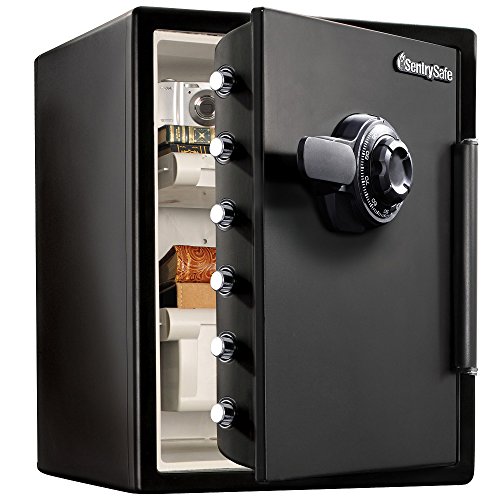
SentrySafe Black Fireproof Waterproof Floor Safe with Dial Combination Lock for Home or Office, 2.05 Cubic Feet, SFW205CWB
FIREPROOF: Safe is UL Classified to endure 1 hour at 1700°F and keep interior temperatures safe for irreplaceable...
As an affiliate, we earn on qualifying purchases.
Conclusion
A portable fire safe can be your best ally or your biggest illusion. When used wisely, it shields your valuables from flames and theft, offering peace of mind on the go. But if you rely solely on its promise, you might overlook better precautions. Remember, it’s a tool—not a magic shield. Stay vigilant, combine safety measures, and don’t let a small safe give you a false sense of security in the face of real danger.
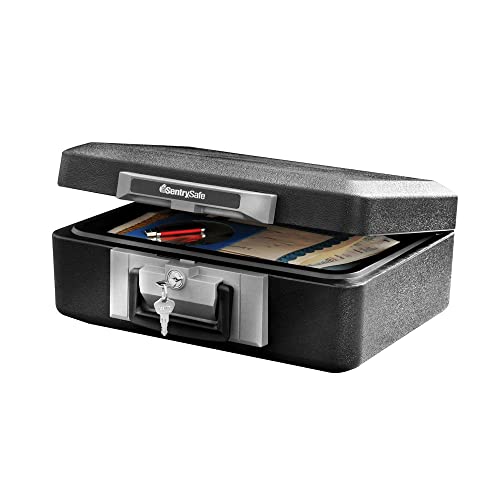
SentrySafe Fireproof Safe Box with Key Lock, Chest Safe with Carrying Handle to Secure Money, Jewelry, Documents, 0.25 Cubic Feet, 6.3 x 15.3 x 12.1 Inches, 1160
FIRE RESISTANT BOX: Lifetime after-fire replacement guarantee. Keep your important papers, digital media and other valuables secure and...
As an affiliate, we earn on qualifying purchases.
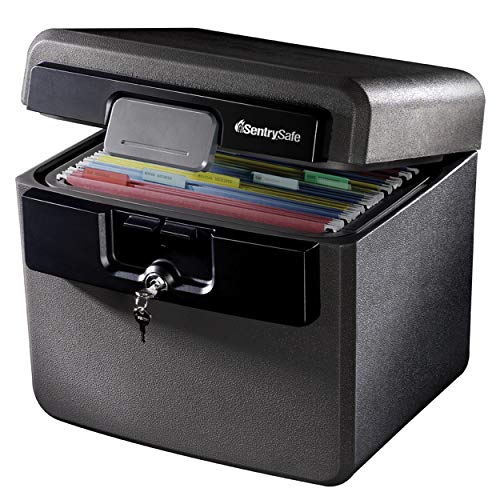
SentrySafe Black Fireproof and Waterproof Safe, File Folder and Document Box with Key Lock, Ex. 14.3 x 15.5 x 13.5 inches, HD4100
FIREPROOF: Safe is UL Classified to endure 1/2 hour at 1550°F and keep interior temperatures safe for irreplaceable...
As an affiliate, we earn on qualifying purchases.