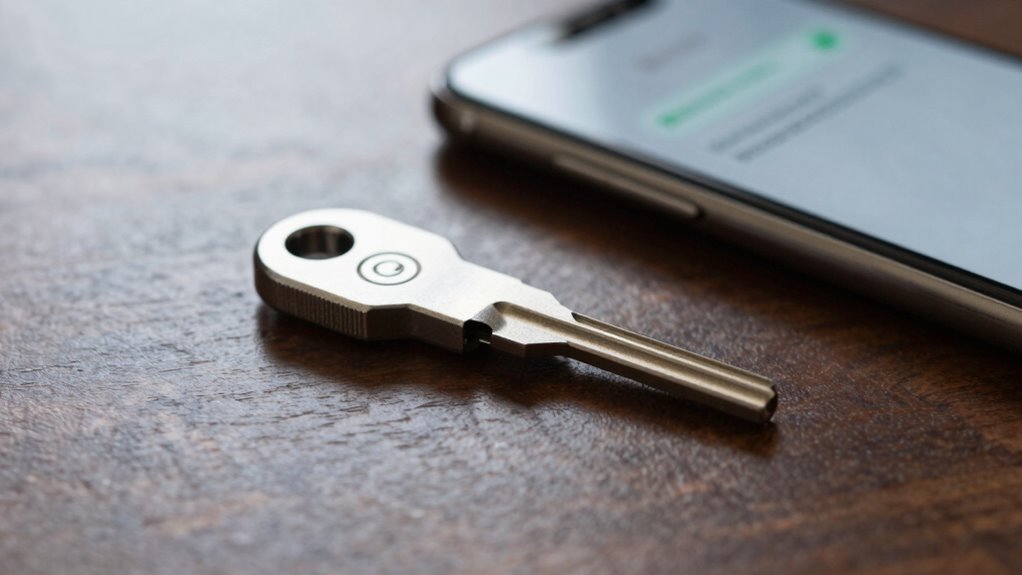

Hardware security keys are much safer than text message codes because they’re resistant to hacking, phishing, and SIM swapping. They require physical presence, making it nearly impossible for hackers to access your accounts without your device. Unlike SMS, which can be intercepted or tricked through scams, security keys provide strong, industry-standard protection. Want to discover how these devices can dramatically enhance your online security? Keep exploring to learn more.
Key Takeaways
- Hardware security keys are resistant to interception and social engineering, unlike SMS codes which can be stolen or intercepted.
- They require physical possession, preventing unauthorized access even if passwords are compromised.
- Security keys are immune to phishing attacks, as they only authenticate when physically present.
- They use industry-standard protocols like FIDO2, ensuring broad compatibility and enhanced security.
- Combining biometric verification with hardware keys provides a stronger, multi-layered defense against cyber threats.
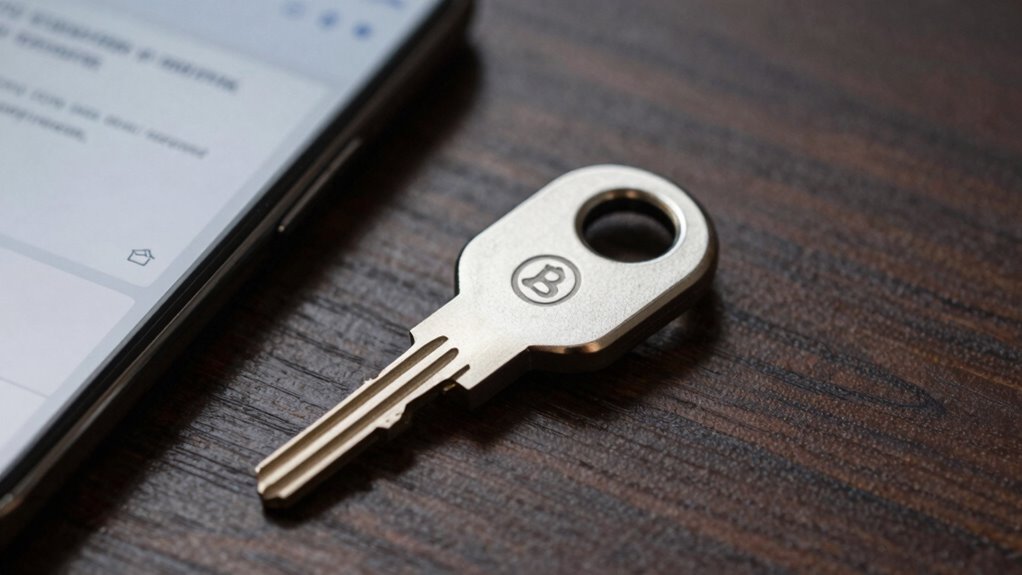
Have you ever wondered how to make your online accounts more secure? If so, you’ve probably heard about two-factor authentication (2FA) and the different ways to implement it. While text message codes are common, 2FA security keys offer a much stronger layer of protection. These physical devices, often called hardware security keys, provide an extra line of defense that’s tough for hackers to bypass. Unlike SMS codes, which can be intercepted or stolen through social engineering, security keys are designed to be resistant to most cyber threats. They connect directly to your device via USB, NFC, or Bluetooth, making it nearly impossible for anyone to access your accounts without physically possessing the key. This form of hardware security is a game-changer because it isolates your account’s verification process from potential online vulnerabilities.
One of the key advantages of 2FA security keys is their reliance on biometric authentication in some models. These advanced keys incorporate fingerprint or other biometric sensors, adding a biometric authentication layer that verifies your identity in a way that’s unique to you. This makes it even harder for someone to clone or steal your access, as they would need more than just the physical device—they’d also need your biometric data. This combination of hardware security and biometric authentication creates a robust barrier against unauthorized access. It’s a noteworthy upgrade from SMS-based verification, which can be compromised through SIM swapping or phishing attacks. With a security key, even if a hacker manages to trick you into revealing your password, they still won’t be able to access your account without the physical key in your possession. Additionally, the use of industry-standard protocols like FIDO2 and WebAuthn ensures compatibility across platforms, simplifying integration and enhancing your security ecosystem.
Another reason security keys outperform text messages is their resistance to phishing. Many phishing scams trick you into revealing verification codes sent via SMS, but a hardware security key simply doesn’t work if it’s not plugged into your device. Every login attempt must originate from the actual key, making phishing attempts ineffective. Plus, because these keys use industry-standard protocols like FIDO2 and WebAuthn, they’re compatible with a wide range of platforms and services, providing uniform security across your digital life. The investment in hardware security and biometric authentication ensures your online accounts are guarded against evolving cyber threats, giving you peace of mind that your sensitive information stays safe. In today’s digital landscape, relying solely on SMS codes leaves you vulnerable, but using a 2FA security key is a smart, practical way to considerably boost your account security.
Frequently Asked Questions
Are 2FA Security Keys Compatible With All Devices?
You’ll find that 2FA security keys are compatible with many devices, but not all. Compatibility depends on your device’s ports and supported protocols, like USB, NFC, or Bluetooth. During setup procedures, you might need specific adapters or apps, especially for mobile devices. Check your device’s compatibility first, and follow the setup instructions carefully to guarantee smooth use across your devices.
How Much Do 2FA Security Keys Typically Cost?
You can expect to pay between $20 and $50 for a 2FA security key, depending on the brand and features. The cost comparison shows that higher-end models with additional security features may be pricier. When purchasing options, consider online retailers, electronics stores, or directly from manufacturers. Investing in a security key is worthwhile for enhanced protection, and shopping around helps you find the best deal for your budget.
Can Security Keys Be Lost or Stolen?
Yes, security key theft and lost device risks exist, but they’re manageable. If someone steals your security key, they might gain access, so it’s essential to keep it secure. Losing your device could mean temporary access issues, but most security keys can be deactivated or replaced quickly. Stay vigilant—protect your keys like you would any valuable, and you’ll minimize risks and keep your accounts safe.
Do Security Keys Work Without Internet Access?
Yes, security keys work without internet access through offline authentication. They use hardware compatibility to communicate directly with your device via USB, NFC, or Bluetooth, so you don’t need an internet connection. This makes them reliable for secure logins anytime, anywhere. You simply insert or tap the key, and it authenticates locally, ensuring your accounts stay protected even when offline.
Are There Risks Associated With Using Security Keys?
Using security keys is like locking your digital doors tight, but they’re not invincible. There are some security key vulnerabilities, such as potential hardware flaws or phishing tricks that bypass hardware. You might also worry about user privacy concerns if the key stores or transmits sensitive data. While generally safe, staying aware of these risks helps you make smarter choices, ensuring your online life stays protected like a fortress.
Conclusion
In the quiet comfort of knowing your security keys are always ready, you enjoy peace of mind without the noisy distractions of less reliable methods. These keys gently remind you that your digital life deserves the best protection, without fuss or fussiness. Embrace the simplicity and elegance they offer, letting your online experience flow smoothly. With a security key, you’re gently steering toward a safer, more confident digital journey—where your peace of mind is always just a touch away.