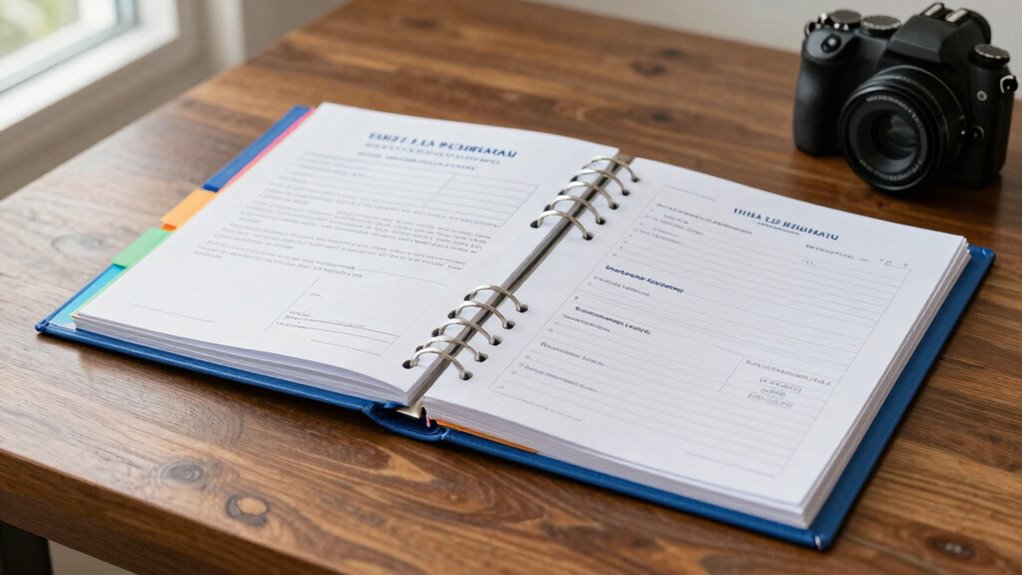

To set up a crucial records binder your family can rely on during emergencies, organize essential documents into clearly labeled sections for IDs, medical info, property, and finances. Keep important papers at the front for quick access, make digital backups, and store the binder in an accessible, secure spot. Teach family members how to use the system and regularly update it. By implementing these steps, you’ll create a dependable plan that prepares your family for any urgent situation—discover more strategies ahead.
Key Takeaways
- Organize vital records into clearly labeled sections, prioritizing important documents at the front for quick access.
- Store physical copies in sturdy, fireproof, and labeled binders or safes, with digital backups in secure cloud storage.
- Regularly review and update the binder after life changes to ensure all information remains current and complete.
- Teach family members how to access and navigate the system, emphasizing ease of use during emergencies.
- Incorporate emergency contacts, medical info, and legal directives into a quick-reference sheet for instant retrieval.
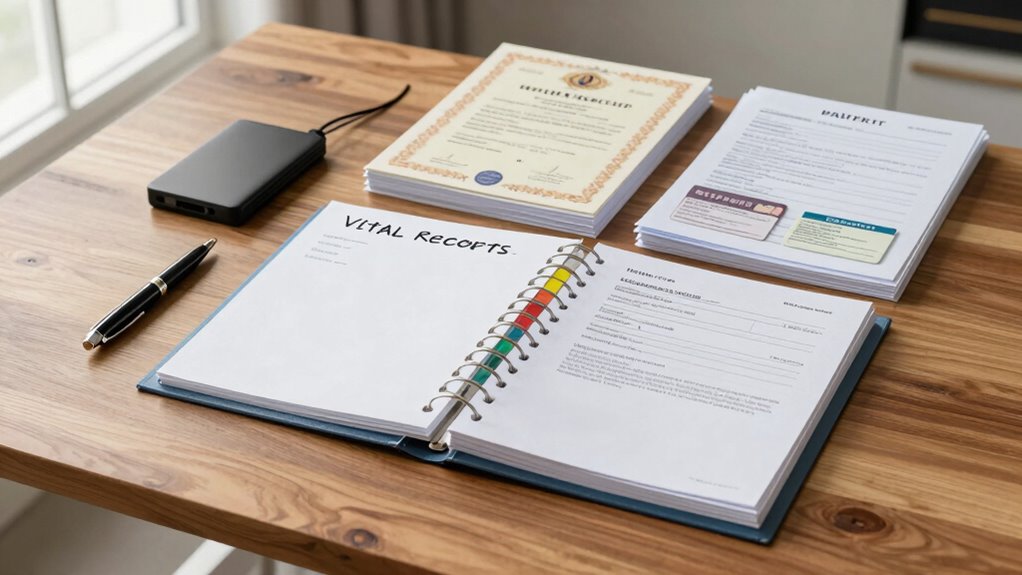
Ever wondered how to keep your important documents organized and easily accessible? That’s where setting up a crucial records binder comes in. In an emergency, knowing exactly where your essential paperwork is can make a stressful situation much smoother. A well-structured binder becomes a central hub for your documentation organization, ensuring you’re prepared for any unexpected event. It’s not just about stacking papers; it’s about creating a system your family can rely on when every second counts.
First, focus on the core idea of emergency preparedness. Your goal is to have quick access to critical documents like birth certificates, marriage licenses, Social Security cards, and insurance policies. By collecting these items in one designated binder, you eliminate the frantic search during emergencies. Use a sturdy, labeled binder or a fireproof safe for added protection. Inside, organize your documents into clear, labeled sections or folders. For example, have one section for personal identification, another for medical records, and a separate one for property and financial documents. This way, when you need a specific paper, you can find it instantly rather than rummaging through clutter.
Next, think about the documentation organization process. Keep the most important documents at the front for quick access. Make copies of originals and store them in a separate, secure location—like a safe deposit box or digital cloud storage—so you’re covered if the original gets lost or destroyed. Regularly review and update your binder, especially after life changes such as marriages, divorces, or property acquisitions. Staying current ensures your family always has the latest information, reducing confusion and delays in emergencies.
Label each section clearly with tabs or sticky notes, making navigation straightforward. Consider including a list of where all critical documents are stored, both within the binder and elsewhere. This directory acts as a quick reference, saving you time when searching for a specific document. If you have children or elderly family members, include important medical and legal directives, so everyone’s needs are covered. Also, consider adding a quick-reference sheet with emergency contact numbers, medical allergies, and other crucial info.
Additionally, understanding your home theatre projection options can help you create an ideal environment for family gatherings and emergency planning, making your space more functional and adaptable. Finally, make it a family project. Teach everyone how the system works so they can access it independently if needed. Keep the binder in a designated, easily accessible location known to all family members. By establishing this organized system, you’re not only streamlining your documentation process but also enhancing your overall emergency preparedness. When every document is in its place, you gain peace of mind, knowing your family can respond quickly and effectively in any emergency.
Frequently Asked Questions
How Often Should I Update My Vital Records Binder?
You should update your essential records binder at least once a year to guarantee all information is current. Review emergency contacts, insurance details, and important documents for accuracy. Regular updates help maintain document security and prepare your family for unexpected events. If your circumstances change—like new contacts or policy updates—update the binder immediately. Staying proactive ensures your critical records are reliable and ready whenever you need them most.
What Digital Backups Are Recommended for Physical Documents?
Think of digital backups as your safety net. You should store copies of your physical documents in secure cloud storage and use encrypted backups for added protection. Regularly update these backups to keep everything current. This way, if disaster strikes, you won’t be caught with your pants down. Use reputable services that prioritize security, ensuring your essential records stay safe, accessible, and protected from prying eyes.
How Do I Organize Records for Multiple Households?
To organize records for multiple households, create separate digital folders labeled clearly for each family. Use secure digital storage with strong encryption to protect privacy concerns. Keep backups in the cloud and on external drives, updating them regularly. Make sure access is limited to trusted family members. This way, everyone can quickly find essential documents during an emergency while keeping sensitive information safe from unauthorized access.
Which Documents Are Essential for Immediate Access?
Think of your emergency kit as a lifeboat in a storm—you need critical documents at your fingertips. Keep your emergency contacts and insurance policies front and center, easy to find in a crisis. These essentials act as your anchors, guiding you through chaos. Make sure they’re organized, protected, and accessible so your family can navigate emergencies confidently, knowing essential information is always within reach when it matters most.
How Can I Share My Binder Securely With Family Members?
You can share your essential records binder securely with family members through digital sharing platforms that offer secure access, like encrypted cloud storage or password-protected files. Set permissions carefully, and only give access to trusted individuals. Regularly update your sharing settings and use strong, unique passwords. This way, your family can access important documents quickly in an emergency while maintaining privacy and security.
Conclusion
Now, with your essential records binder set up, you’re unstoppable—ready to face anything that comes your way! In an emergency, you’ll be the hero, the superhero with every critical document at your fingertips, saving the day in seconds. Forget chaos and confusion—you’re the calm, organized force everyone relies on. This system isn’t just a binder; it’s your family’s secret weapon, ensuring you’re forever prepared, forever protected, and always one step ahead of disaster!