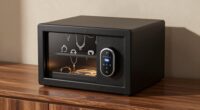
To best store passports, deeds, and titles without damage, invest in a UL-rated fireproof safe placed in a secure, cool, and dry spot away from heat sources. Use archival-quality, acid-free sleeves to protect documents from moisture, light, and handling. Keep everything organized in labeled folders or small boxes inside the safe for easy access. Regularly check for wear and maintain proper ventilation—continue to discover more ways to safeguard your important papers effectively.
Key Takeaways
- Store passports, deeds, and titles in an archival quality, acid-free sleeve to prevent deterioration.
- Keep documents in a fireproof safe placed away from heat, moisture, and direct sunlight.
- Organize papers using labeled folders or small boxes inside the safe for easy access and protection.
- Handle documents carefully to avoid tears, smudges, or creases, and check sleeves regularly for wear.
- Ensure the safe is securely locked and positioned in a stable, elevated location for maximum safety.
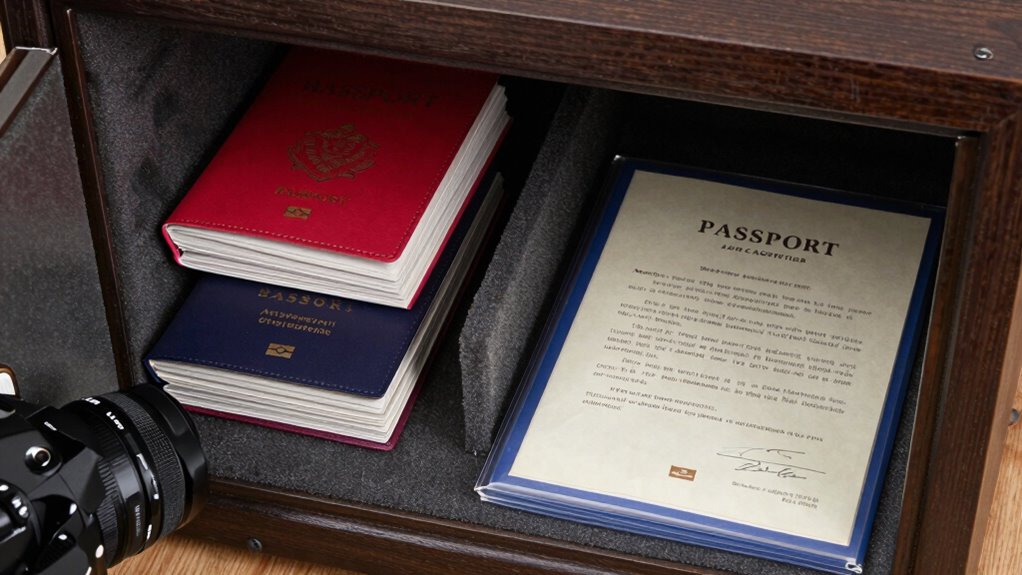
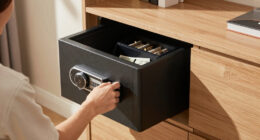
Have you ever wondered what’s the best way to keep your passports, deeds, and titles safe? The answer lies in choosing the right storage solutions that protect these valuable documents from fire, water, and deterioration. One of the most effective options is investing in a secure fireproof safe. These safes are designed to withstand high temperatures, shielding your important papers from potential fires. Look for safes that are UL-rated or have similar certifications, ensuring they meet strict safety standards. A fireproof safe provides peace of mind, knowing your documents are protected against unexpected disasters.
Invest in a UL-rated fireproof safe to protect your important documents from fire and disaster.
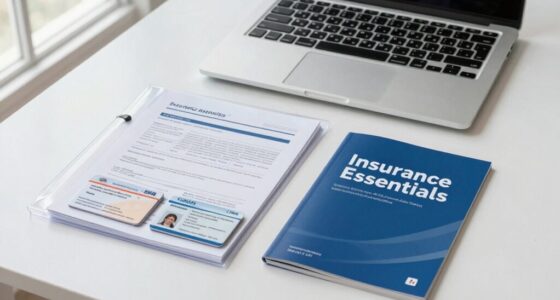
Alongside a safe, consider how you store the documents inside it. For added protection, archival quality sleeves are essential. These sleeves are made from acid-free, lignin-free materials that prevent paper degradation over time. When you place your passports, deeds, and titles in archival quality sleeves, you considerably reduce the risk of damage caused by light, air, and handling. They create a barrier against moisture and pollutants that can cause your documents to yellow, tear, or become brittle. Using sleeves also makes it easier to organize and handle your papers without risking tears or smudges.
To maximize protection, keep your fireproof safe in a secure, easily accessible location. Avoid placing it directly on the floor, especially in damp or humid areas, as moisture can compromise the safe’s integrity and your documents. Elevate it on a sturdy platform or shelf that’s away from windows or vents where heat and water damage are more likely. Make sure the safe is locked and only accessible to trusted individuals, adding an extra layer of security.
When storing your documents, take the time to organize them neatly. Use labeled folders or small boxes inside the safe to separate passports, deeds, and titles. This helps you quickly locate items when needed and reduces unnecessary handling. Remember, even the best safe won’t protect your documents if you neglect proper storage habits. Regularly check the condition of your safe and the documents inside, replacing sleeves if they show signs of wear. Additionally, consider implementing proper ventilation to prevent mold and moisture buildup that could compromise your stored papers.
Ultimately, combining a secure fireproof safe with archival quality sleeves offers a reliable method to safeguard your most important documents. This approach ensures they stay intact, legible, and accessible for years to come, giving you confidence that your valuable papers are protected from fire, water, and age-related damage.
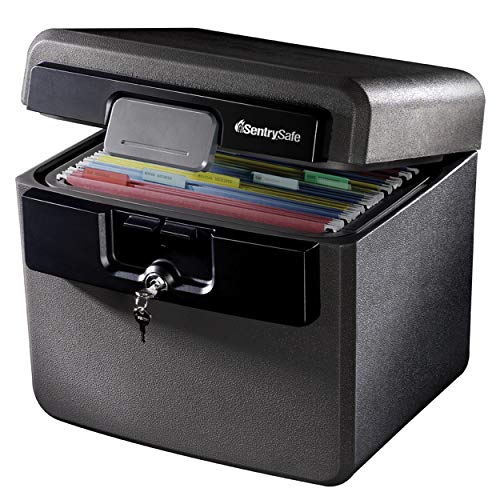
SentrySafe Black Fireproof and Waterproof Safe, File Folder and Document Box with Key Lock, Ex. 14.3 x 15.5 x 13.5 inches, HD4100
FIREPROOF: Safe is UL Classified to endure 1/2 hour at 1550°F and keep interior temperatures safe for irreplaceable…
As an affiliate, we earn on qualifying purchases.
As an affiliate, we earn on qualifying purchases.
Frequently Asked Questions
What Materials Are Best for Waterproof Storage?
You should use waterproof containers made from durable, corrosion-resistant materials like high-quality plastic or metal with sealed lids. For added protection, choose archival quality materials such as acid-free sleeves or pouches inside the container. This combination keeps your passports, deeds, and titles safe from water damage and environmental wear. Make sure the storage area is also climate-controlled to prevent moisture buildup, ensuring your important documents stay in pristine condition.
How Often Should I Check My Stored Documents?
You should check your stored documents every six to twelve months to guarantee document security. Imagine opening your safe and finding everything perfectly intact, or unexpectedly discovering damage that could threaten your valuable records. Regular storage frequency allows you to catch issues early, whether it’s moisture or deterioration. Staying vigilant keeps your passports, deeds, and titles secure, giving you peace of mind and confidence that your documents are always protected from harm.
Can Digital Copies Replace Physical Storage?
Digital backups, like cloud storage, can complement physical storage but shouldn’t completely replace it. You can access your documents quickly and securely from anywhere, reducing the risk of loss. However, always keep physical copies in a safe, protected location as a backup. Relying solely on digital copies might leave you vulnerable if technology failures occur or if cyber threats compromise your data. Balance both for ideal security.
What Temperature Is Ideal for Long-Term Storage?
You should aim for a storage environment with a stable temperature around 65-70°F, as climate control prevents damage from heat or humidity. Avoid extreme fluctuations, which can cause paper to warp or fade. Keep your documents in a cool, dry place with consistent conditions to preserve their integrity long-term. Proper climate control guarantees your passports, deeds, and titles stay safe without deterioration over time.
How Do I Prevent Mold and Mildew on Documents?
To prevent mold and mildew on your documents, you should maintain a clean, dry storage environment and guarantee proper ventilation. Use airtight, acid-free containers to protect against moisture and humidity, which are key factors in mold growth. Regularly check your storage area for signs of dampness, and consider using silica gel packs to absorb excess moisture. Good document preservation depends on controlling humidity and keeping your storage space clean and well-ventilated.

BCW Document Sleeves 8.5 x 11 | Acid-Free Archival Quality | Clear Plastic Paper Sleeves | Compatible with BCW 8.5×11 Toploader | Protect Documents, Photos, Art, and More | Crystal Clear, Safe Storage
Premium Protection for 8.5×11 Documents – Protect your important papers with BCW plastic sleeves for paper 8.5×11, crafted…
As an affiliate, we earn on qualifying purchases.
As an affiliate, we earn on qualifying purchases.
Conclusion
Storing your passports, deeds, and titles properly is essential to keep them safe and in good condition. Did you know that over 60% of important documents get damaged due to improper storage? By using quality fireproof and waterproof safes, you’re protecting your valuables from unexpected disasters. Taking these simple steps guarantees your important documents remain intact and accessible when you need them most. Don’t wait—secure your essentials today and avoid costly replacements later.
SentrySafe Black Fireproof and Waterproof Safe, File Folder and Document Box with Key Lock, Ex. 14.3 x 15.5 x 13.5 inches, HD4100
FIREPROOF: Safe is UL Classified to endure 1/2 hour at 1550°F and keep interior temperatures safe for irreplaceable…
As an affiliate, we earn on qualifying purchases.
As an affiliate, we earn on qualifying purchases.

ENGPOW Fireproof File Organizer Bag with 13 Colorful Pockets Accordion File Folder,5200℉ Document Organizer Box with Lock&Labels,Multi-Layer Portable Home Safe Storage for Important Documents,Files
Fireproof and Water-resistant: The multi-Layer file organizer is made of silicone coated material and aluminum foil which withstand…
As an affiliate, we earn on qualifying purchases.
As an affiliate, we earn on qualifying purchases.