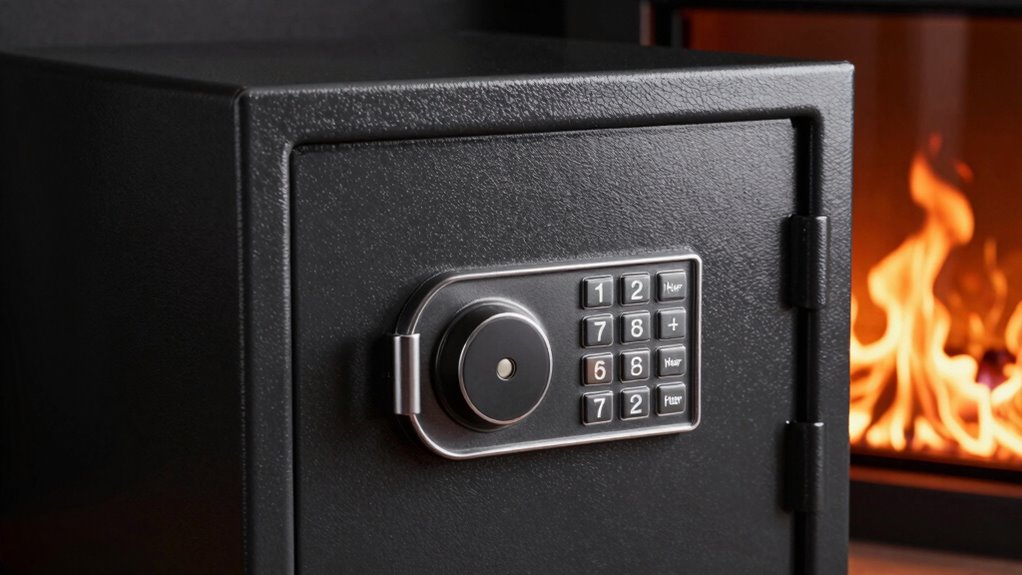
A “1-hour” fireproof safe rating means it can withstand high temperatures for at least that duration, protecting your valuables from typical furnace-like conditions during a fire. However, what it truly guards against depends on certified testing, the quality of fire-resistant materials, and build quality. While it offers valuable protection, it’s important to understand the limits of fire resistance. Keep exploring to discover what factors truly determine your safe’s fireproof performance.
Key Takeaways
- A “1-hour” rating means the safe can withstand fire temperatures for at least one hour during testing.
- Certification from organizations like UL ensures the rating is based on standardized, verified fire resistance tests.
- Fireproof materials and quality construction are crucial factors that determine the actual protection duration.
- The rating indicates the safe’s ability to protect contents from heat and flames, not absolute fireproofing.
- Real-world fires may vary; the “1-hour” label is a benchmark, not a guarantee of complete safety.
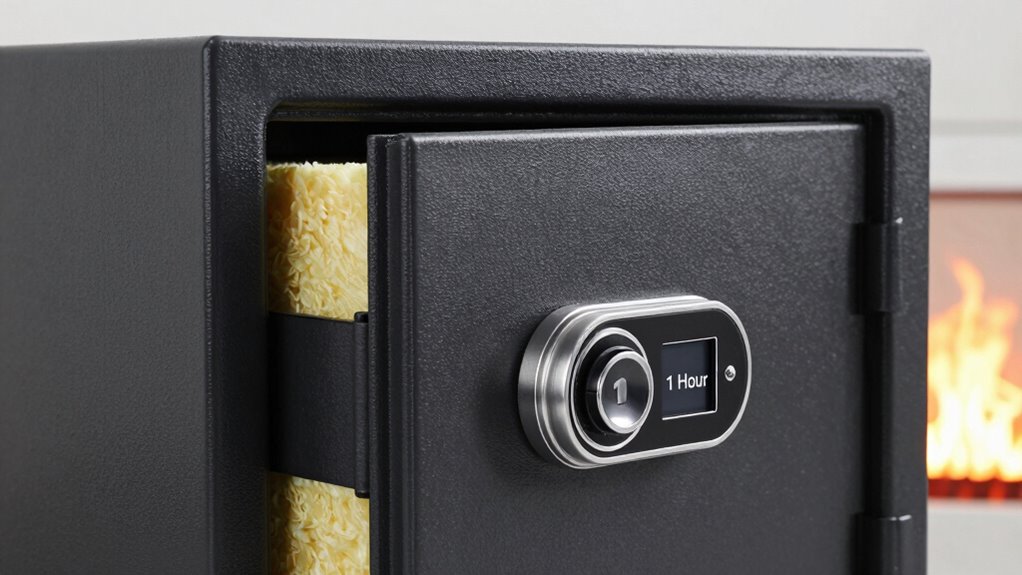
When choosing a fireproof safe, understanding its ratings is essential to guarantee your valuables are protected during a fire. These ratings are a clear indicator of how well a safe can withstand high temperatures over a specific period. Knowing what these ratings mean helps you select the right safe for your needs, whether you’re safeguarding important documents, jewelry, or digital data. Fireproof ratings are primarily based on the safe’s ability to resist fire, which depends heavily on its fireproof materials and the safe certification it has received from testing agencies. Fireproof materials, like refractory concrete, fire-resistant insulation, and specialized composite layers, are designed to slow heat transfer and prevent the interior from reaching damaging temperatures. The combination of these materials determines the safe’s ability to keep contents intact during a fire, especially under the conditions specified by its rating. Additionally, the quality of the construction and assembly significantly impact the overall fire resistance performance.
Safe certification is vital because it verifies that the safe has been tested and meets industry standards. Reputable testing organizations, such as Underwriters Laboratories (UL) or Intertek, subject safes to rigorous fire tests that simulate real-world scenarios. When a safe is UL-rated, for example, a “1-hour” fire rating means it can withstand fire conditions for at least one hour without the interior temperature exceeding a specific threshold—usually around 350°F. This certification takes into account the fireproof materials used, the construction quality, and the overall integrity of the safe. It’s not just about the materials but also how they’re assembled and tested under controlled conditions.
Many safes on the market claim various fire resistance times, but without proper certification, these claims can be unreliable. Look for safes that have undergone certified testing and clearly display their ratings, as this gives you confidence that they can indeed protect your valuables as advertised. The “1-hour” rating isn’t just a marketing term; it’s a benchmark based on testing standards that consider both the fire’s temperature and duration. Keep in mind, however, that actual fire conditions can vary, and no safe is entirely fireproof—only fire-resistant for a certain duration. Recognizing the fireproof materials used and their construction quality can help you assess a safe’s true protective capabilities.
Frequently Asked Questions
Do All Fire Safes Meet the Same Testing Standards?
Think of fire safes like knights protecting treasures; not all wear the same armor. Some meet rigorous safety standards, earning official fireproof certification, while others fall short. Not every safe meets the same testing standards, so it’s crucial you check the certification label. By choosing one that adheres to recognized safety standards, you guarantee your valuables are truly protected during a fire, not just claimed to be safe.
How Does a Safe’s Insulation Affect Its Fire Resistance?
Your safe’s insulation plays a vital role in its fire resistance by reducing heat transfer. High-quality fire insulation acts as a barrier, slowing down the transfer of heat from the outside to the interior. This helps protect your valuables for the rated time, like one hour. Without effective fire insulation, the heat can penetrate quickly, compromising the safe’s ability to withstand fire and keep your belongings safe.
Can a Safe’s Rating Be Upgraded or Changed?
They say “you can’t teach an old dog new tricks,” but that’s not always true. You can often do a safe upgrade or a rating change if your safe’s manufacturer offers it or if you replace the safe entirely. Check with the manufacturer first, as some models allow for rating adjustments or reinforcement. Just remember, a safe’s existing rating typically won’t change without professional modifications or new safes.
Are There Risks of False Fire Ratings?
There are indeed risks of false fire ratings, which can lead you to believe your safe offers more protection than it actually does. Fire rating myths can create false security, making you trust a safe’s claims without verifying. Always check independent testing and certifications to ascertain the rating is accurate. Relying solely on manufacturer claims can leave your valuables vulnerable, so stay informed and cautious about these ratings.
What Maintenance Is Required to Keep a Safe Fire-Resistant?
You should regularly check your fire-resistant safe by inspecting fire resistant coatings for damage and ensuring they remain intact. Keep temperature monitoring devices in place to track internal heat levels, preventing overheating that could compromise protection. Avoid storing items that could damage the coatings or create gaps. Periodic professional inspections also help verify the safe’s integrity, so your valuables stay protected during a fire.
Conclusion
Now you know the truth behind fireproof safe ratings. Don’t depend solely on a “1-hour” claim—delve deeper, decide smarter, and protect precisely. Prioritize performance, patience, and protection to prevent potential pain. With a little diligence and discernment, you’ll determine the best barrier against blazing disasters. Be brave, be bright, and choose a safe that truly stands strong, securing your sensitive stuff when it matters most. Your peace of mind depends on your smart, savvy safety selection.