

Order books display real-time buy and sell orders, letting you see market depth and execute trades by matching existing bids and asks. AMMs, on the other hand, use liquidity pools with algorithms to set prices automatically, allowing instant swaps without order matching. While order books offer transparency and control, AMMs provide continuous trading and easier access, especially for beginners. Keep exploring to understand which system might suit your crypto trading style best.
Key Takeaways
- Order books display real-time buy and sell orders, enabling direct price discovery through active market participant interactions.
- AMMs facilitate trading via liquidity pools, automatically adjusting prices based on algorithms like the constant product formula.
- Order books offer transparency and precise control over trade prices, while AMMs provide continuous liquidity without matching orders.
- Large trades can cause slippage in AMMs due to changes in pool ratios, whereas order books can manage slippage through order types and depth.
- Beginners might find AMMs simpler for direct swaps, but order books offer clearer market insights and more control over trade execution.
What Are Order Books and How Do They Facilitate Crypto Trading
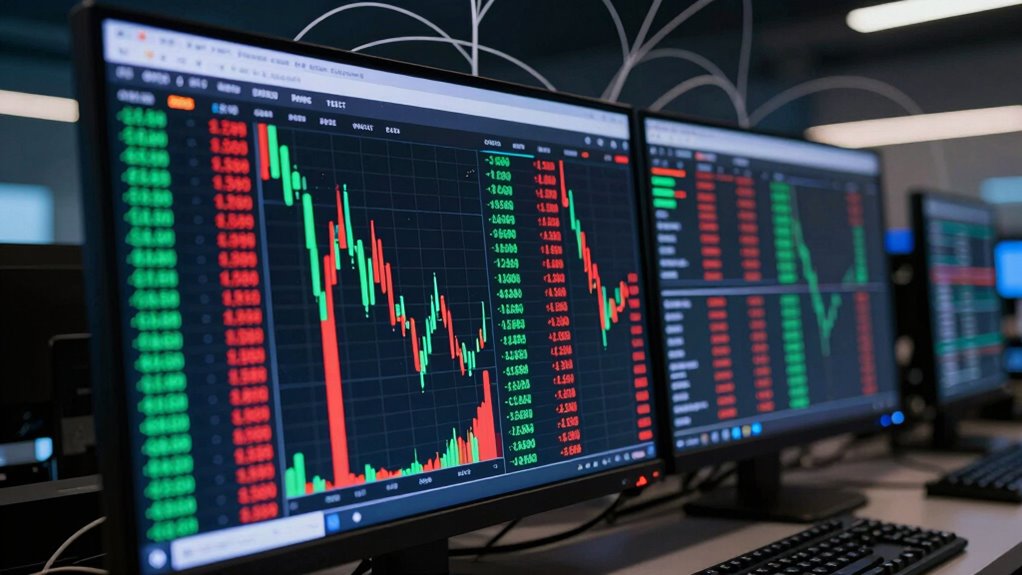
Order books are central to traditional crypto trading, serving as digital marketplaces that display buy and sell orders in real-time. They provide vital information about market depth, showing how much of a cryptocurrency is available at various price levels. As a trader, you can see the order flow—the sequence of bids and asks—as it unfolds. This visibility helps you gauge supply and demand, identify potential price movements, and decide when to enter or exit a trade. The order book’s transparency allows you to analyze the liquidity of a market, making it easier to execute large trades without causing significant price shifts. Overall, order books enable a more dynamic, responsive trading environment by providing real-time insights into market activity. Additionally, understanding how market depth functions can help traders anticipate potential reversals or breakouts, enhancing their ability to make informed decisions. Recognizing the order book structure can further improve trading strategies by revealing underlying supply and demand imbalances. Furthermore, the liquidity profile displayed in order books assists traders in assessing how easily they can execute trades at desired prices. A comprehensive understanding of market liquidity can also help traders avoid slippage and optimize trade execution. Moreover, awareness of order flow dynamics can give traders an edge in predicting short-term price changes and market trends.
How Do Automated Market Makers (AMMs) Work in Decentralized Exchanges

Ever wondered how decentralized exchanges facilitate trading without traditional order books? Automated Market Makers (AMMs) make this possible through liquidity pools—funds pooled from users who provide assets. Instead of matching buy and sell orders, AMMs use algorithms, like the constant product formula, to set prices automatically. When you trade, you interact directly with these pools, which instantly execute swaps based on the current pool composition. However, this system introduces slippage risks; large trades can considerably alter prices within the pool, causing you to receive less favorable rates. Liquidity pools ensure continuous trading without the need for order matching, but they demand careful consideration of slippage. This mechanism simplifies decentralized trading and keeps markets active even when order books are absent.
Comparing Order Books and AMMs: Key Differences and Similarities

While AMMs rely on algorithms and liquidity pools to facilitate trades without matching individual buy and sell orders, traditional order books operate quite differently. Order books display real-time bids and asks, matching traders directly. AMMs use liquidity pools, where traders swap assets against a pool, which can lead to price slippage during large trades. This difference impacts how traders manage market volatility and liquidity risks. Additionally, liquidity provision in AMMs is often more accessible for individual traders compared to the more complex order book systems. The transaction speed in automated systems can also vary depending on network congestion and algorithm efficiency. Moreover, the automation in AMMs allows for continuous trading without the need for a counterparty at the moment of trade execution. Here’s a comparison:
| Feature | Order Books | AMMs |
|---|---|---|
| Liquidity | Provided by market participants | Supplied via liquidity pools |
| Price Discovery | Dynamic, based on order flow | Algorithmic, based on pool ratios |
| Trade Execution | Matchmaker-based | Automated through algorithms |
Both systems have unique strengths, but understanding these differences helps you choose the right trading approach.
How Do Order Books Manage Liquidity and Price Discovery

Order books manage liquidity and price discovery through a continuous flow of buy and sell orders that reflect traders’ willingness to transact at specific prices. This system allows the market to instantly incorporate new information and adjust prices accordingly. Liquidity pools in order books contain these orders, providing depth that helps facilitate large trades without drastic price changes. When trading volume is high, the order book’s depth reduces price slippage, ensuring prices remain stable during transactions. Conversely, thin order books can cause significant slippage, making trades more costly. This dynamic process enables efficient price discovery, as buy and sell orders constantly inform the market’s consensus on value. Additionally, visual order flow tools enhance traders’ understanding of market sentiment in real-time. As a result, order books offer real-time transparency and responsiveness, key to understanding how liquidity and prices are managed in crypto markets. The presence of market depth plays a crucial role in maintaining stability and trust in trading environments. Maintaining an adequate level of liquidity is essential for minimizing price volatility and ensuring smooth trading operations. Furthermore, the ability to analyze order flow in real-time supports traders in making informed decisions amidst rapid market changes, which is vital for effective price discovery and market efficiency.
How Do AMMs Handle Liquidity and Price Setting in Crypto Markets

Automated Market Makers (AMMs) handle liquidity and price setting by using algorithms that automatically adjust prices based on the ratio of assets in their pools. These liquidity pools contain pairs of tokens, and the pricing formula guarantees trades are executed smoothly. When you swap tokens, the pool’s ratios change, causing the algorithm to update prices accordingly. This process allows for continuous trading without relying on a traditional order book. Additionally, liquidity pools play a crucial role in maintaining market stability and enabling seamless transactions. They also facilitate creative storytelling to engage users and build community trust in DeFi platforms. However, large trades can cause significant price slippage, meaning the price you get may differ from the market rate. Because AMMs depend on these pools and formulas, they provide liquidity even when there are no active buyers or sellers. This structure simplifies trading but also introduces unique risks like price slippage, especially during volatile market conditions. The algorithms that underpin AMMs ensure automatic adjustments, making the trading process more resilient to sudden market shifts. Furthermore, understanding liquidity management helps traders better anticipate potential price impacts during large transactions. An understanding of digital displays can help traders monitor real-time data and make informed decisions during volatile periods.
Pros and Cons of Order Book Trading: Speed, Transparency, and Costs
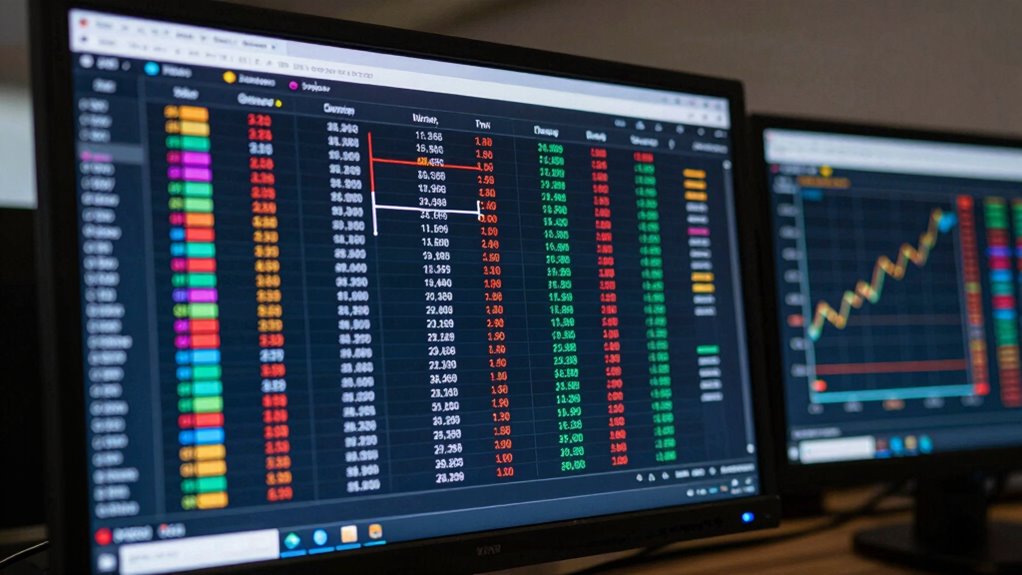
Order book trading offers you quick execution, so your trades happen almost instantly. You also benefit from clear price transparency, making it easier to see market conditions. However, these advantages come with costs that you should consider before choosing this method. Additionally, understanding piercing care and hygiene can help you maintain optimal trading conditions and avoid unnecessary complications. Being aware of essential oils for respiratory health can also enhance your overall well-being during trading sessions, especially in stressful market environments. Maintaining privacy preferences during online trading can help protect your sensitive information from unauthorized access. Incorporating seasonal maintenance checklists can further optimize your trading environment and ensure smooth operations year-round.
Fast Trade Execution
Fast trade execution is a key advantage of order book trading, enabling you to buy or sell assets quickly when market conditions shift. With a deep order book, your orders are matched swiftly, reducing the time between decision and execution. However, liquidity pools in AMMs can lead to increased price slippage during large trades, affecting your execution speed and cost. Order books rely on active market makers and high liquidity to guarantee quick fills, especially in volatile markets. This speed allows you to capitalize on fleeting opportunities. But, if liquidity is thin, your order might take longer or fill at a less favorable price. Overall, order book trading’s speed is essential for active traders seeking rapid execution, but liquidity depth directly influences its effectiveness.
Price Transparency Benefits
Price transparency is one of the key advantages of order book trading, giving you clear insight into current market conditions. With visible bids and asks, you can better understand price discovery and assess market depth. This transparency helps you make informed decisions quickly and reduces surprises during trades. You can see how many orders are at each price level, revealing liquidity and potential price movements. However, it also means other traders can analyze your activity, which might impact your strategy. Overall, the transparency fosters trust and allows you to gauge market sentiment more accurately.
- Gauge liquidity and potential price shifts
- Identify large buy or sell walls
- Make faster, informed decisions
- Detect market manipulation or anomalies
- Understand order flow and market sentiment
Cost Implications
While order book trading offers significant advantages like transparency and quick execution, it also involves notable cost implications. You typically pay trading fees to exchanges, which can vary based on your trading volume and the platform’s fee structure. These fees can add up, especially for frequent traders. In contrast, decentralized exchanges using liquidity pools often have lower or no trading fees, but you might face slippage or impermanent loss. Order books require active market makers and liquidity providers to ensure smooth trading, which can increase costs indirectly. Overall, while order book trading can be more expensive due to fees and the need for continuous liquidity, it provides faster and more transparent transactions. Balancing these costs is vital for optimizing your trading strategy.
Benefits and Drawbacks of AMMs for Crypto Traders
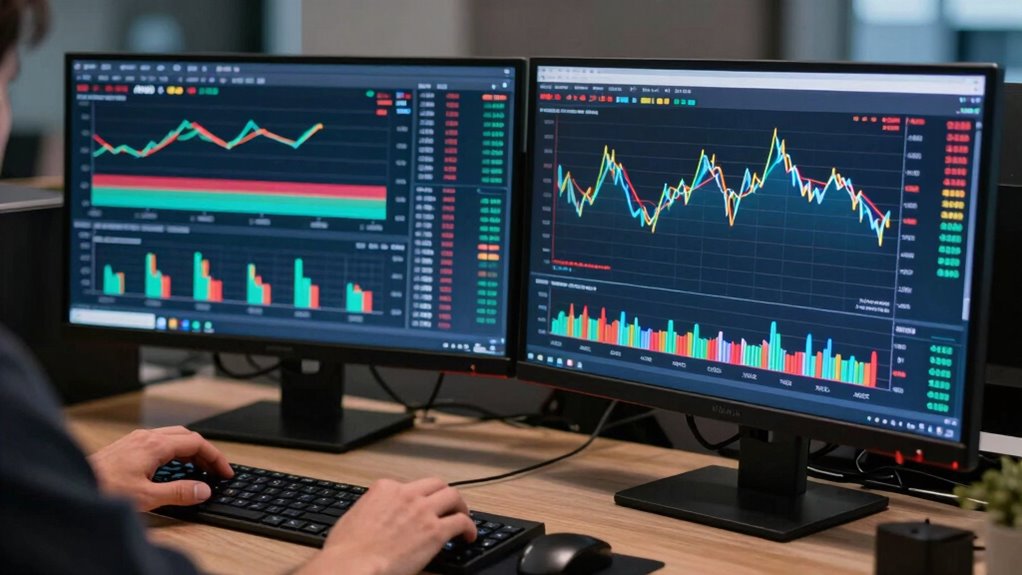
Automated Market Makers (AMMs) offer several advantages that can benefit crypto traders, especially in providing continuous liquidity and easy access to trading pairs without relying on traditional order books. With liquidity pools, you can trade instantly, avoiding delays caused by matching buy and sell orders. AMMs also simplify trading, making it accessible for new users. However, there are drawbacks. Slippage management can be challenging during large trades, leading to unexpected price shifts. Additionally, liquidity can dry up in less popular pools, increasing trade costs. While AMMs foster decentralization and permissionless trading, they sometimes lack the depth of traditional order books, which can limit your ability to execute large orders smoothly. Overall, AMMs are powerful but require understanding their limitations.
Which System Is Better for Beginners: Order Book or AMM?

For beginners choosing between order books and AMMs, understanding how each system works can make a big difference in your trading experience. Order books offer transparency and precise price control, which helps you manage slippage during large trades. However, they require familiarity with order types and market dynamics. AMMs use liquidity pools, allowing you to trade directly against pooled assets, simplifying the process. While AMMs are user-friendly for newcomers, slippage can be unpredictable, especially with low liquidity pools. If you prefer straightforward trading with more control, an order book might suit you better. Conversely, if you want easy access without managing individual orders, AMMs could be more appropriate. Consider your comfort with market mechanics and your trading goals when choosing the system suited for you.
Common Challenges of Order Books and AMMs Explained
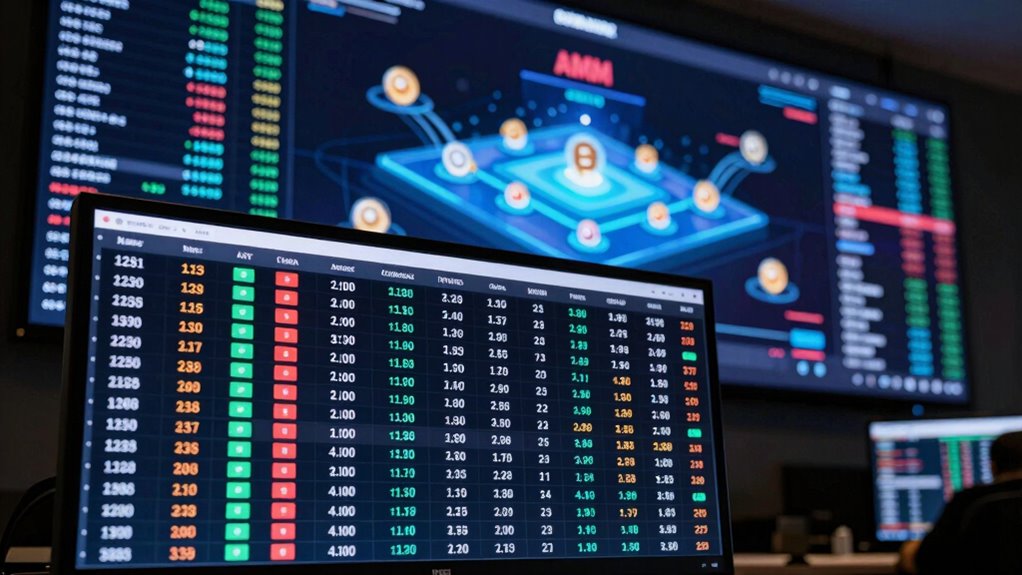
Both order books and AMMs face distinct challenges that can impact your trading experience. With order books, limited market depth can cause price swings and slippage during large trades. You might also encounter liquidity issues if not enough buyers or sellers are active. AMMs, relying on liquidity pools, can suffer from impermanent loss and reduced efficiency in volatile markets. furthermore, price slippage occurs when the pool’s balance shifts unexpectedly. You might find it hard to execute large orders without affecting the price. Additionally, both systems can struggle during sudden market moves, making it harder to get favorable prices. Understanding these challenges helps you navigate trading more confidently and choose strategies that best fit your risk tolerance.
Order books and AMMs face challenges like slippage, liquidity issues, and market volatility affecting trading efficiency.
- Limited market depth impacts order book efficiency
- Liquidity pools can cause impermanent loss
- Slippage affects large trades in both systems
- Market volatility can disrupt AMMs’ prices
- Liquidity issues can lead to less favorable fills
How to Choose the Right Trading System for Your Crypto Strategy
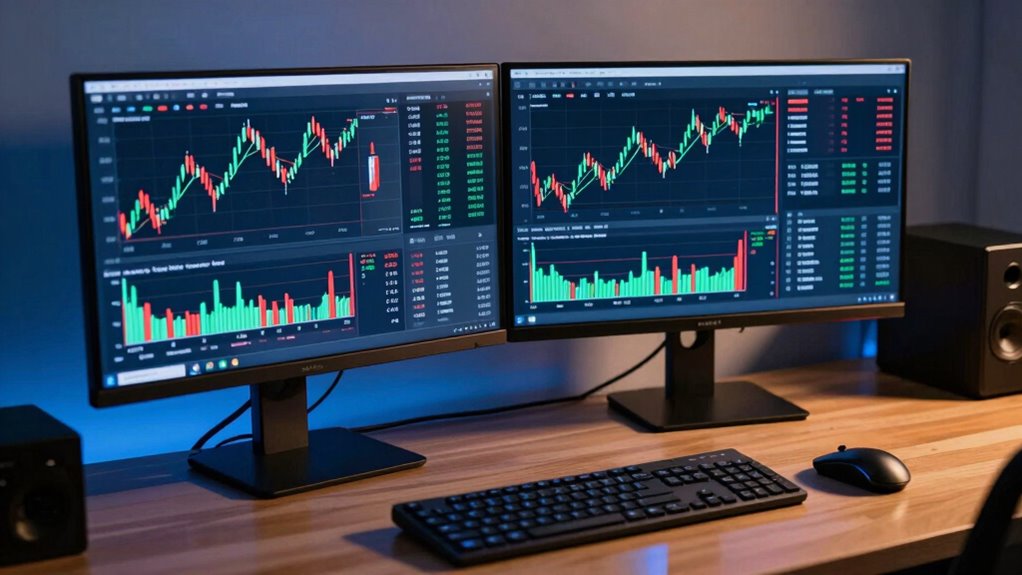
Choosing the right trading system depends on your specific goals, risk tolerance, and trading style. If you prefer quick, automated trades, liquidity pools with trading algorithms might suit you best, offering continuous liquidity and minimal slippage. These systems enable you to execute trades based on predefined rules, making them ideal for active traders. Conversely, if you prioritize order book transparency and price discovery, traditional order books may align better with your approach. Consider how much control you want over your trades, your comfort with automated processes, and how much liquidity you need. Ultimately, evaluating the strengths of liquidity pools and trading algorithms versus order books will help you select a system that complements your crypto strategy effectively.
Frequently Asked Questions
How Do Order Books Impact Market Manipulation Risks?
Order books can increase your risk of market manipulation because they show market depth, which others can exploit through spoofing techniques. Spoofing involves placing fake orders to create false demand or supply signals, misleading you into making poor trades. By understanding how order books work, you can better recognize these tactics and stay cautious, preventing manipulation from skewing your trading decisions.
Can AMMS Support Complex Trading Strategies Like Options?
AMMs typically don’t support complex options or strategic layering like traditional order books. They operate on simple liquidity pools, making them less suitable for intricate trading strategies. If you’re looking to trade complex options, you’ll need an order book-based platform that offers advanced tools. AMMs excel at straightforward swaps, but for options and layered strategies, traditional exchanges provide the necessary features and flexibility.
How Do Order Books Handle Sudden Market Crashes?
Think of an order book as a busy highway suddenly hit by a flash crash, causing liquidity droughts. During market crashes, order books rapidly thin out, with fewer buy and sell orders, making it harder to execute trades at desired prices. You might see wide spreads and slippage as the system struggles to match orders, amplifying the chaos. This real-time fluctuation highlights the importance of liquidity and swift market responses.
Are There Hybrid Systems Combining Order Books and AMMS?
Yes, hybrid trading systems combining order books and AMMs exist. These combined systems leverage the strengths of both, providing liquidity and efficient trade execution. You benefit from order books’ price discovery and AMMs’ constant liquidity pools, reducing slippage. Many platforms are adopting hybrid models to offer more stable and flexible trading environments, especially during volatile markets, giving you better control and improved trading experience through these innovative approaches.
What Are the Security Risks Unique to Each System?
Imagine your funds are in a vault; with order books, centralized custody means a single point of failure, risking hacks or escrow vulnerabilities. With AMMs, smart contract bugs can be exploited, leading to loss of assets. Both systems face unique risks: order books are vulnerable to insider manipulation and escrow issues, while AMMs risk vulnerabilities in liquidity pools and smart contract security. Stay cautious and choose platforms with strong security protocols.
Conclusion
Whether you prefer the precision of order books or the simplicity of AMMs, the choice isn’t always clear-cut. Each system has its strengths and pitfalls, but the real question is: which one will shape your crypto journey moving forward? As markets evolve and new innovations emerge, only one thing’s certain—you’ll need to understand both to stay ahead. Are you ready to make your move and discover what’s truly best for you?