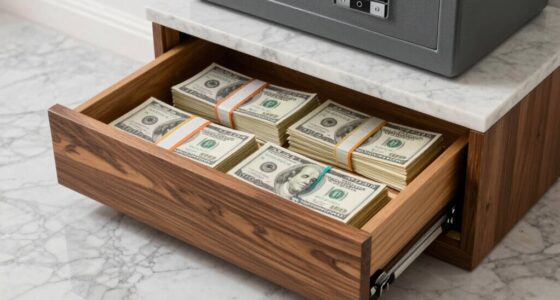
Your main concern determines which safe you need. If theft or break-ins are your biggest worries, a burglary safe with reinforced security features will protect your valuables. If fire damage threatens irreplaceable items or important documents, a fire safe with certified heat resistance is your best choice. In many cases, combining both offers the most extensive protection. Keep exploring to find out how to match the right safe with your specific risks.
Key Takeaways
- Determine if theft or fire is your primary threat to choose between a burglary safe and a fire safe.
- Burglary safes are designed to resist tampering and forced entry, ideal for securing cash, jewelry, and valuables.
- Fire safes protect documents and electronic media from heat damage, crucial for irreplaceable items and important papers.
- Combining both safes offers comprehensive protection against both theft and fire risks.
- Assess your specific risks and valuables to select the most appropriate safe for your needs.
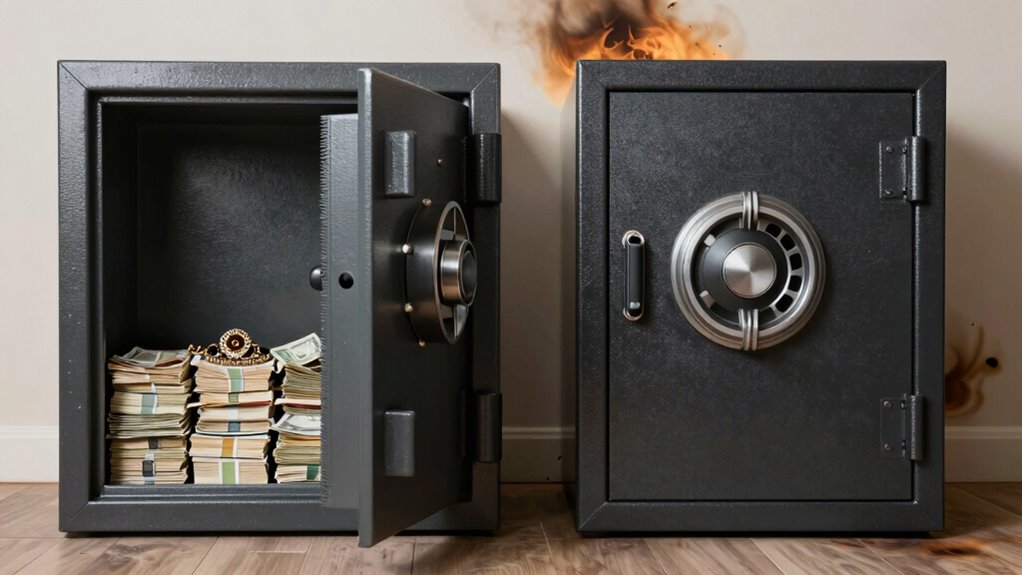
When choosing a safe for your valuables, understanding the difference between a burglary safe and a fire safe is essential. Each type is designed to protect against specific threats, so knowing which one best fits your needs can save you money and frustration later on. A burglary safe primarily aims to deter theft and protect your belongings from unauthorized access. These safes often feature reinforced steel construction, pry-resistant doors, and complex locking mechanisms. The security features are built to withstand tampering, making it difficult for burglars to break in quickly. If you have valuable items like jewelry, cash, or important documents, a burglary safe can help reduce the risk of theft and provide peace of mind. Keep in mind that if you do experience a break-in, having a safe with high-security features can simplify insurance claims, as you’ll have documented proof of secure storage.
On the other hand, fire safes focus on protecting your valuables from fire and heat damage. They are designed to withstand high temperatures for a certain period, typically 30 minutes to a few hours, depending on the model. Fire safes often feature fire-resistant materials and insulation that prevent heat transfer and keep the interior temperature low enough to protect sensitive documents, photographs, and electronic media. While these safes may not be as robust against physical theft, they are invaluable if your primary concern is safeguarding irreplaceable items from fire-related incidents. When comparing fire safes, look for ones with certified fire ratings to ensure they meet industry standards, and consider their insulation quality to maximize protection during a fire emergency. Additionally, understanding safe construction can help you choose the most effective model for your needs.
It’s important to evaluate your specific risks. If theft is your main concern, investing in a burglary safe with advanced security features will help protect your valuables and streamline insurance claims, as you’ll have documented proof of secure storage. Conversely, if your home is prone to fires or you store important documents that could be irreplaceable, a fire safe is the best choice. Sometimes, the best solution is to combine both types, especially if you want extensive protection against multiple threats. Remember, no safe is entirely invulnerable, but choosing the right one based on your primary concern ensures you’re better prepared. Ultimately, understanding the threats you face and selecting a safe designed to mitigate those risks can save you from heartbreak and financial loss, offering peace of mind in the face of unpredictable emergencies.
Frequently Asked Questions
How Do I Determine Which Safe Suits My Specific Storage Needs?
To determine which safe suits your storage needs, start by evaluating what you need to protect—valuables or documents. Consider safe installation options and how the safe fits into your space, ensuring easy access and secure placement. Think about storage organization—do you need fire protection, burglary resistance, or both? This helps you choose between a fire safe or burglary safe, matching your specific risks and ensuring your items stay protected.
Are Fire Safes Effective Against Water Damage From Fires?
Fire safes with water-resistant features can protect your valuables from water damage caused by firefighting efforts. While fire-resistant safes are designed to withstand high temperatures, they often include water-resistant seals to prevent moisture from seeping in during a fire. However, not all fire safes offer the same level of water resistance, so you should check the product specifications to make certain it provides adequate protection against water damage during a fire.
Can a Safe Protect Against Both Theft and Fire Simultaneously?
A fire safe alone isn’t typically designed to protect against theft, but a burglary safe offers security against intruders and can sometimes be fire-resistant. For exhaustive protection, you should look for a safe that combines fire resistance with sturdy theft deterrents. While a fire safe safeguards valuables from fire damage, a burglary safe provides security from theft. Choosing a dual-purpose safe ensures you’re protected against both threats efficiently.
What Features Should I Look for in a High-Security Burglary Safe?
You want a high-security burglary safe that truly protects your valuables. Look for tough, reinforced safe materials like solid steel and pry-resistant walls for durability. Opt for advanced locking mechanisms such as biometric, digital keypad, or dual-lock systems to prevent unauthorized access. Coincidentally, these features not only deter thieves but also give you peace of mind, knowing your assets are securely stored against intrusion and theft.
How Often Should I Replace or Upgrade My Safe?
You should replace or upgrade your safe every 5 to 10 years to guarantee maximum security. Regular safe maintenance helps identify wear and tear, while security upgrades can incorporate the latest technology to combat evolving threats. If you notice any signs of damage or your safe no longer meets your security needs, it’s time to upgrade. Staying proactive with these updates keeps your valuables protected against both burglary and fire risks.
Conclusion
Ultimately, choosing between a burglary safe and a fire safe is like picking between a sturdy shield and a blazing fortress—each guards against a different storm. While theft may knock on your door, fire can turn your world to ash in a heartbeat. Know your risks, and arm yourself accordingly. After all, safeguarding your treasures means preparing for the unpredictable, ensuring your valuables are wrapped in armor that stands firm against whatever threats come your way.